
How People-Pleasing Becomes Your Business Model (And How to Stop)
If you constantly feel energetically drained running your business, always over-giving, being indispensable, undercharging, saying yes when you want to scream no, and getting little back in return, you may have commercialised your people-pleasing. A founder's story and a two-step rewire.
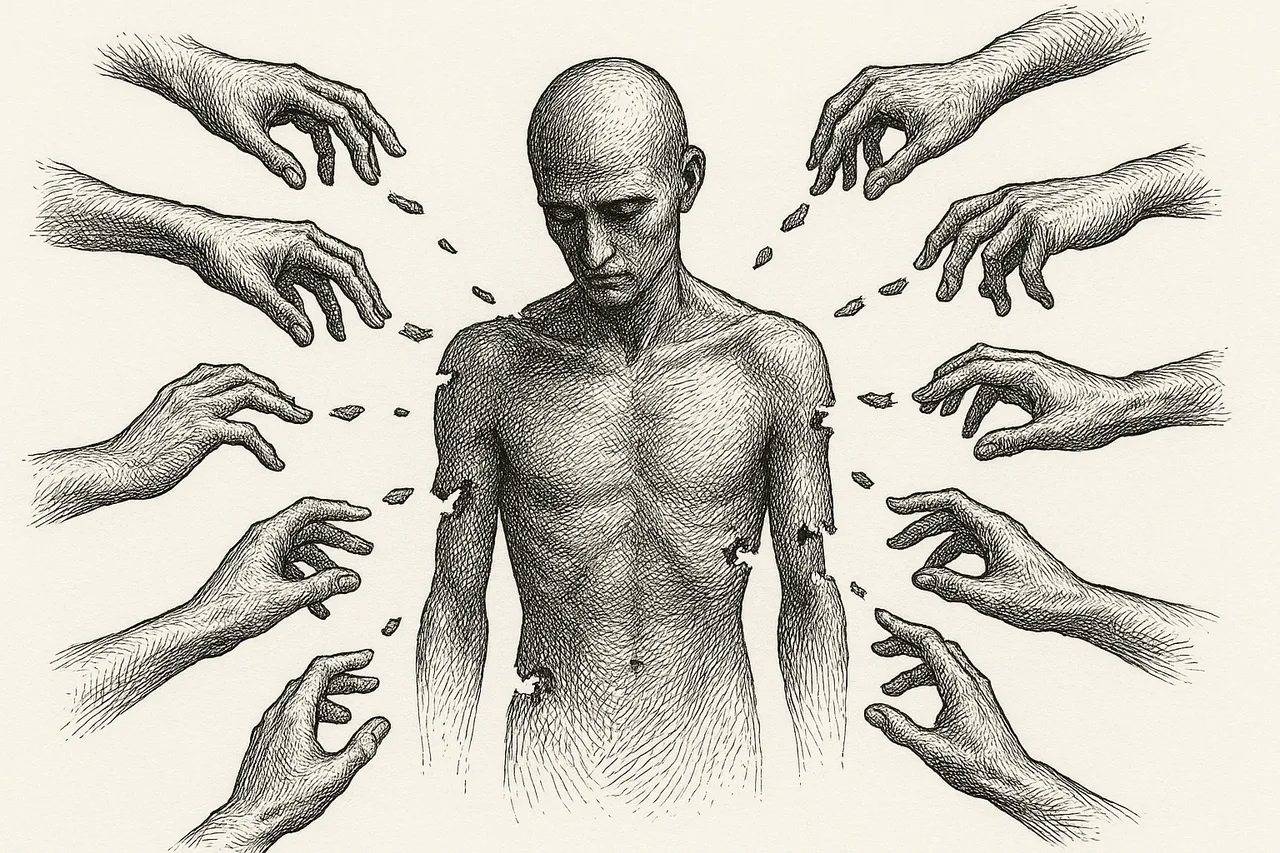
If you constantly feel energetically drained running your business, always over-giving, being indispensable, undercharging, saying yes often when you want to scream no, and feeling like you are getting little back in return, you may have commercialised your people-pleasing.
The offers you sell, the price you set, the way you structure your routines, these are decisions you might think have been made consciously but are in fact made by your unconscious.
If you unconsciously believe I must make myself indispensable to people so they don't leave, every layer of the business will quietly serve that goal, no matter how many surface-level boundaries you put in place.
This is what I mean by commercialised people-pleasing. It's one of the hardest patterns to get out of. You can't consciously think your way out of it, because the belief is often deeply embedded in your unconscious, and your behaviour runs like an automatic habit.
This is the story of how I discovered I had been unconsciously building my life around an old belief, and how I finally rewrote it.
Sisyphus in Heels
At 26, I bootstrapped Surreal Digital, a marketing agency and business coaching for creatives, to 6-figures in 2.5 years. I had monetised my passion.
I had built the thing I was supposed to want. The thing I'd spent years convincing myself I wanted. The thing society told me would finally make me happy.
But something inside me had died.
The business thrived. Leads came in without resistance. Enquiries were at an all-time high.
I used to love this work. Marketing felt like art, turning brand stories into living mythologies.
But somewhere between optimising the systems and scaling the revenue, the creativity bled out. My body started breaking down: autoimmune health problems, migraines, exhaustion, a nervous system screaming for rest I refused to give it. I was disconnected from everything that made me feel alive.
I had scaled my business, and in the process, burned myself out completely.
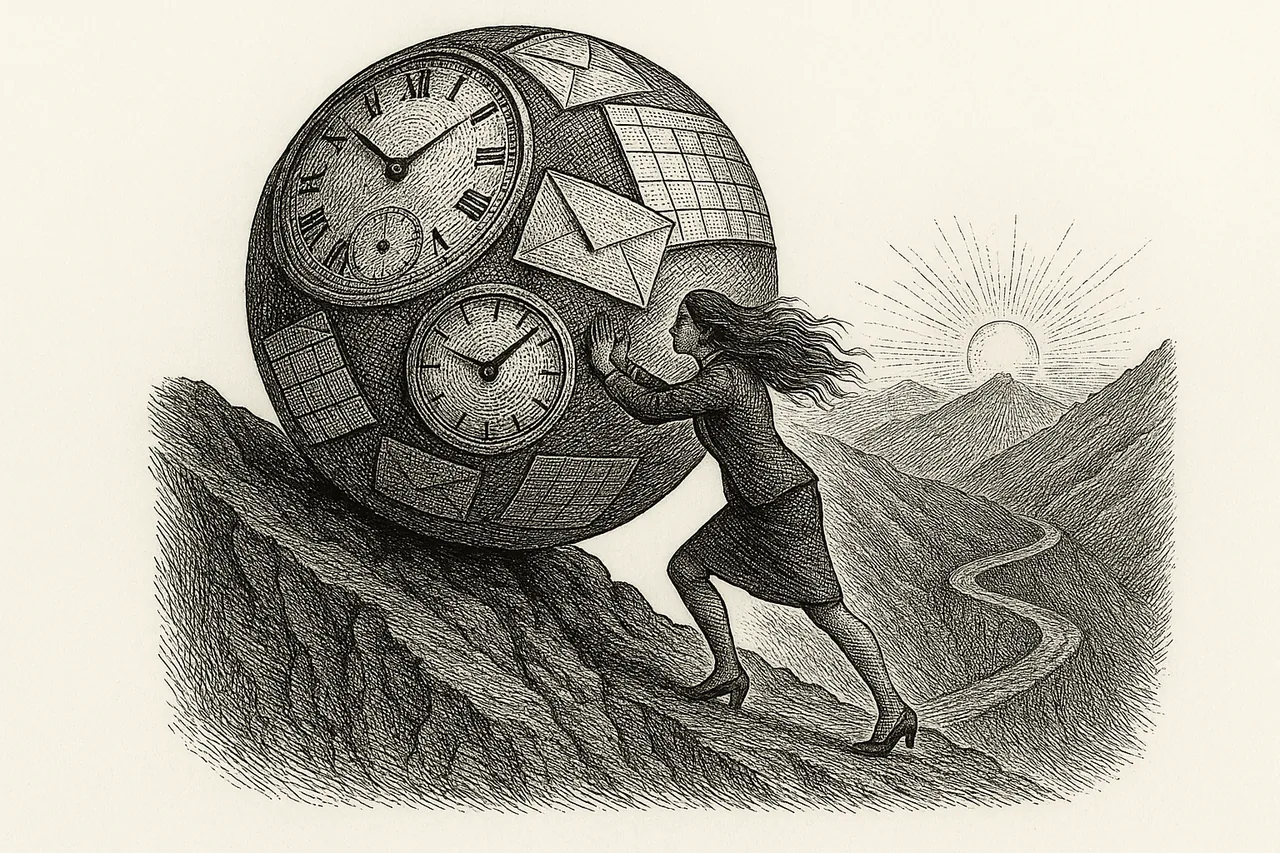
I felt like Sisyphus. Every morning I rose and performed and solved. Pushed the boulder up the hill. By nightfall it rolled back down.
The fourteen-year-old who built my business
Once a year, I took myself away to Amsterdam with just a notebook and a practice that allowed me to enter a non-ordinary state of consciousness during which my unconscious opens up. I always brought questions, business problems I'd been circling for months without clarity.
This time I brought ten good questions. By the end of four hours, I had my answer. But not to any question I'd asked.
Time stretched, logic dissolved, and suddenly I wasn't in Amsterdam anymore.
I was two and a half years old, being dropped off at a boarding kindergarten five days a week.
I pretended to be sick constantly, desperately hoping the teachers would call my parents to come get me.
The abandonment was unbearable, but I had no words for it yet.
Just a bottomless terror that settled into my bones.
Years later, at fourteen, I fled to a foreign country with a suitcase and no identity.
Another abandonment, this time self-inflicted.
An escape from a household that wasn't safe to stay in anymore.
I didn't know the rules.
I was never quite seen.
So I learned: smile more, please more, be useful.
If I am useful, maybe then they will be nice to me.
That belief didn't start at fourteen.
It was just the strategy a teenager used to manage a terror that had been there since she was two.
The revelation hit like cold water: I hadn't been the architect of my life. A two-and-a-half-year-old, terrified of abandonment, had designed my business model. A fourteen-year-old, desperate to be useful enough to keep, had built the structure.
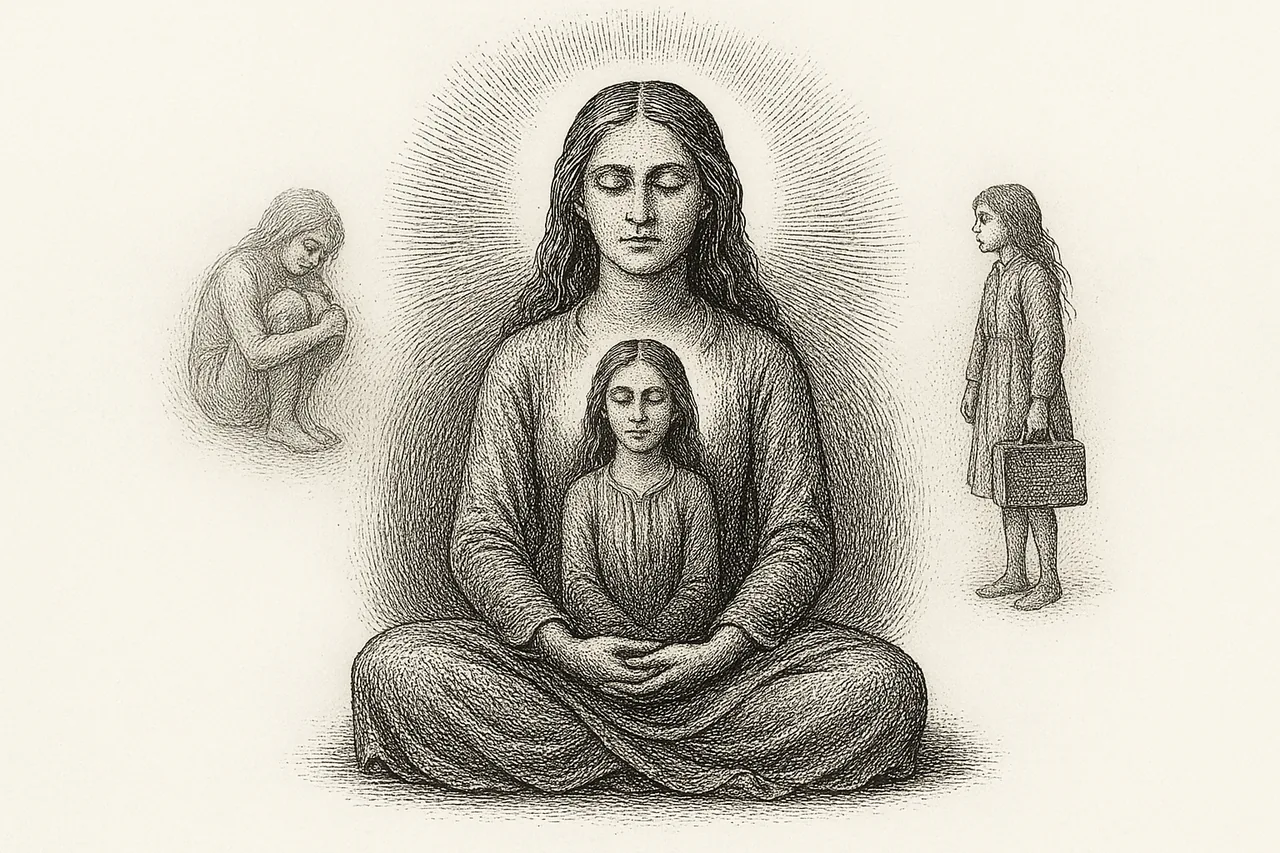
The marketing agency wasn't just a business. It was a trauma response disguised as entrepreneurship. Every client emergency I solved, every late-night rescue mission, every time I bent over backwards to be indispensable, I was recreating the exact dynamic that kept me alive at fourteen: prove your worth or risk abandonment.
I had built a business that required me to prove myself every single day because of an unconscious belief installed before I could question it: I am only worthy of love if I am useful.
If the business model itself was the problem, then none of those ten questions mattered at all.
I had spent three years optimising a cage.
My unconscious chose the agency model for me because a scalable digital business doesn't always physically need me.
In an agency, my worth was validated in every call, every crisis solved, and every "thank you, I couldn't have done this without you." Being indispensable felt like proof of belonging.
And if I'm not needed every hour of every day, how do I know I'm worthy of existing?
I had commercialised my people-pleasing, and I was paying the price for it in energy, health, and time.
How I rewired the pattern
Shedding that identity wasn't easy. The ego clings to whatever has defined us, especially when that definition has produced success by external standards.
Part of me resisted the shift because people-pleasing had been my survival strategy for so long.
But becoming aware of how it was not making me happy or healthy, and how it had contributed to the growth ceiling of my business, made me realise change was necessary.
Change is not comfortable. It means stepping outside of what I'm comfortable with and what I'm used to.
It took me a while to finally break through my people-pleasing patterns. What I found was that there are two simple steps to the process.
Step one: Awareness
Awareness of how and what contributed to the pattern, ideally under altered states of consciousness. If you aren't aware of your patterns, you can't change them.
Sometimes when we're in an ordinary state of consciousness, we can't access the messages from the unconscious because our logical and rational thinking blocks us from what our intuition is telling us. When we're in an altered state, the unconscious mind opens up and we become more aware of what it is telling us.
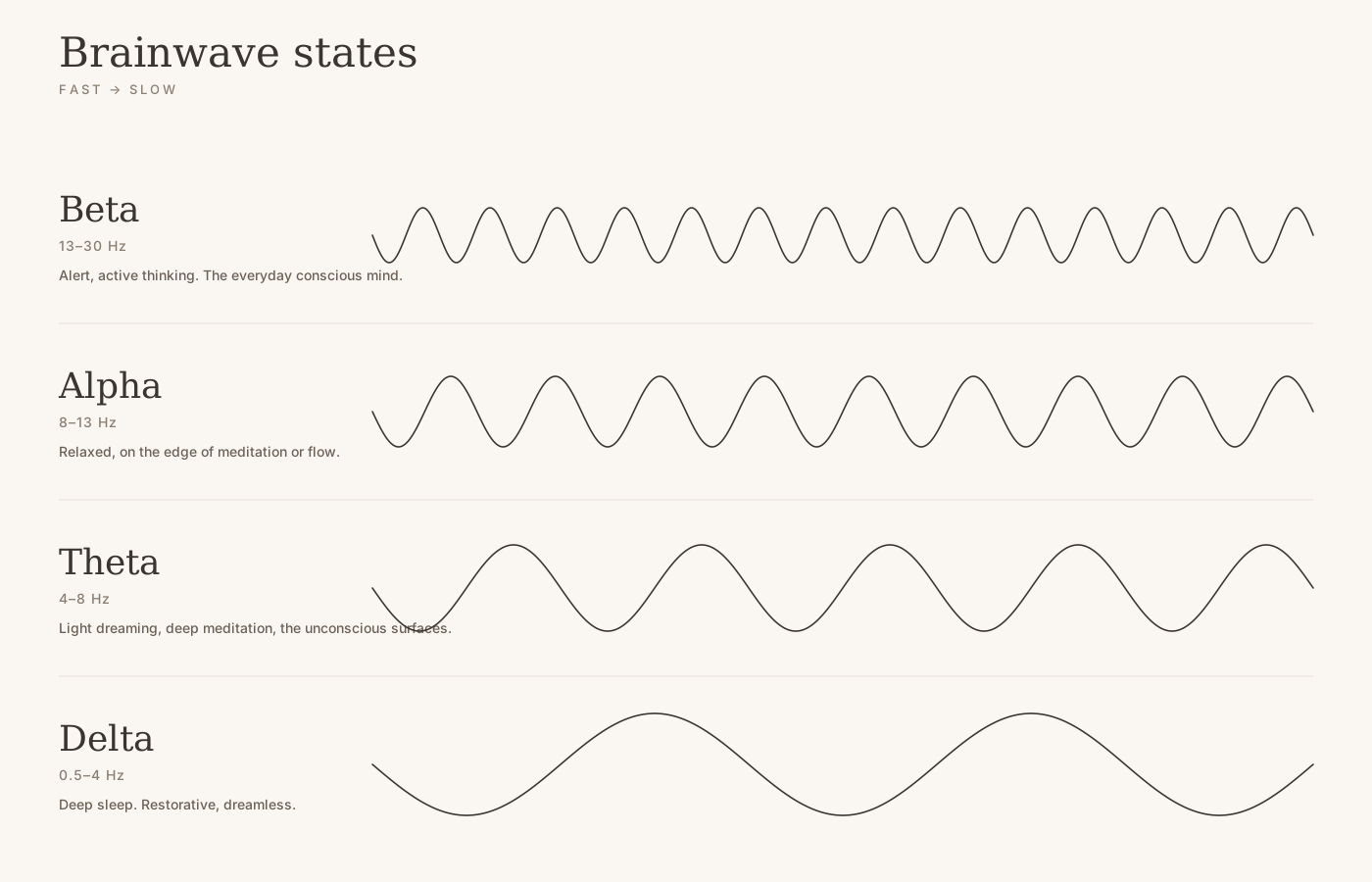
In neuroscientific terms, altered states happen when our brainwaves shift from beta to alpha and theta. These are natural shifts that happen in us daily. When we're in flow, or about to drift off to sleep, or just waking up, the brain is naturally in these altered states.
What I found very useful is the Morning Pages practice from The Artist's Way by Julia Cameron. She suggests that as soon as you wake up, you write three pages in your journal in stream-of-consciousness style, without censoring any thoughts. Many creatives and entrepreneurs swear by it, including Tim Ferriss and Alicia Keys.
According to neuroscience, when we've just woken up, our brain is still in a liminal state between the conscious waking state of Beta and the dreamier states of Delta and Theta. This is when the brain is naturally in an altered state of consciousness, and when insights and messages from the unconscious are most likely to be revealed.
If you can schedule 30 minutes to journal in the morning before your conscious mind takes over the day, you might start to hear the whispers of what your unconscious is trying to tell you.
By doing this exercise every day for three months, I started to understand what my soul really wanted and why my people-pleasing behaviours were what they were.
For instance, I recognised how my people-pleasing was self-sabotaging.
I often felt I couldn't say no to social events because I worried I would disappoint the people who invited me.
When I didn't enjoy those events, I felt the need to drink alcohol to blend in.
Because I wasn't setting boundaries or prioritising my own needs, my health was deteriorating from the amount of alcohol I was drinking.
Through journaling, I became more aware of how the patterns were showing up in daily life, and I started to set better boundaries and say no to events that didn't feel aligned with my values.
With chronic people-pleasing, by prioritising other people's needs so often, we forget what our own needs are. We lose our sense of self in co-dependent relationships, friendships, or business dynamics. We become like chameleons, becoming whatever others want us to be.
To change that, we need to re-develop a sense of self. We need to learn what our needs are, what makes our hearts sing, what our souls need, how to give ourselves love and compassion, how to fill our own cup first before we pour it for others.
It requires us to listen closely to the unconscious, because the unconscious holds the truth about what our soul needs.
Gradually, over months or years, you become more aware of what the patterns are, and you can start to take the steps to set your boundaries.
Step two: Re-patterning
Instead of repeating the old behaviours, you catch yourself in the moment and try to do things differently.
Before automatically saying yes to clients, stop and check in with yourself: am I doing this out of obligation, or genuinely out of alignment? Whenever you feel a sense of I have to do it, reframe it.
Often the body holds the truth. Doing things out of obligation feels contractive in the body. Doing things in alignment feels expansive.
Instead of saying yes to events I would previously have agreed to, I was able to say no. Instead of charging what I previously charged, I charged 1.5x of what I thought I was worth. Instead of justifying my prices, I stood firmly in what I believed to be the truth.
Another way to re-pattern people-pleasing behaviours is to repattern the childhood memories that led to our people-pleasing behaviours. Some psychologists call it re-parenting the inner child.
This is often done in NLP using submodalities, and is most effective in hypnotic trance states. You go back to the old memories you hold in your mind and change how your mind perceives them. For instance, in trance, I revisited the memory of my fourteen-year-old self. I felt the abandonment again. I felt the insecurity. Then I gave her what she had needed at the time: a hug, a sense of safety, the knowledge that she was already enough, that she didn't need to earn validation. I turned that image into black and white. I thanked my unconscious for keeping me safe, but as a grown-up, I no longer needed that same story.

Ultimately, by gradually changing the stories I had told myself about who I am and learning what my needs are, I was able to change my people-pleasing patterns. I changed my business from an agency model to a digital coaching one. I was able to double my revenue while working significantly less.
I set boundaries.
I charged what I was worth.
I said no to toxic clients.
I attracted respectful clients.
I finally stepped into my own power and started doing things in a more aligned way.
In my personal life, I'm also able to live more fully. I can connect with my true self, create an inner sense of safety, and attract more aligned friendships. I'm also able to create space for creative flow, and ultimately find my purpose and what truly fulfils me by my own standards.
What is commercialised people-pleasing?
Commercialised people-pleasing is when you've built a business model around the part of you that needs to be needed. It's what the psychoanalyst Donald Winnicott called the "false self": the version of a child that learns to be whatever its environment needs, in order to stay safe.
How commercialised people-pleasing shows up
- You chose a service or agency model where physical presence and emotional labour are the product, even when scalable digital options were available to you.
- Your prices sit at or below market for what you actually deliver. You can articulate why you should charge more, but you don't.
- You give away too much for free: extra calls, extra revisions, "quick favours" that quietly eat hours.
- You shape your calendar around other people, never carving out time for your own creative flow.
- You overdeliver as a baseline.
- You respond to client messages at all hours, even when nothing is actually urgent.
- You have boundaries on paper but break your own boundaries in practice the moment a client expresses mild displeasure.
- You say yes to collaborations that don't really serve you because you don't want others to feel bad.
- You keep underperforming team members on longer than you should because the conversation feels too hard.
- You make sure your employees are always happy, sometimes sacrificing your own needs to please them.
- You take on work that could be delegated to your team because you don't want to overload them, or push back if they say it's too much.
- You soften your point of view in your content so it appeals to everyone.
- You over-apologise in emails and hedge your language to avoid sounding too direct.
- You secretly believe you'd lose most of your clients if you stopped being so accommodating.
If three or more of these resonate, you may have commercialised your people-pleasing without realising it. The good news is that the structure is editable, but you have to see it before you can change it.
The Surreal Experiment that started this work
We spend a lot of time thinking through our problems consciously, but we rarely look at the unconscious architecture that decides our business models, our prices, and the ceilings we keep hitting.
It's difficult to see outside the box when you're living inside it.
Surreal Experiment 01: The Unconscious Report is a diagnostic quiz to identify your unconscious patterns.
Take the business version or the personal version.
The truth might be brutal.
It will definitely be uncomfortable.
Your ego will want to grip the reality you've been in for a long time, trying to tell you these beliefs are facts rather than limits.
That resistance is just a protective mechanism, a younger version of you trying to keep your world safe.
If those beliefs were programmed in, they can also be deprogrammed. Awareness is the first step.
FAQ
What's the difference between people-pleasing and being a good service provider?
Good service is the product of a clear contract: you deliver what you promised, you communicate well, and you treat both yourself and your clients with respect. You know your own self-worth, and you separate your sense of self from the value of your work, so you don't need your clients to externally validate who you are. Because you know what your work is worth, you deliver in a way that serves both you and the client, and you can say no to clients that aren't aligned.
In this scenario, you hold a clear internal and external boundary. The internal one is with yourself: when you work, when you rest, when to push and when to pause. The external one is with others: saying no, asking for what you need, protecting your time and energy.
People-pleasing is what happens when that boundary collapses. You don't have a clear sense of your own worth, so you derive it from your work and from your clients' validation. The relationship becomes co-dependent: you need others to confirm both your worth and the value of your work. Without clients, your sense of self-worth collapses. This is what leads to overworking, burnout, and energetic depletion.
Why do high-performers people-please so often?
Because the same childhood adaptation that produced the pattern (be indispensable so they don't leave) also produces relentless competence. The drive that makes you successful and the drive that makes you exhausted are often the same drive. This is why high-achievers are some of the worst at recognising their own people-pleasing: the data points on their LinkedIn profile look like proof that the strategy is working.
Can you stop people-pleasing without changing your business?
Yes, you can. You can change how you operate inside the business. When I shifted from an agency model to a digital coaching and online course model, I was able to set better boundaries, charge what I was worth, and scale the business with evergreen content that no longer required my physical presence on every call.
But the more you discover what you actually need and what your real values are, the more your business direction itself may shift. For me, I realised what I was really passionate about wasn't only coaching creatives on their marketing. The most significant breakthroughs I saw for creatives were rooted in personal mindset work, and the business was a reflection of that. So I expanded my offerings into more holistic coaching on personal transformation, and grew that to a broader audience beyond just creatives.
As you gradually discover what your needs are, your business direction can shift with you. You'll start to notice that the limitations you set for yourself were never real limitations to begin with.
How do I tell my unconscious beliefs from my real values?
Beliefs feel like facts. Values feel like choices. If a belief produces dread or guilt when you imagine violating it, it's probably an unconscious adaptation rather than a value. If it produces clarity or calm even when violating it costs you in the short term, it's likely closer to a real value.
What's the role of childhood in business choices?
Significant. In the first seven years of your life, you are naturally in an altered state of consciousness, the Theta brainwave state associated with hypnosis. This is when the unconscious architecture that decides your career later is shaped. The beliefs you absorbed about money, worth, belonging, and what you had to do to be kept all show up in your business choices. Most founders never examine this layer. Most growth ceilings sit on it.
Continue the work
- Stop People-Pleasing & Set Boundaries: the broader pillar this sits inside, with more on the boundary work.
- Tap into the Power of the Unconscious: the deeper layer where the wound lives.
- Shadow Work & Self Discovery: for the parts of the pattern that need to be met before they can be released.
With love,
Ginny Wan
Continue reading
Explore the full Stop People-Pleasing & Set Boundaries pillar