
Master Your Entrepreneur Personality Types
Explore 8 entrepreneur personality types & their shadow patterns. Not MBTI. Learn to use your archetype to grow your business & unlock your full potential.
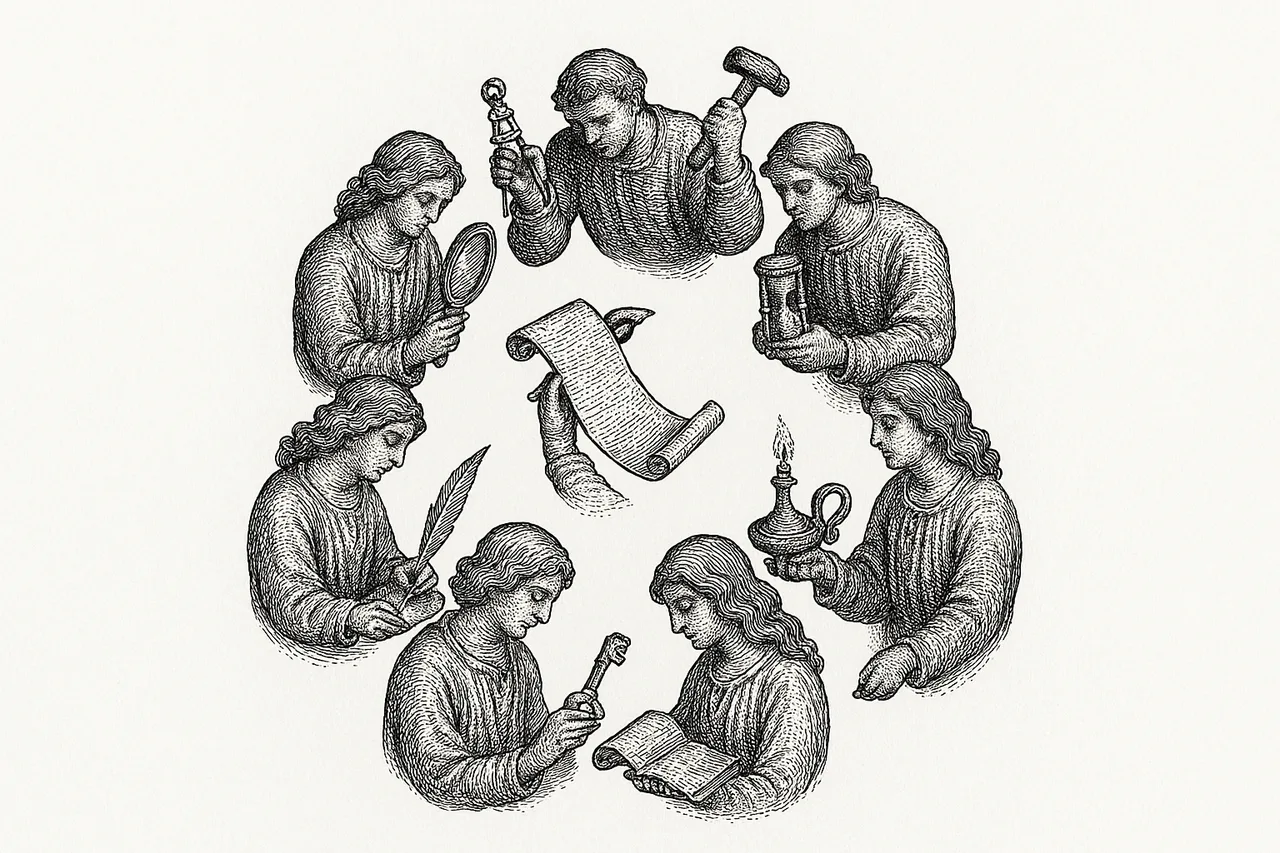
You’re already sitting on a box of gold. A beggar had sat by the same road for thirty years, holding out the same battered cap. One morning a stranger stopped, asked what he was sitting on, and told him to open it. Inside was gold. Not a little. A life-changing heap of it.
Most personality tests for entrepreneurs focus on the external mask rather than the internal reality. They reflect the version of yourself that you perform in public, providing a neat label like ENTJ before sending you back into the world feeling profoundly understood. I recognize the attraction. I once wore the ENTJ label like a custom blazer. It fit the prevailing narrative. Much of entrepreneurial culture celebrates the aggressive strategist who analyzes, decides, exerts pressure, and triumphs. For a time that identity was effective, until it became too successful and led me directly toward burnout.
The shift didn’t come from collecting more labels. It came from deeper work. Meditation. Breathwork. A far less flattering audit of what I wanted and what parts of myself I’d overdeveloped because they earned praise. Over time, the pattern softened. I became more open, more exploratory, more willing to hear perspectives I would once have steamrolled. Closer to ENFP, if you like the shorthand. What mattered more was being less trapped by my own brand of competence.
That’s the useful part of Jung here. Personality type was never meant to be a cage. The point is individuation, becoming more whole by developing the functions you neglect. If you’re heavily identified with Thinking, your work isn’t to become an even sharper machine. It’s to grow Feeling so your judgment stops amputating wisdom. If you lead with intuition and possibility, you may need more grounding, more structure, more reality contact.
Ken Wilber’s Integral Theory makes this even more practical for business. People change as consciousness changes. A founder may build from fear and survival early on, then realise later that they want to lead from service, meaning, and a very different relationship to power. Your business evolves when your interior operating system does. If you want a complementary lens on leadership patterns, this guide on improve leadership through the Enneagram is worth a look.
Table of Contents
- 1. The Visionary Innovator
- 2. The Strategic Operator
- 3. The Collaborative Builder
- 4. The Experimental Risk-Taker
- 5. The Passionate Purpose-Driven Founder
- 6. The Opportunistic Hustler
- 7. The Intellectual Authority Builder
- 8. The Relational Relationship-to-Money Transformer
- 8-Profile Entrepreneur Personality Comparison
- Beyond the Archetype Your Personal Evolution
1. The Visionary Innovator
The Visionary Innovator lives slightly ahead of the room. They spot patterns before the rest of the team has found the whiteboard marker, and they often build businesses because ordinary reality seems badly designed.
The Oxford Internet Institute found that successful UK founders tend to show higher Big Five traits compared with the general population, and the researchers identified six recurring founder profiles including leaders, developers and accomplishers in their Oxford study on founder personality. That matters because a lot of what people call “vision” is really a blend of openness, activity and willingness to keep moving while everyone else asks for certainty first.

Steve Jobs is the cliché here, but clichés become clichés for a reason. Visionaries are often at their best when they’re translating an intuition the market can’t yet articulate. They can also become absolutely insufferable if nobody around them knows how to convert inspiration into sequence, budget and timeline.
When the gift becomes a costume
The shadow side is subtle. Visionaries often become addicted to being the one who sees what others don’t. That identity can harden into a superiority pattern, or its quieter cousin, the belief that “I’m too different to be understood properly.” Both create distance. Both sabotage execution.
Jung would call this inflation. The ego fuses with the gifted function and starts treating it as the whole self. In practice, that looks like endless ideation, very selective listening, and a mysterious inability to finish anything that doesn’t feel sufficiently groundbreaking.
Practical rule: If every idea is world-changing, none of them are scheduled.
A better move is to work with the neglected opposite. If you lead with intuition, develop sensation. Put dates on the dream. Use sentence completion prompts such as “If I had to make this real in the next 30 days, I would…” and keep writing until the cleverness runs out and the truth shows up. In NLP terms, many visionaries run on towards meta-programmes and possibility filters. Useful for invention, terrible for follow-through if left unbalanced.
What works is accountability, somatic grounding and dream analysis used properly, not as aesthetic spirituality. Dreams can surface the emotional truth about a business direction before your pitch deck catches up. What doesn’t work is collecting more insight while avoiding embodiment. Entrepreneur personality types become dangerous when they turn into excuses with good branding.
2. The Strategic Operator
Every founder says they value systems. The Strategic Operator builds them. They’re the adult in the room when everyone else has confused enthusiasm for infrastructure.
Thryv’s report on business owner personalities describes ESTJ style operators as highly organised and logic-driven, with stronger on-time project delivery than more intuitive types in its small business personality profile overview. Strip away the typology branding and the point stands. Some entrepreneurs win because they can make complexity boring in exactly the right way.

Tim Cook is the obvious public example. He doesn’t sell the fantasy of chaos and genius. He operationalises excellence until it becomes invisible. In smaller businesses, this type is the founder who knows where cash is leaking, where the process breaks, and which team ritual is pretending to be useful.
Structure without soul is still a problem
The shadow here isn’t incompetence. It’s rigidity. Operators can become so identified with control that ambiguity feels like threat rather than information. Then perfectionism sneaks in wearing a respectable suit and calling itself standards.
If this is your style, the useful question isn’t “How do I become more disciplined?” You’ve got plenty. The question is where discipline has become a defence against uncertainty, emotion or creative risk. Breathwork helps because it trains nervous system tolerance for not knowing. That sounds soft until you realise most over-control is a physiological event first and a strategic preference second.
The right kind of inner work also helps operators see where they’ve confused self-worth with efficiency. That’s where something like Surreal Experiments for business growth patterns becomes useful, not as a gimmick but as a way to surface unconscious control beliefs that ordinary planning tools never touch.
A practical intervention looks like this:
- Map the tension point: Notice exactly when your body tightens. It’s usually around delegation, uncertainty or imperfect output.
- Use sentence completion: Finish the line “If I let this be messy for a week…” ten times. The hidden fear usually appears around line six.
- Review your rituals: Keep the systems that create clarity. Kill the ones that exist mainly to soothe your need to feel in charge.
This is worth watching if you want a visual take on strategic business thinking.
3. The Collaborative Builder
Some founders scale through force. The Collaborative Builder scales through people. They create trust, community, culture and momentum by making others feel seen, included and invested.
This type often gets underestimated because our entrepreneurial mythology still worships the lone wolf and the charismatic rainmaker. Meanwhile, Collaborative Builders are assembling durable ecosystems, introducing the right people, retaining talent and turning a business into a place others want to stay.
That’s not softness. It’s an advantage.
Connection is not the same as clean boundaries
The problem arrives when care mutates into over-functioning. Builders can become the emotional infrastructure for everyone around them. They absorb tension, smooth conflict, hold the team together, and then wonder why they’re exhausted and slightly resentful by Thursday.
Jungian work is especially useful here because the shadow often contains anger, selfishness and clean self-protection, all the traits this founder has decided are “not me”. But whatever gets disowned doesn’t disappear. It leaks. Usually as passive frustration, fuzzy expectations or weirdly delayed honesty.
You don’t build a healthy culture by rescuing adults from the discomfort of direct feedback.
What works is strengthening the Thinking function if Feeling dominates your style. Not becoming cold. Becoming clearer. Use NLP reframes around conflict. Replace “If I disappoint them, I’ll lose the relationship” with a more accurate frame such as “Clear expectations are part of respect.” Somatic boundary practice matters too. Many people-pleasing patterns show up in the body before they show up in language. Tight chest. Held breath. Smile that arrives half a second too early.
A few practical moves help:
- Name roles, not moods: Define who owns what. Don’t rely on everyone “feeling aligned”.
- Separate empathy from agreement: You can understand someone’s reaction without reorganising the business around it.
- Track where you over-give: Look for repeated moments where you say yes to preserve harmony, then pay for it in energy later.
Oprah is a useful example here, not because her path is copy-and-paste, but because relationship-based influence works when it’s anchored in a strong centre. Collaborative entrepreneur personality types thrive when generosity is paired with spine.
4. The Experimental Risk-Taker
The Experimental Risk-Taker is built for iteration. They’d rather test than theorise, and they often create momentum by trying ten things while everyone else is still discussing brand values in a Notion doc with suspiciously beautiful icons.
This type is often brilliant in volatile conditions. They can move fast, learn fast and recover fast. In startup culture that gets praised as adaptability. Sometimes it is. Sometimes it’s just a socially acceptable relationship with restlessness.
Reid Hoffman’s “constant beta” mentality captures the healthy version of this energy. So does any founder who treats feedback as fuel rather than insult. The issue isn’t appetite for experimentation. The issue is whether the experiments are serving a deeper aim or merely protecting the founder from commitment.
Curiosity needs a container
The shadow pattern is fear of entrapment. If every decision must remain reversible, nothing meaningful gets built. Risk-Takers can become connoisseurs of optionality. Lovely for cocktail conversations. Less lovely for revenue, team confidence or customer trust.
Hypnotherapy-informed reframing proves its value. A lot of commitment resistance is built on hidden language patterns such as “If I choose one path, I lose all freedom.” That sentence feels true until you examine it. In reality, chosen focus often creates more freedom than scattered novelty ever will.
The test is simple. Are you experimenting to learn, or experimenting to postpone identity?
If this is your pattern, keep the experiments but change the rules. Give each one a clear time frame, a success signal and an explicit stop point. Breathwork helps because staying with discomfort is a trainable skill, and finishing usually produces discomfort long before it produces pride.
A useful sequence looks like this:
- Choose one live experiment: Don’t run six strategic pivots at once and call it agility.
- Write the fear plainly: “If this works, then I’ll have to…” often reveals more than “What’s my strategy?”
- Close loops on purpose: Completion builds self-trust. Endless prototyping often erodes it.
Jack Dorsey style founders have made this pattern look glamorous. It can be. It can also become an elegant way to avoid the ordinary discipline that turns momentum into an actual business.
5. The Passionate Purpose-Driven Founder
The Passionate Purpose-Driven Founder doesn’t just want to make money. They want the business to mean something. They’re often building around values, reform, service, consciousness, sustainability or some deep sense that work should express a moral centre.
That energy can be magnetic. People follow conviction when it’s embodied. Patagonia became the shorthand example because purpose there feels structural rather than decorative. You can usually tell when a founder’s mission is real. It costs them something.

Ken Wilber’s Integral lens is useful here. A founder might begin at a survival-driven stage, building from fear, scarcity or sheer necessity. Later, after enough success or enough suffering, the motivation matures. The business becomes less about proving worth or escaping the past and more about contribution, coherence and values. Same person. Different centre of gravity.
Mission can become martyrdom
The shadow is almost always a distorted relationship with ambition and money. Many purpose-driven founders carry an unconscious split where service is noble and commercial strength feels contaminated. Then they undercharge, overextend, resent the market and call it integrity.
Inner work matters. Not the fluffy version. The version that uncovers guilt, superiority, hidden disdain for sales, and the old story that wanting more somehow makes you less pure. Tools for personal pattern assessment at Surreal Experiments can help surface those scripts so purpose stops fighting profitability.
A strong intervention here is to develop the neglected opposite function. If Feeling leads, bring in Thinking. Ask better business questions. What is the offer worth? What does the mission require operationally? Where have you made “being heart-centred” a polite excuse for weak commercial design?
A few truths tend to help:
- Profit funds reach: If the mission matters, it needs resources.
- Adaptation is not betrayal: Listening to the market doesn’t mean selling your soul.
- Compassion includes you: Burnout is not evidence of moral seriousness.
The most evolved version of this founder builds from heart without becoming financially avoidant. That’s conscious business, not sanctified chaos.
6. The Opportunistic Hustler
At 11:47 p.m., this founder is still replying to leads, renegotiating a supplier problem, sketching a new offer in Notes, and somehow pitching a partnership that did not exist at breakfast. By noon the next day, they’ve created momentum out of thin air. It’s impressive. It’s also the kind of operating style that can turn a business into a permanent emergency.
The Opportunistic Hustler spots openings faster than the spreadsheet crowd. They are persuasive, adaptive, hard to discourage, and unusually good in the messy stage where nothing is stable yet. If cash is tight, the market is shifting, and nobody is handing out permission slips, this archetype often looks like a genius.
Jungian language helps here. This pattern usually over-relies on improvising functions such as Extraverted Intuition or Extraverted Sensing, with less access to the slower disciplines that create continuity. NLP frames it as a strategy loop. Scan, pounce, solve, repeat. Integral Theory adds the missing insult. What works brilliantly at one stage of development can become a liability when the business now needs systems, patience and self-observation, not another adrenaline spike.
That is the trade-off. Scrappiness gets early traction. It does not build a company by itself.
Sara Blakely’s early bootstrap energy shows the healthier version of this pattern. Resourceful, direct, commercially sharp. The difference is that mature hustle uses speed on purpose. Immature hustle uses speed to avoid stillness, reflection, and any evidence that the founder cannot outwork structural problems.
Speed often protects an identity
A lot of Hustlers are not merely ambitious. They are adapted to instability. The old script sounds like this: if I slow down, I lose relevance. If I stop producing, I stop being safe. That pattern can come from financial pressure, chaotic family systems, volatile work environments, or years of proving worth through output.
By the time the business has revenue, the founder may have no idea how to operate without urgency.
The shadow usually shows up in operational mess rather than motivational slogans. Offers multiply faster than delivery capacity. Margins swing around. Sales are decent, but cash flow still feels weirdly stressful. The calendar is full, yet the company depends on one overstimulated human making a thousand reactive decisions.
Here is the awkward truth. Hustle is often a trauma response with a Stripe account.
The intervention has to go deeper than time management. Rearranging the calendar helps for about six days. Then the nervous system recruits another fire to run toward. The work is to separate effort from identity.
A useful NLP intervention is to catch the founder’s internal language in real time. Notice phrases like “I have to stay on it,” “If I don’t push, it all stalls,” or “I’m good under pressure.” Those are not neutral descriptions. They are instructions. Change the script and behaviour starts to change with it. “Pressure sharpens me” becomes “clarity sharpens me.” “I need urgency to perform” becomes “I perform best with focus and recovery.”
Somatic work matters too, because this archetype feels the cost in the body before admitting it in the P&L. Watch for jaw tension, shallow breathing, random irritability, compulsive inbox checking, and that peculiar boredom that shows up whenever nothing dramatic is happening. Those are not personality quirks. They are signals that the founder has trained their system to confuse activation with effectiveness.
A stronger version of this archetype keeps the opportunism and adds structure:
- Fewer offers, cleaner economics: Stop chasing every viable opening. Pick the ones with repeatable margin.
- Defined sprint windows: Use intensity in specific periods, then stop. Endless urgency is just poor pacing in expensive clothing.
- Decision rules: Pre-set criteria for discounts, partnerships, custom work and new ideas, so every opportunity does not become a referendum on your self-worth.
- Recovery as performance infrastructure: Sleep, white space and thinking time protect judgment. They are not rewards for after the work is done.
The evolved Hustler is still fast. Still sharp. Still excellent at turning scraps into traction. The difference is that they no longer need chaos to access their talent. That shift matters because entrepreneur personality types are not fixed identities. They are recurring patterns. Patterns can mature, and this one gets very powerful once compulsion stops masquerading as drive.
7. The Intellectual Authority Builder
This founder builds trust through knowledge. They teach, write, synthesise, explain and create frameworks that make people think, “Right, this person understands what they’re talking about.”
Tim Ferriss, Seth Godin and Malcolm Gladwell each represent a version of this pattern. Different styles, same core move. They turn thought into influence, and influence into business architecture.
This archetype often does well in education-led brands, consulting, media, high-trust services and any business where language itself is a strategic asset. They don’t just have ideas. They know how to package them so others can use them.
Knowledge is useful, over-identification is not
The shadow is over-intellectualising. Authority Builders can become trapped in analysis, trapped in polish, or trapped in the fantasy that one more insight will finally make them ready to publish the thing they’ve already rewritten twelve times. It’s not always perfectionism in the obvious sense. Sometimes it’s a very refined avoidance strategy.
The introvert angle matters here. Some entrepreneurs build with a deliberate, understated approach and well, but still battle overthinking and imposter patterns because low extraversion gets mistaken for weakness. The Federation of Small Businesses highlighted introverted founders and common barriers such as overthinking and imposter syndrome in this discussion of entrepreneur personality blind spots. Quiet doesn’t mean timid. It means your authority may emerge through depth instead of spectacle.
If this is your style, Jung’s notion of the inferior function is useful. You may live in intuition and thinking while neglecting feeling or sensation. Then your work becomes elegant but oddly bloodless. Readers can sense that. Clients can too.
A few upgrades help:
- Publish before total certainty: Authority grows through contact with reality, not private perfection.
- Translate, don’t impress: If your writing only proves you’re clever, it won’t build trust for long.
- Bring the body back in: Somatic cues often tell you when thinking has turned defensive.
I’ve seen this pattern in founders who can explain everyone else’s blind spots but struggle to make an offer, send an invoice or claim expertise in plain language. The fix isn’t dumbing down. It’s integrating humanity with intellect.
8. The Relational Relationship-to-Money Transformer
This is the entrepreneur who finally notices that pricing, selling, receiving, negotiating and scaling are never just commercial mechanics. They’re psychological events. Money reveals identity faster than most spiritual practices do.
Some founders only discover this after the usual advice fails. They improve the copy, refine the offer, optimise the funnel, and still find themselves discounting, undercharging, hesitating in sales calls or attracting clients who mirror their own confusion about value. That’s not merely a tactics issue. It’s a pattern issue.
The Enterprise Research Centre material described in this analysis of personality and startup tools suggests that entrepreneurs high in openness were more likely to adopt AI-driven self-development tools. Whatever you make of the framing, the practical point is sound. Founders who are willing to examine inner patterns often get better information about why their business behaviour keeps repeating.
Money always reveals the hidden script
This archetype matters because money has a way of exposing your shadow in broad daylight. If you associate wealth with greed, you’ll sabotage growth elegantly. If you associate charging properly with rejection, you’ll keep your prices in the realm of emotional safety. If receiving feels vulnerable, you’ll overdeliver instead.
The useful tools here come from multiple directions. Jungian shadow work can uncover disowned desire and moral tension around success. NLP can identify the exact language patterns shaping your decisions. Sentence completion psychology reveals the beliefs your polished brand voice keeps hidden. Hypnotherapy-informed prompts can help shift the emotional charge around worth and receiving.
If you want a starting point, use the Surreal Experiments assessment for entrepreneurial patterns. Not because a quiz will save you, but because precise reflection beats vague self-awareness every time.
Try this in practice:
- Track your language around money: Notice phrases like “I’m bad at sales” or “people won’t pay that”. They’re usually beliefs disguised as observations.
- Pair inner work with direct action: Raise one price, clarify one proposal, or ask one cleaner question in a sales call.
- Watch your body during financial conversations: Freeze, fawn and rush all tell you something your strategy deck won’t.
This is one of the most useful entrepreneur personality types because it stops treating business psychology as a side hobby. It puts the interior and exterior game in the same room, where they belonged all along.
8-Profile Entrepreneur Personality Comparison
| Profile | Implementation complexity 🔄 | Resource requirements ⚡ | Expected outcomes 📊 | Ideal use cases 💡 | Key advantages ⭐ |
|---|---|---|---|---|---|
| The Visionary Innovator | High, concept-heavy, needs structure to execute | Moderate, High, creative talent, funding, strategic partners | Potentially transformative but uncertain, category-defining impact if executed | Breakthrough products, moonshots, long-term disruption | Spotting untapped markets; inspiring teams; attracting capital |
| The Strategic Operator | Medium, process-driven with clear steps | High, systems, analytics, operational teams | Predictable scaling and efficiency; steady margins | Scaling businesses, operations-heavy organizations | Operational excellence; reliable scalability; investor confidence |
| The Collaborative Builder | Medium, people/process balance and cultural work | Moderate, investment in team, community-building time | Strong engagement, retention, and partnerships | Community-driven ventures, nonprofits, culture-focused growth | High team/customer loyalty; strong networks and partnerships |
| The Experimental Risk-Taker | Low, Medium, rapid iterative cycles, lightweight process | Low, Moderate, lean capital, testing tools, analytics | Fast learning and discovery; variable profitability | MVPs, growth hacking, rapid R&D sprints | Agility; fast validation; low-cost experimentation |
| The Passionate Purpose-Driven Founder | Medium, align mission with viable business model | Moderate, mission-aligned hires, value-sensitive funding | Deep social/brand impact; monetization and scaling risk | Social enterprises, conscious brands, impact startups | Authentic branding; passionate supporters; long-term resilience |
| The Opportunistic Hustler | Low, tactical, quick-to-act execution | Low, minimal capital, high personal energy | Rapid early revenue and traction; fragile infrastructure | Bootstrapped launches, sales-first ventures, rapid market plays | Speed to market; resourcefulness; quick traction |
| The Intellectual Authority Builder | Medium, content, credentials, and audience work | Moderate, time for research, content creation, platforms | Sustainable authority, premium positioning, diversified income | Consulting, courses, speaking, thought leadership platforms | Expert positioning; high-value pricing; audience trust |
| The Relational Relationship-to-Money Transformer | High, integrates deep inner work with business changes | Moderate, coaching, personal development tools, accountability | Durable alignment of mindset and revenue; slower but sustainable gains | Coaches, wellness founders, entrepreneurs needing mindset shifts | Removes internal blocks; authentic pricing; long-term financial health |
Beyond the Archetype Your Personal Evolution
Recognising your dominant pattern is useful. Worshipping it is where things go sideways.
That’s the trap in most conversations about entrepreneur personality types. People find a label that explains their strengths, then subtly build an identity around avoiding the very capacities they most need to develop. The Visionary becomes allergic to process. The Operator develops a theology of control. The Builder mistakes self-abandonment for generosity. The Hustler confuses adrenaline with aliveness. The Intellectual keeps thinking where feeling is required. The purpose-driven founder sanctifies poor commercial design. None of this is rare. It’s Tuesday.
Jung’s idea of individuation is the corrective. The task isn’t to become less yourself. It’s to become less one-sided. If you’re highly identified with Thinking, grow Feeling so your business decisions aren’t technically correct and humanly tone-deaf. If you lead with Feeling, develop Thinking so care doesn’t turn into chaos. If intuition dominates, strengthen your capacity for concrete execution. If sensation dominates, stretch into larger pattern recognition and future vision.
That’s also why fixed-type thinking can become misleading. People change, shaped over time by their environment, their successes, and especially by crisis. The founder who once built from scarcity, urgency and fear may later realise that those motives no longer fit. Through meditation, breathwork, reflection and enough honest contact with their own shadow, they start building from a different level of consciousness. Wilber’s Integral Theory gives language for this. Early-stage survival motives can evolve into more plural, heart-centred and values-led forms of leadership. The business changes because the meaning-making system behind it changes.
I’ve seen that personally. Being attached to ENTJ once felt efficient and even admirable. It matched the mythology of the decisive builder. But over-identifying with that style narrowed my field of vision. It rewarded the strategic, rational and forceful parts of me while sidelining softer but equally intelligent capacities, things like receptivity, emotional truth, curiosity without agenda, and actual listening. The shift toward a more open, feeling and exploratory mode didn’t make me weaker. It made me less brittle. It also made me better at conscious business.
That’s the point. You’re not trying to win the type test. You’re trying to stop being run by a partial self that happens to be socially rewarded.
A practical way to work with this is simple. Start by naming your dominant archetype candidly. Then identify its opposite medicine. If you’re a Visionary, borrow from the Operator. If you’re a Hustler, learn from the Builder. If you’re an Intellectual, develop a cleaner relationship with embodiment and emotion. Then get specific. Which conversations do you avoid? Which emotions do you outsource to “strategy”? Which strengths have become defence mechanisms with excellent branding?
The old parable still holds. Most founders keep asking the world for permission, confidence, certainty or validation while sitting on the internal material they need. The work is not to collect more flattering descriptions of yourself. The work is to open the box.
If you want a dose of perspective on resilience and identity shifts, Narrareach's writing inspiration is a useful companion read.
Ready to find out what's in your box?
Curious which unconscious patterns are running your business? Take our free Entrepreneurial Pattern Assessment to get a personalised report on your dominant archetype and its shadow.
Ready to start your work?
Download the Surreal Experiments app and start a conversation with your AI coach today. It's time to turn insight into transformation.
Surreal Experiments helps entrepreneurs and creatives uncover the unconscious patterns shaping their work, decisions and growth. If you’ve already done the books, the therapy language and the standard personality tests, this is the deeper layer. Expect Jungian psychology-informed prompts, NLP and hypnotherapy-inspired reframes, and reflective tools designed to surface self-sabotage, perfectionism, overthinking and hidden beliefs around success, money and identity. It’s self-discovery for people who are done performing self-awareness.
Continue reading
Explore the full Personality Tests & Self-Assessment pillar