
How social media hypnotises you: 5 techniques it borrows from hypnotherapy
Social media uses five hypnotic techniques, borrowed from hypnotherapy, to keep you in a trance. Here is how the induction works, and how to break it.

It's 8:20 in the morning, and I'm about to get on the next Underground train into Central London.
Looking around the carriage, I can see how drained people look, energetically sucked into the black mirror of their phones.
I've just read a study. The University of Cambridge, sponsored by Virgin Media, tracked the phone screen time of over 6,000 UK adults across a year.
The average adult spends 4 hours a day on their phone. More than a third of that, around 1 hour and 26 minutes a day, is unintentional.
Over a lifetime, that adds up to 4 years and 8 months of staring at a screen without any specific goal or intent. A.k.a. doomscrolling.
The more I study hypnotherapy, the more I see how social media uses hypnotic techniques to keep you in a trance.
Here are five of them.
1. Induce amnesia

Do you remember the posts you scrolled past last time you opened social media?
Maybe one or two. Certainly not every post that flew past your eyes.
When fresh content floods your brain every few seconds, it becomes too much for the conscious mind to process.
The conscious mind can only hold a small amount of information at once, and it keeps only what feels most relevant.
That's why our phone numbers are built around the magical number, seven plus or minus two: the upper limit of what the conscious mind can comfortably retain.
When the conscious mind gets overwhelmed, the unconscious mind starts to take over.
Your unconscious then filters which content to remember and which to forget.
By inducing amnesia, your unconscious comes online and takes control.
It's like every other compulsive habit. Skin picking, hair pulling, an addiction to alcohol, caffeine, sugar or nicotine. You consciously know it's not good for you, but you can't stop.
When an emotional urge arises, the behaviour that follows is automatic and unconscious.
You're running a program. An automatic habit loop that conscious willpower struggles to override.
2. Confusion induction

The grandfather of hypnotherapy, Milton Erickson, would frequently collapse time and space, weaving between different narratives so his subject lost track of where they were.
He would shift between past, present and future, moving between topics, leaving the listener's conscious mind confused about what was happening in the present moment.
Normally, when we follow a story, our attention holds because each piece builds on the last.
But social media rips you between completely unrelated worlds in a few seconds. One video about creativity. The next about a cute dog. The next about seven signs someone is a narcissist. The next about social media growth.
Your brain simply cannot cope.
It doesn't know which narrative to follow, so it gets overwhelmed.
And when the conscious mind gets overwhelmed, the unconscious comes online.
By inducing confusion, the platform keeps you in a hypnotic state, and your unconscious keeps chasing the next dopamine hit.
3. Eye fixation
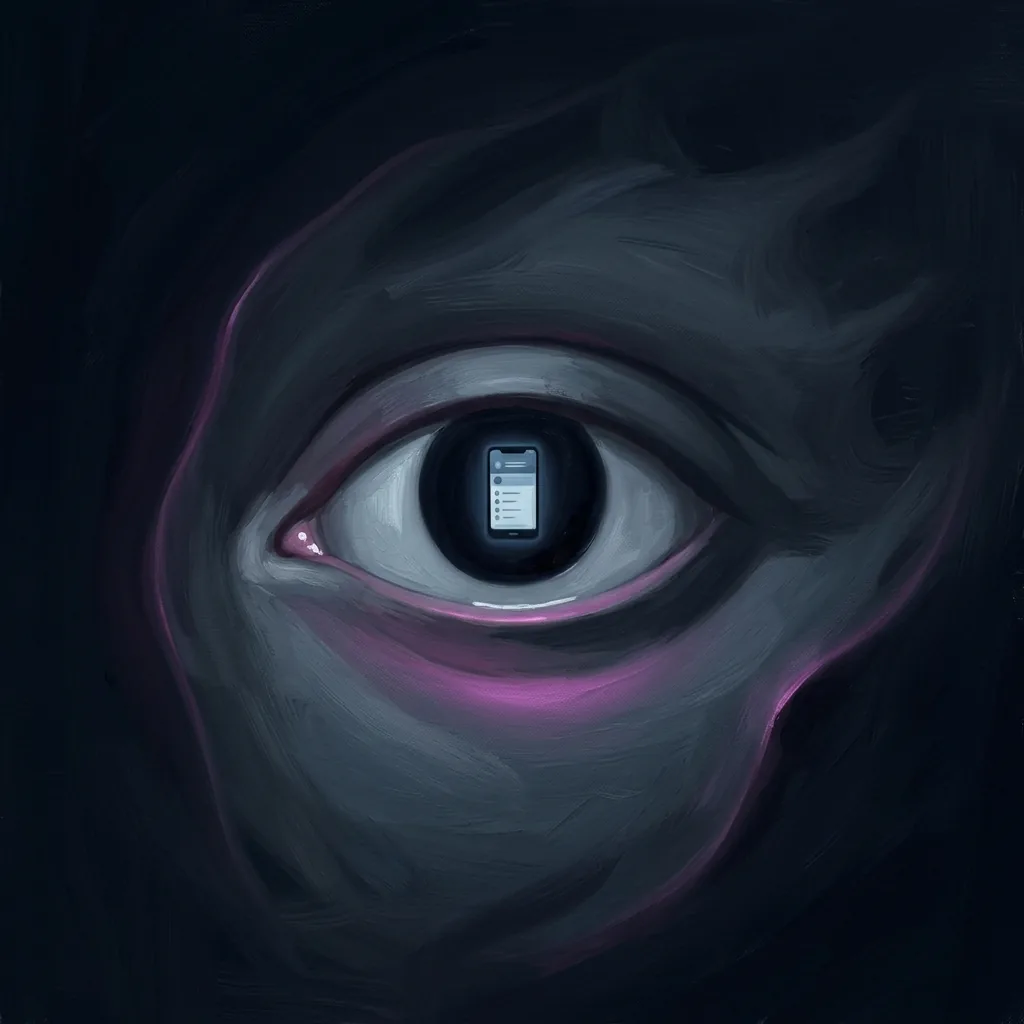
In hypnosis, one of the oldest ways to induce a trance is to narrow your attention and fix your gaze on a single spot.
Think about what you're actually doing when you scroll.
A bright screen, held close to your face. The whole room around you fading out.
The induction has already started before you've even had a thought about which content to scroll.
4. Time distortion

You know that feeling when you look up from your phone and think, where did the last hour go?
That's a sign you were in a trance.
When your unconscious takes control, you drop into a different brainwave state and lose track of time.
Think of flow states, deep meditation, or psychedelic experiences. Time collapses. It often feels like you've slipped into a different reality.
5. Future pacing

All that aspirational content. The dream lifestyle, the body, the house, the next brand or activity you'll discover, the life you wish you had.
It all invites you to step into a future version of yourself and rehearse it.
In hypnosis, we call that age progression.
Rehearsing that future feels good.
But it also leaves you a little hungry, wanting more. And that wanting is what keeps you coming back.
How do you break the phone trance?
You start by making the unconscious conscious.
Once you can name the induction, whether it's the amnesia, the confusion, the fixed gaze, the lost hour, or the rehearsed future, it loses some of its grip.
Then you give your nervous system a different state to drop into on purpose, instead of the one the feed keeps choosing for you.
That's the whole idea behind the Surreal 7-Day Mindful Phone Use Challenge with Hypnosis: to get those hours back for what actually matters, whether that's building healthier habits, starting a dream side business, or simply being more present in your life.
Continue reading
Explore the full Tap into the Power of the Unconscious pillar