




The 7-Day Mindful Phone Use Challenge
Take back control of your time and attention in 7 days.
£111 · Start today
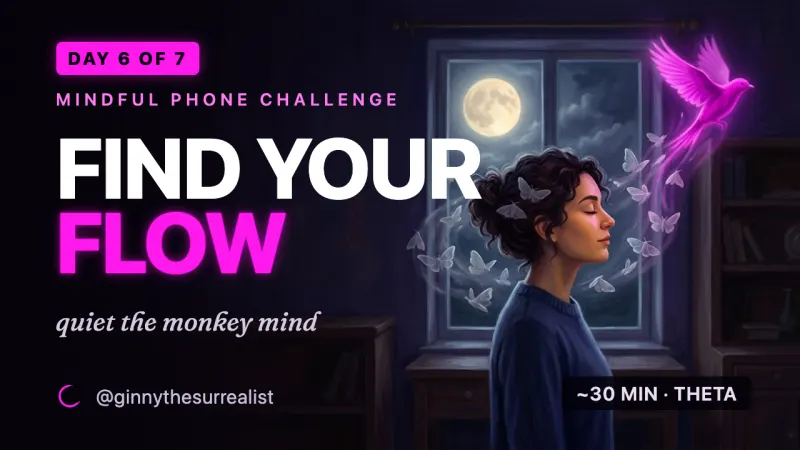
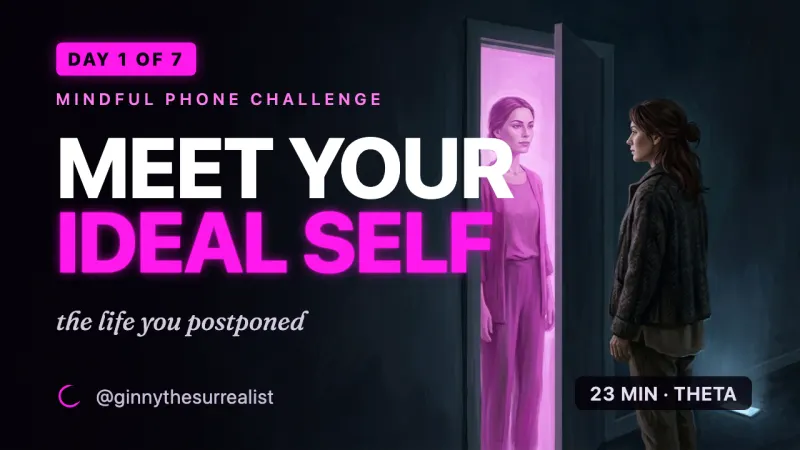

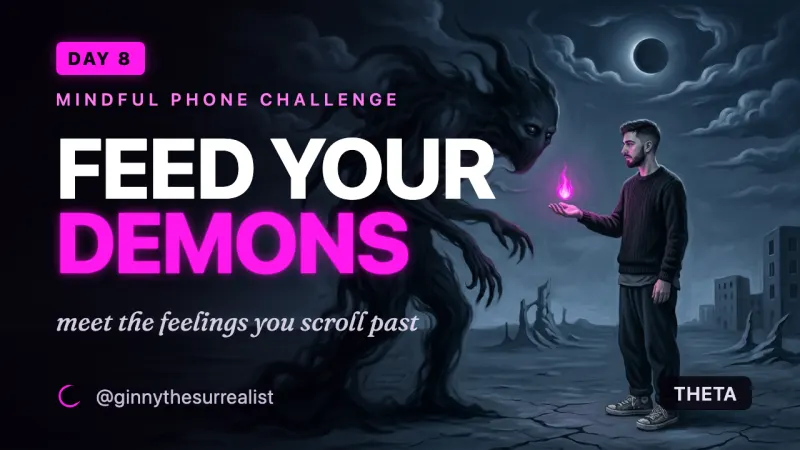
Eight hypnosis sessions · 13 prompts & exercises · yours to keep
The math no one wants to do
1 hour and 26 minutes a day of doomscrolling is
523hours per year
21.8days per year
4.5years of your life
This is the average amount of unintentional phone use every day, based on a yearlong Virgin Media O2 study of more than 6,000 people in the UK.
If you are 30 now, you will spend more than four and a half years mindlessly scrolling on your phone before you turn 82.
What could you create, build, or become if you took even half of that time back?
If any of this sounds familiar
You feel like your phone constantly consumes your focus.
You find it hard to get a positive dopamine response from anything else.
You’re tired of endless scrolling through bad news, reels, and notifications every few minutes.
You’re tired of living in constant FOMO, comparing your life to random people online.
You feel like your brain is fried, brain-dead by noon.
Your attention is hijacked.
You have to use social media for work, but you still lose hours to scrolling you never meant to do.
You want to stop waking up and immediately grabbing your phone.
You crave constant stimulation, and you can’t sit with boredom.
And it costs you more than time
Maybe you had a dream to quit the job, start the business, write the thing, make something of your own. But you keep telling yourself you don’t have time for it. And yet you spent four hours on your phone today, twenty minutes here and there, until it added up to more than three hours a week on a single app.
You open the app for one quick thing and lose the whole afternoon watching other people live their lives instead of living yours.
Your best ideas used to arrive when you were bored. You haven’t let yourself be bored in years.
Why this works when
everything else hasn’t.
Swipe the table sideways →
| This challenge | App blockers and greyscale phones | Deleting apps or using dumb phones | |
|---|---|---|---|
| Addresses the root cause | |||
| Works with your unconscious | |||
| Builds self-awareness | |||
| Sustainable after it ends | Rarely | ||
| Works without willpower | |||
| Daily time needed | 20-30 min | Constant vigilance | Cutting yourself off |
| Ongoing cost | None | Subscription | None |
The science underneath
The human brain processes 11 million bits of information per second. Your conscious mind handles 50. Your unconscious processes the remaining 10,999,950.
— Neuroscientist Manfred Zimmermann, 1986
Most solutions ask your conscious mind to overpower your unconscious one. That’s why they don’t work. This challenge goes to the source, the unconscious, where the habit actually lives, and works in its own language to change the programming running underneath.
When you reach for the phone, your conscious 50 bits think you’re just checking the time. The other 10,999,950 have already fired an old habit reflex, running on autopilot, to pull you out of a feeling you don’t want to face, whether it’s boredom, loneliness, or anxiety. That’s why you can know it’s bad for you and still do it forty times a day.
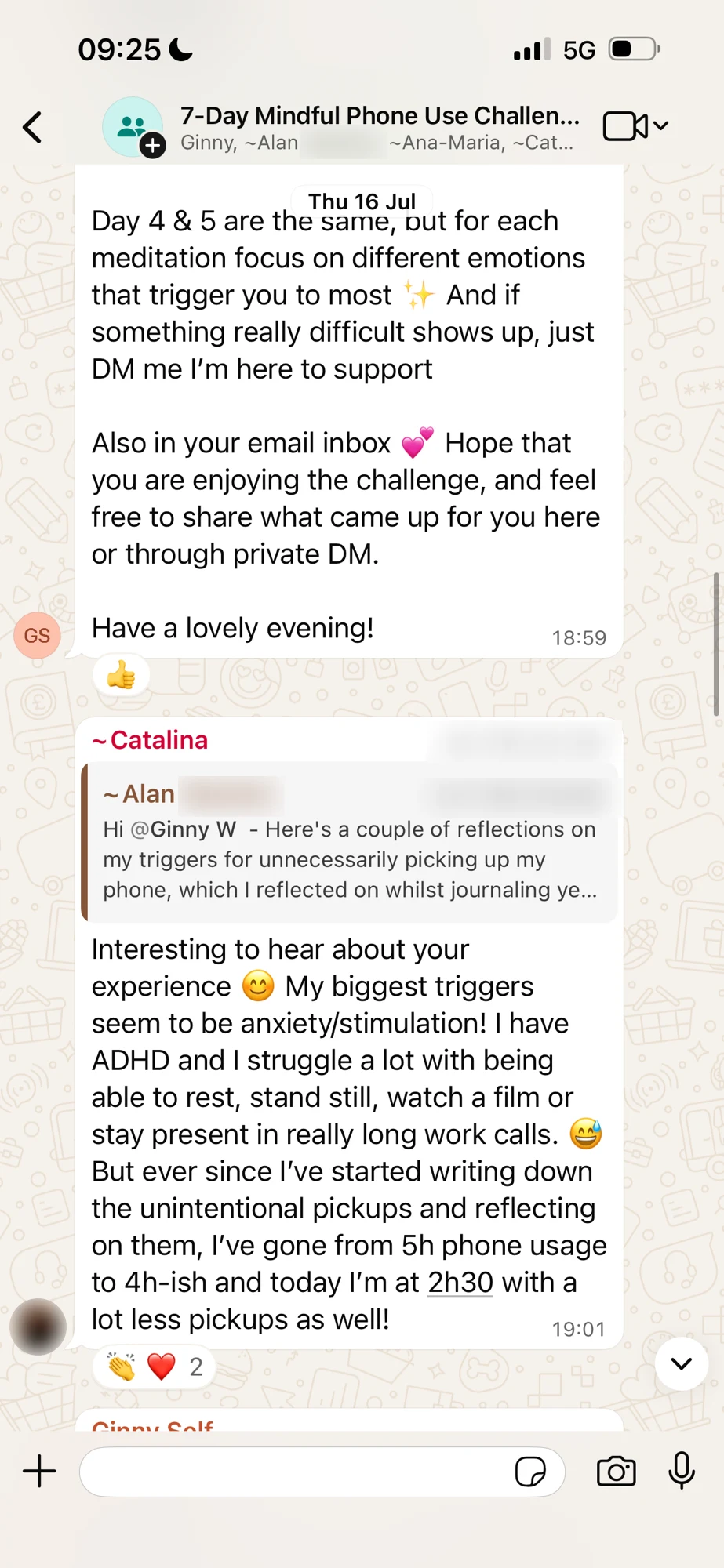
First cohort
Results from the
group chat.
Introducing
The 7-Day Mindful Phone Use Challenge.
Seven days, twenty to thirty minutes each. It all works with your unconscious, where the habit actually lives, so reaching for your phone slowly becomes a choice again.
How the
seven days go.
Day 1Meet your ideal selfFrom unintentional to intentional.
You meet the version of you who picks up the phone on purpose. Not a saint who never touches it, just someone clear about who they want to be with their attention. Your unconscious starts moving toward that image, so intentional use becomes the default rather than the exception.
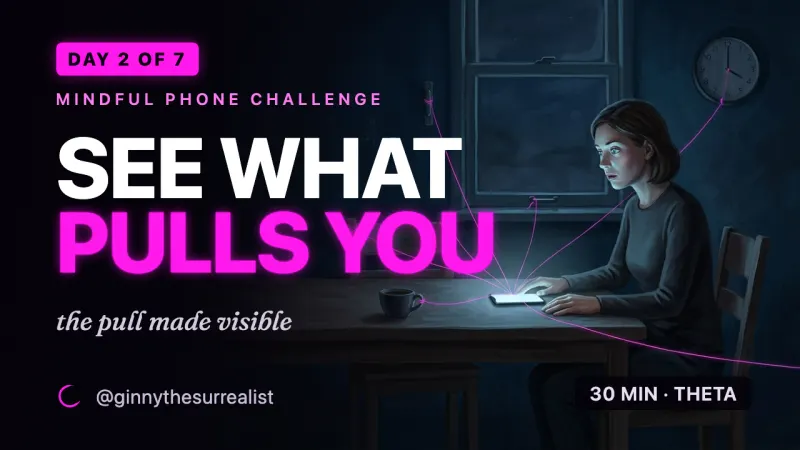 Day 2See what pulls youName your triggers, change the belief.
You map the exact moments and feelings that send you reaching, then look at the beliefs sitting underneath them. Change the belief, not just the behaviour, and the trigger starts to lose its grip.
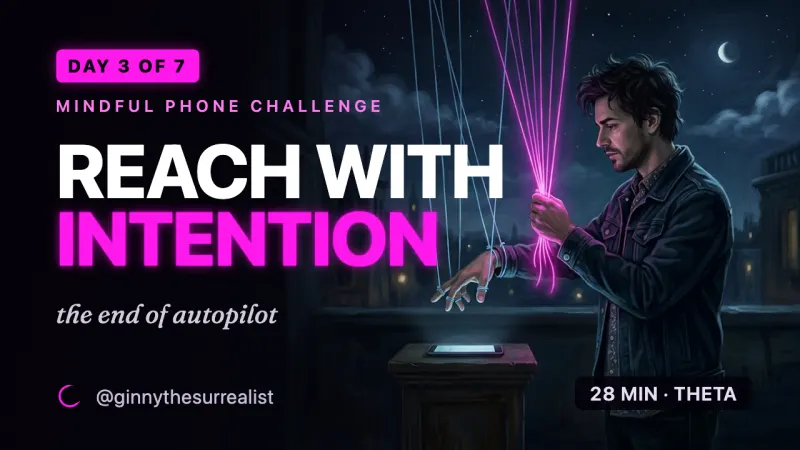 Day 3Reach with intentionIntentional, or not. That’s the question.
The whole week turns on one distinction: reaching for your phone on purpose, or reaching on autopilot. Today a pause opens between the urge and the phone, so your thumb comes off reflex and the choice comes back to you.
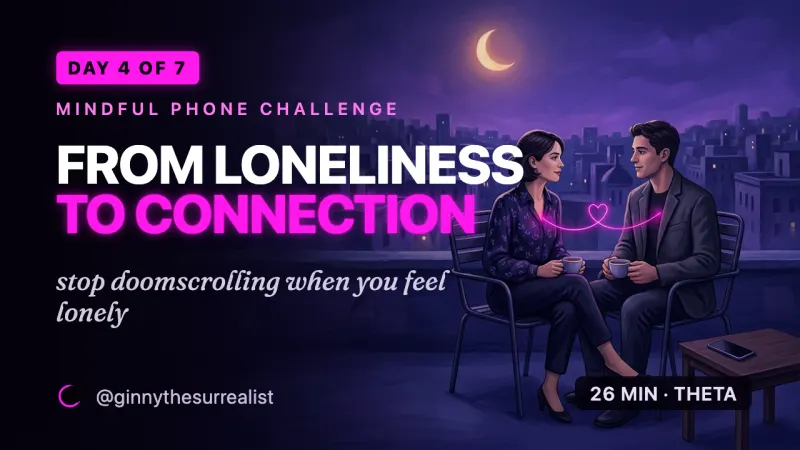 Day 4From loneliness to connectionStop scrolling for company.
Most lonely scrolling is a search for company that never arrives. Today you meet the part of you that reaches for the phone when you feel alone, thank it for trying to help, and ask the creative part of you for three real ways to feel connected instead.
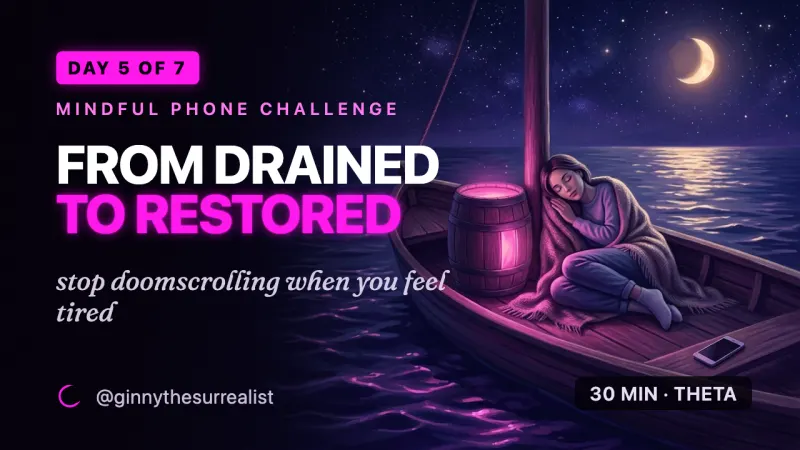 Day 5From drained to restoredReal rest instead of fake rest.
Scrolling when you are tired feels like rest and leaves you more drained. Today you meet the part of you that reaches for the phone when you are exhausted, and your unconscious finds you ways to actually rest, so tired evenings stop disappearing into the screen.
Day 6Calm the monkey mindRestlessness becomes flow.
You settle the restless, jumpy mind that reaches before you have decided anything, and learn to tell the thoughts worth acting on from the ones that just want a hit. Stillness becomes a doorway to flow instead of a reason to scroll.
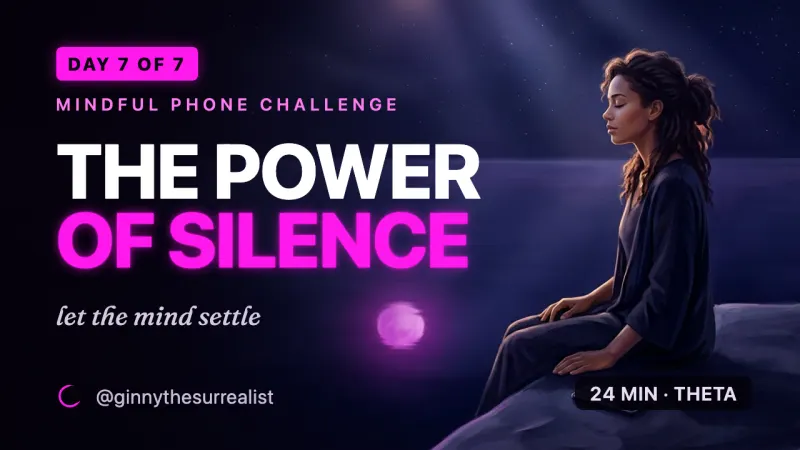 Day 7From doing to beingThe power of silence.
The finale goes underneath the whole week, to your relationship with doing. You practise being instead of filling every gap, and let the silence become the place your clearest answers arrive. You leave with a phone you pick up on purpose, and your attention back.
Bonus sessionFeed your demonsFace the feeling underneath the reach.
A bonus session to keep after the seven days. Most reaching is a way out of a feeling. Here you turn toward it instead. Using a Tibetan Buddhist technique from Tsultrim Allione’s Feeding Your Demons, you face the emotion you keep escaping, so it stops quietly running you.
What you get
Everything that arrives when you
join the challenge.
One hypnotherapy session costs around £150 to £250. This is seven of them, recorded for this exact habit, plus everything below, for £111.
The core of it
Seven daily hypnosis sessions
20 to 30 minutes a day, for seven days
Hypnosis and NLP that go to work on the reflex that reaches for your phone. All you do is put your headphones in, close your eyes, and listen. Over 210 minutes of audio, yours to keep.
Instant access · value £490 included
Bonus #1
The eighth session: Feed Your Demons
A bonus session to keep after the seven days. Most reaching is a way out of a feeling. Here you turn toward it instead, using a Tibetan Buddhist technique from Tsultrim Allione, so the feeling stops quietly running you.
Instant access · value £70 free
Bonus #2
The 13 daily prompts & exercises
Eight journaling prompts and five practical exercises, one or two a day alongside the audio, to notice when and why you reach for your phone. That self-awareness is what loosens the pull, so you start catching it before it takes over.
Instant access · value £19 free
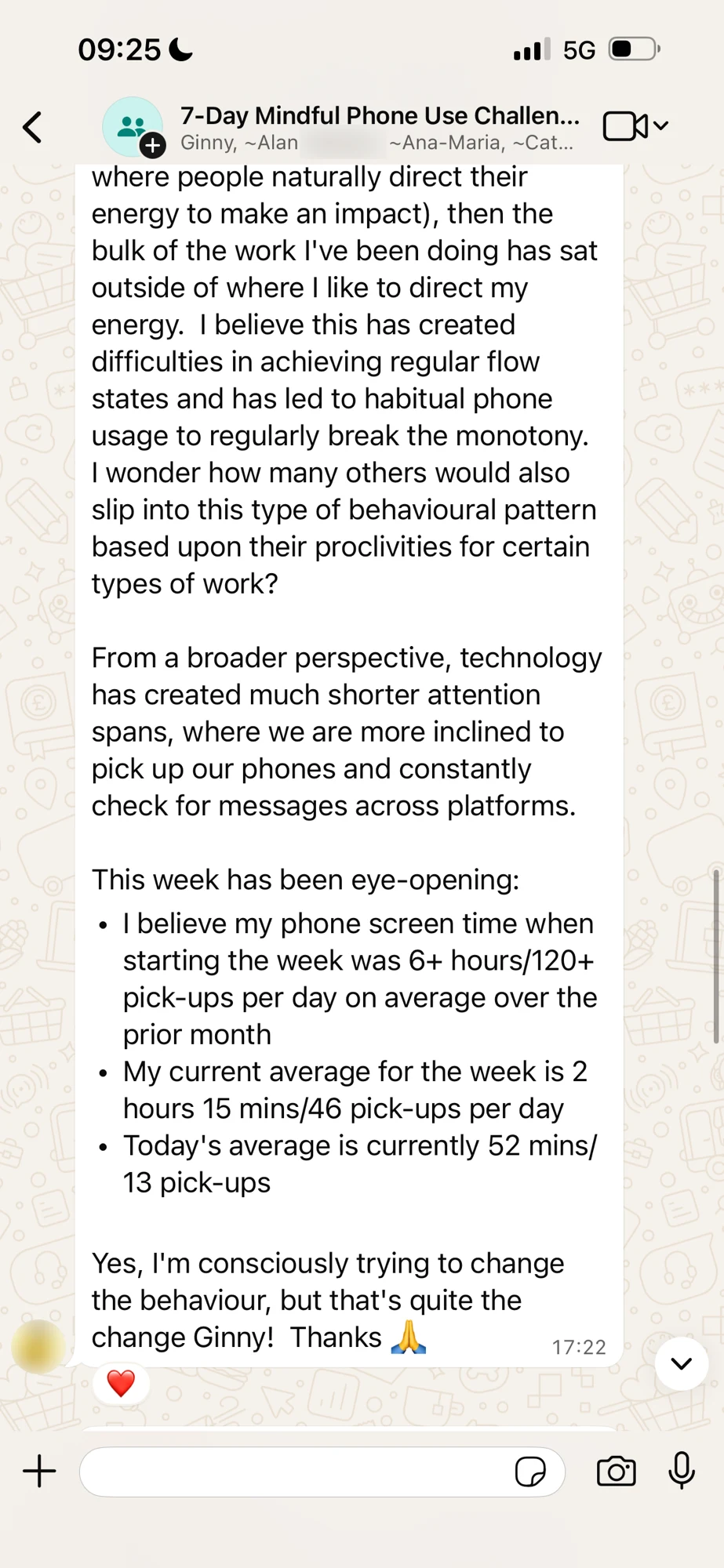
Alan N.
My current average for the week is 2 hours 15 mins/46 pick-ups per day […] that’s quite the change Ginny! Thanks 🙏17:22
Catalina
I’ve gone from 5h phone usage to 4h-ish and today I’m at 2h30 with a lot less pickups as well!19:01
Bonus #3
The WhatsApp accountability group
A private group to share the wins and the wobbles with other people doing the seven days alongside you. It is a lot harder to drop off when others are doing it with you. Joining is optional.
Instant access · value £15 free
Bonus #4
The relapse protocol
At some point you will have a bad week and find yourself three hours deep again. That is normal, and it is not the challenge failing. This is the sheet you open on that day, with a pocket card to cut out and keep.
Instant access · value £12 free
Bonus #5
The screen time scorecard
Fill in the baseline before Day 1, then one row a day. At the end you have the actual number instead of a feeling about it. The unintentional hours are the ones we are after, not the total.
Instant access · value £9 free
Bonus #6
Keep every session, for good
Nothing expires and nothing bills you later. All eight sessions stay yours, so you can run the whole week again whenever the scroll starts creeping back, or go straight to the one day you need.
Instant access · value £20 free
Eight hypnosis audio sessions · 210+ minutes
£111 · One payment · Instant access

Why I made this
Hi, I’m Ginny Wan.
I’ve tried everything you have: the app blockers, the phone-addiction apps, leaving my phone in another room, even a dumb phone for a while. Each method lasted a few days, maybe a week, then the old habit found its way back in.
What finally shifted was when I reprogrammed my habit in altered states. I’ve spent the last decade, and thousands of hours in trance, working out how the unconscious installs a habit and how to change it there. Willpower never lasted. What worked was hypnosis, in the theta brainwave state, because that’s where the unconscious actually lives.
In the last few years, through working with more than 4,300 creative entrepreneurs on growing their businesses, their marketing, and their blocks, I kept seeing the same thing: so much of what holds them back runs below conscious awareness. When someone tells me they don’t have time, more often than not they’re losing hours to doomscrolling without ever quite choosing to, and those habits are almost entirely unconscious.
Creatives often think what’s blocking them is not having enough knowledge, time, or money to invest in the business. Most often it’s unconscious fears: fear of being criticised, fear of visibility, a scarcity mindset, fear of failure, and so on. That’s what led me to start Surreal Experiments, to help people break the unconscious patterns in their way and build a life that’s actually aligned with them, with more flow, meaning, and fulfilment.
This challenge is that work, in seven days, aimed at the one habit almost everyone I meet is a little ashamed of.
Studied
BA Philosophy, UCL. MSc Management, London Business School.
Trained
NLP and hypnotherapy under some of the world’s top hypnotherapists: Richard Bandler, Paul McKenna and Stephen Brooks.
Recognised
Watkins’ Mind Body Spirit. Guest lecturer at UCL and Sotheby’s Institute of Art.
This is an example of
a session.
Reviews
What our customers say
about our products.
Scroll for more
Read 32 5-star reviews on Trustpilot↗Why join
What changes when you get
your attention back.
Hours back for your dream life
The target: reclaim 2+ hours a day. That’s 14 hours a week to pour into the work you care about, the people you love, and the life you keep meaning to build.
A calmer nervous system
You start to catch the craving as it rises instead of just obeying it, and you learn to sit with the feeling underneath, boredom, restlessness, anxiety, rather than reaching for the phone to escape it.
Access to deep states of flow
Boredom stops being an emergency. It becomes the doorway to flow.
Tools that last beyond the week
What you learn here stays with you after the seven days. Once you know how to catch and change one automatic habit, you can use the same skill on any other one you’ve been trying to shift.
No shame here
Your phone habit isn’t a weakness. It started as a way to cope with stress, boredom, or hard feelings, and we work with that gently, at the root, instead of shaming you out of it.
Made for how the mind actually works
Each session guides you into a hypnotic, meditative state and works through story, imagery, and sensation, the language your unconscious actually responds to.
This is what you
finally reclaim.
Frequently avoided questions
The questions you’re
already asking.
How much does it cost?+
Is this therapy?+
Does hypnosis actually work, or will I be “under” and clucking like a chicken?+
I’ve tried everything. Why would this be different?+
Do I have to give up my phone?+
What if I need my phone for work, like getting inspiration?+
Who is this for?+
How would the content be delivered?+
What if I don’t have WhatsApp?+
How much time does it take?+
Is there a particular time of day you recommend, for best results?+
Is there a set journaling prompt, or do I just write on whatever comes up?+
What if I don’t have time to do everything?+
What if I miss a day?+
Who is this NOT for?+
What if I’m too sceptical for this?+
Seven days.
£111.
One payment, and the whole week is yours.
Secure checkout by Stripe.
£111 · 7 days · Instant access
go on, check your screen time first. i’ll wait.
This challenge is for education and self-discovery. It is not a substitute for professional medical or psychological advice, diagnosis, or treatment. Hypnosis audio is for relaxation and habit change. Do not listen while driving or operating machinery.
Created by Ginny Wan with Love 💜
Follow us