
The Anger I didn't know I had
Anger doesn't disappear when you suppress it. It stores in the body. A first-person account of finding suppressed anger and the workshop that released it.
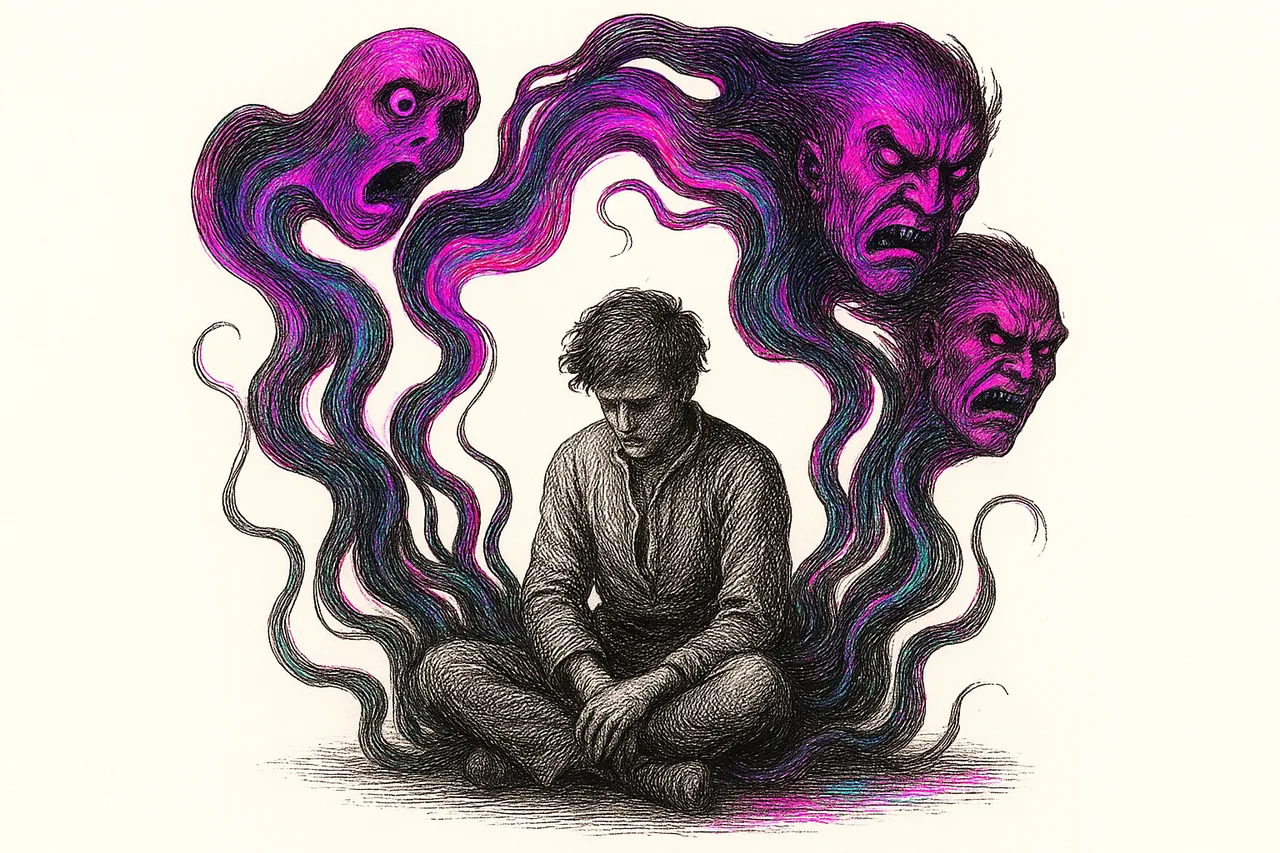
⚠️ Trigger warning. This article contains emotionally intense descriptions of childhood abuse and trauma recall. It also mentions a personal experience with plant medicine (ayahuasca). This is a personal story, not medical advice. If you have a history of abuse, trauma, or PTSD, please check in with yourself and prioritise your emotional safety before reading further.
Repressed anger doesn't go away when you stop feeling it. It moves in. It takes a room in your body, and it stays there until something finally asks it to leave.
This is the story of how I found mine, where it had been hiding, and what released it.
"Are you an angry person?"
My Chinese doctor asks me while her fingers read my pulse and her eyes read my body.
"Liver qi stagnation," she says. The words land softly but with absolute certainty. She tells me I have stored anger in my liver, years of it, suppressed and swelling. She points out that the right side of my body is enlarged, which caused my spine to curve.
"Your liver," she says, "is storing all the things you've been fed that you never meant to swallow."
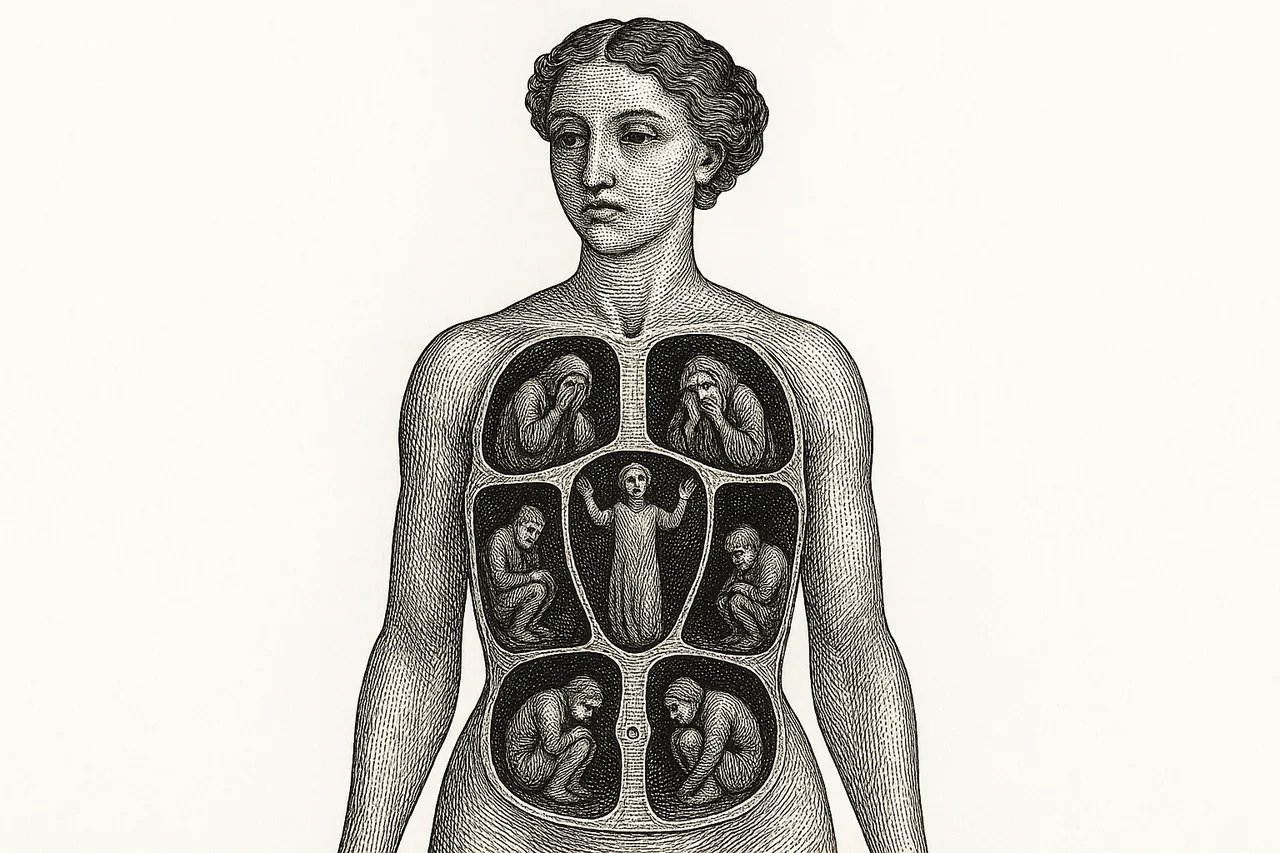
In Chinese medicine, every organ is a house for an emotion.
The liver holds anger. The lungs carry sadness and grief. The spleen holds worry; the heart, joy; the kidneys, fear.
If you suppress any of these, they take up residence in the rooms of your body.
If you don't release them, they slowly develop into disease, chronic and insistent, the body keeping its own ledger.
I sought out opinions the way people do when they suspect the truth but don't want to carry the weight of believing it alone.
A second voice. A third.
When two voices, then three, say the same thing, you know it is time to dig deeper.
Next, I found a Spinal Energetics practitioner.
It's a somatic technique developed by Dr. Sarah Jane, which I'd stumbled upon during one of those late-night Instagram scrolls where you fall down a rabbit hole.
I watched video after video of people on tables, their bodies convulsing, shaking, releasing something they couldn't name. The practitioner barely touched them, yet they lay there while their bodies did the unblocking for them.
I had to experience it for myself.
The practitioner looked at my spine the way you might look at a book written in a language you happen to speak fluently. "Liver," she said, almost immediately. "You're storing anger there. Look at how the right side of your body sits higher than the left."
An echo of my Chinese doctor.
Signs of repressed anger
But angry? Me?
I turned the word over in my mind like a strange coin I'd found in my pocket.
Day-to-day, I wasn't the angry type. Not consciously, anyway.
Sure, I'd snap occasionally at employees when standards slipped, or at ex-boyfriends when they became emotionally distant. But I categorised that as frustration, the kind everyone feels when reality refuses to cooperate with expectation.
I tried to trace it back through my childhood and adolescence, but nothing came.
When an emotion gets buried that deep, it doesn't wait around in your conscious mind hoping you'll notice it.
It hides. It lives in the tissue of your organs, in the tilt of your shoulder.
Talk therapy can't touch it because you can't talk about what you don't remember.
You can't name what you've spent decades training yourself not to feel.
But the anger eventually came. It arrived like a storm, twice. And neither time looked the way I thought it would.
The first wave: the East London anger workshop
The first time was when I signed up for an all-women's anger somatic release workshop in East London.
It was held in a yoga studio with hardwood floors and too many plants.
The facilitators, two women with the kind of calm that comes from having screamed their way through their own demons, taught us that anger is a messenger.
They explained that women, especially, learn to swallow it whole because the world punishes us for the sound of our rage.
Then they handed us pillows.
"Embody the anger," they said. "Hit something. Scream. Use your voice the way you did before you learned to make yourself small." If there was a memory of anger we wanted to engage with, we were told to start there. If not, start with the body and see what surfaced.
I thought about my boyfriend at the time.
God, I was furious with him then.
He was emotionally unavailable in that specific way some men perfect: hiding his needs, blaming me for not magically intuiting them, expecting me to be both mind reader and emotional manager.
I was critical and cold in return, my own needs unmet, tangled in the exhausting work of being misunderstood.
The facilitators started drumming.
The sound pulled us into a threshold space where the ordinary world thins. The circle of women began to move, to hit, to scream. There is something about collective rage, an ancient frequency we have all forgotten we know how to hear.
But when the memories came, they weren't about him at all.
They were about my mother.
The memories flooded in: weekly, sometimes daily abuse between the ages of eight and fourteen.
She would pick flaws, real or imagined, it didn't matter, and use them to justify what came next.
Living with her meant walking on eggshells that never stopped cracking. A bath towel hung wrong, homework completed in the wrong order, small things that became reasons, then excuses, for physical and mental violence.
As her mental illness worsened, she started hallucinating about my "crimes." She would scream that I was watching television when I was writing an essay, and she wouldn't stop until I cried.
It was as if my tears were the proof she needed that she'd been right all along.
And my father, the silent witness to all of it. His nonchalance felt like its own kind of violence. His negligence was a second abandonment.
In that yoga studio, with the drums pounding and women screaming into pillows, the dam broke.
The anger I'd suppressed for decades rose up.
I cried and screamed until my throat felt raw.
The feeling was so massive I wasn't sure my body could hold it; it felt like I was going to crack open, split apart from the inside.
And here is the complicated part: I didn't hate my parents anymore.
I understood how my mother became who she was.
I knew about the ancestral trauma, how my grandmother had treated her far worse. She had no model for motherhood, just the unconscious reenactment of what had been done to her.
I could forgive them with my mind. I'd done the work, read the books, understood the psychology.
But my body? My body hadn't forgiven a goddamn thing.
My body kept its own accounts, stored its own evidence in my liver and my spine. Intellectual understanding didn't dissolve the pain; it just made me aware of how much I was still carrying.
The second wave: ayahuasca and the compassionate frame
The second time the anger came was on ayahuasca this year.
Deep in an altered state of consciousness, I tried to tap into that anger again. But it didn't arrive as rage. And it wasn't just mine.
I saw my mother as a child in Communist China.
Poverty wasn't just present, it was everywhere, thick as air, inescapable.
My grandparents spent six hours commuting each day just to survive.
There were no presents, no tenderness. She never received love, just the bare minimum required for existence.
I saw my father, too. The second-youngest in a family of eight.
His mother won a state award, "Mother Heroine," for producing the most children in their region.
But being one of so many meant invisibility.
There was never enough attention or love, just the crushing knowledge that there were too many of them for anyone to be seen clearly.
I wept, but not from anger. I wept because I felt their sadness as children. Their loneliness of being small and unwitnessed.
They hurt me unconsciously. Inevitably. Because they'd never learned how to give the kind of love I actually needed.
They gave me the love they thought I needed: what they'd lacked growing up. Best schools. Gifts. Clothes. Material comfort. More attention than they'd ever received.
But they couldn't give me the love I actually needed because they'd never learned to love themselves. They'd never received enough, and they lacked it desperately. You can't give what you were never taught. Can't offer what you never received.
They loved me in the only ways they knew how.
What anger really was
When I felt their sadness, really felt it, in my body, not just understood it intellectually, my anger disappeared overnight.
In that altered state, I found the child I used to be.
I used NLP techniques to re-parent her.
I rewrote the story she'd been telling herself about being unlovable, about deserving the pain.
I showed her why her parents acted that way, not to justify it, but to help her understand she had never been the problem.
When I came back, the anger was gone, transformed into love and gratitude. It was the complicated kind of gratitude that holds both truth and forgiveness without needing them to cancel each other out.
I finally saw the anger for what it really was: a defence mechanism. It was a wall I'd built to keep my heart safe from being broken by the people who were supposed to protect it. It was a victim story I'd needed to feel entitled to my distance, to not feel love.
Once I really saw the wall, I could finally take it down.
How to release repressed anger (without plant medicine)
I know what some of you are thinking. "Ginny, you had a breakthrough on the world's most powerful psychedelic. I'm just sitting at home in my ordinary state of consciousness."
You're right.
The plant medicine gave me the vision. But it didn't give me the daily practice.
I needed a way to access that state, where I could see my anger not as "me," but as a protector trying to keep me safe, without substance.
In the Tibetan tradition, they call these defence mechanisms Inner Demons. And they don't believe in fighting them. They believe in feeding them.
I adapted a 6-step protocol from Tibetan and shamanic traditions that lets you engage with any emotion or fear without plant medicine.
It's how I work with my own inner demons on a Saturday afternoon.
It's intense, surprisingly fun when done well, and it works.
→ Read the full protocol: Feeding Your Demons
FAQ
What is repressed anger?
Repressed anger is anger that was felt but never expressed, usually because expression wasn't safe. Children of abusive, controlling, or emotionally volatile environments learn to swallow it whole. The body stores what the conscious mind can't process. Years later it shows up as illness, addiction, chronic tension, or sudden flares of rage at people who don't deserve them.
What are the signs of repressed anger?
Signs of repressed anger include chronic tension (often one-sided), disproportionate irritation at small things, a short fuse with loved ones but calm with strangers, numbness in situations that should provoke reaction, recurring physical symptoms in the liver/jaw/neck/shoulders, and feeling "fine" but exhausted underneath. The classic tell is that you don't feel angry consciously, but your body keeps acting as if it is.
Where is anger stored in the body?
In Traditional Chinese Medicine, the liver is the primary organ associated with anger storage. In somatic-trauma frameworks (Bessel van der Kolk, Peter Levine), unexpressed anger commonly stores in the jaw, throat, shoulders, and right side of the body. Both frameworks describe the same phenomenon: emotion that wasn't safe to express becomes physical.
Can repressed anger cause physical illness?
Both Eastern and Western traditions say yes. TCM links chronic liver qi stagnation to migraines, digestive issues, hormonal disruption, and depression. Western somatic research links unprocessed emotion to chronic pain, autoimmune flares, and tension-related illness. The mechanism (cortisol dysregulation, sustained sympathetic nervous system activation) is increasingly well-evidenced.
How do you release repressed anger safely?
Slowly, and ideally with support. Somatic methods (anger release workshops, embodied movement, Spinal Energetics, breathwork) tend to reach what talk therapy can't. Internal Family Systems and depth psychology offer cognitive frameworks. Combining both is more effective than either alone. If your repressed anger is rooted in serious trauma, work with a trauma-informed therapist.
Is it dangerous to release repressed anger?
For most people, no, appropriately held release is therapeutic. But if you have severe trauma history, dissociation, active psychosis, or are currently in crisis, intense release work without professional support can be destabilising.
Continue the work
- Shadow Work & Self Discovery, the broader pillar this sits inside.
- Feeding Your Demons, the embodied 6-step protocol referenced above.
- Tap into the Power of the Unconscious, for understanding how emotions get filed away in the first place.
With lots of love,
Ginny
Continue reading
Explore the full Shadow Work: Discover Your Hidden Self pillarRelated
Read next
Shadow Work: Discover Your Hidden Self
Shadow Work Prompts: 50 Questions to Surface What You've Been Avoiding
Fifty shadow work prompts in eight themes (family, anger, envy, money, desire, intimacy, mortality) to surface what you've been avoiding.
Shadow Work: Discover Your Hidden Self
Feeding Your Demons: A Trauma Release Exercise From Tibetan Chöd
A 6-step embodied protocol for processing the parts of yourself you've been avoiding. From Tibetan Chöd, IFS, and 5Rhythms. Includes safety notes.