
Tap into the Power of the Unconscious
Why you can’t put your phone down: the neuroscience of phone and social media addiction
Your phone and social media run on four mechanisms your willpower was never built to fight. Here is how the habit works, and why blockers, greyscale and deleting the apps keep failing.
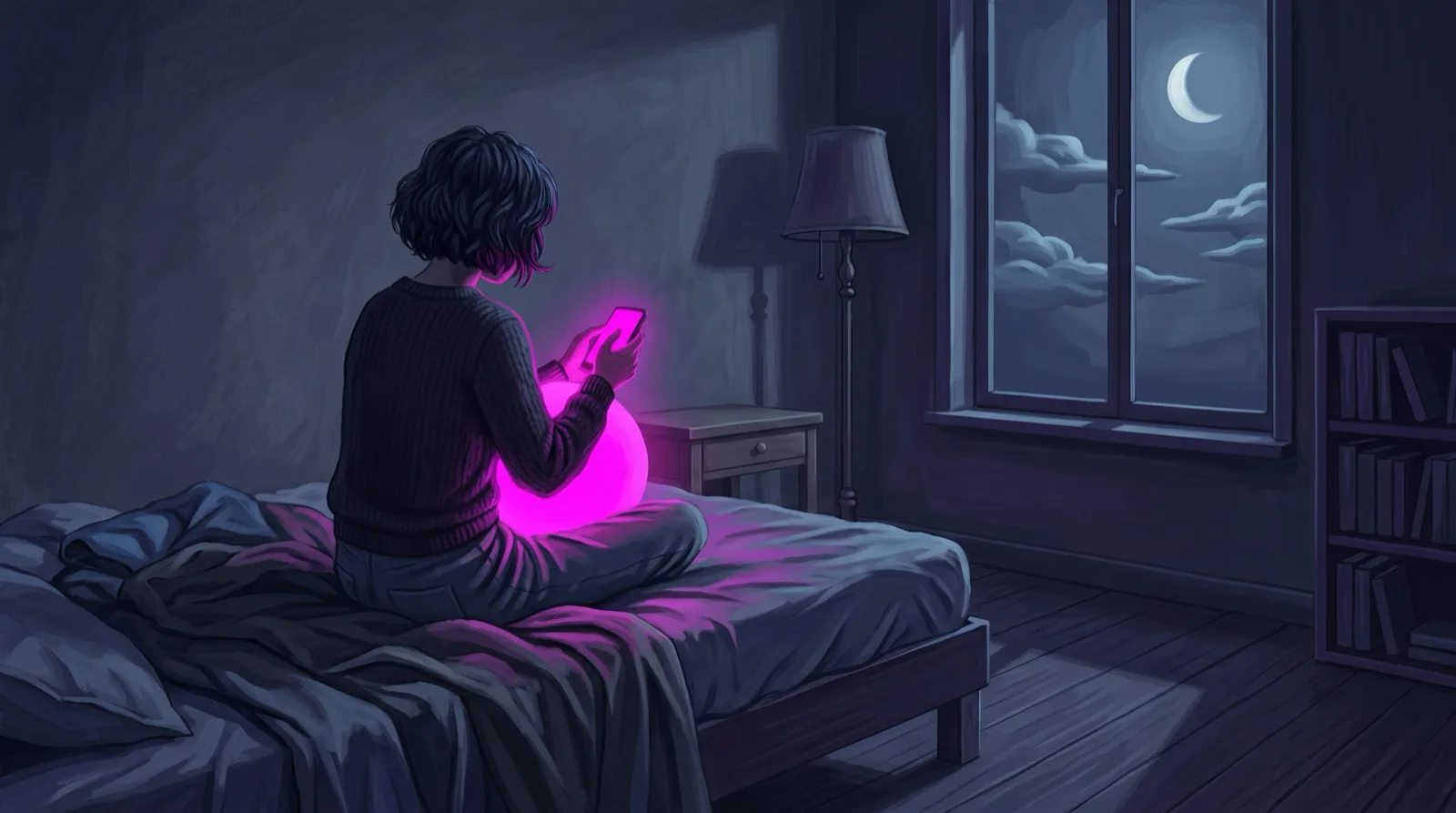
You pick up your phone to check the time.
Twenty minutes later you’re watching a stranger make focaccia, and you have no memory of deciding to.
The University of Cambridge, sponsored by Virgin Media, tracked the phone screen time of over 6,000 UK adults across a year.
The average adult spends 4 hours a day on their phone. More than a third of that, around 1 hour and 26 minutes a day, is unintentional.
Over a lifetime, that adds up to 4 years and 8 months of staring at a screen without any specific goal or intent. A.k.a. doomscrolling.
You consciously know it’s not good for you, but you can’t stop.
As a hypnotherapist, I can tell you this was never a willpower problem.
Here are four ways your phone and social media apps are designed to keep you addicted and hypnotised.
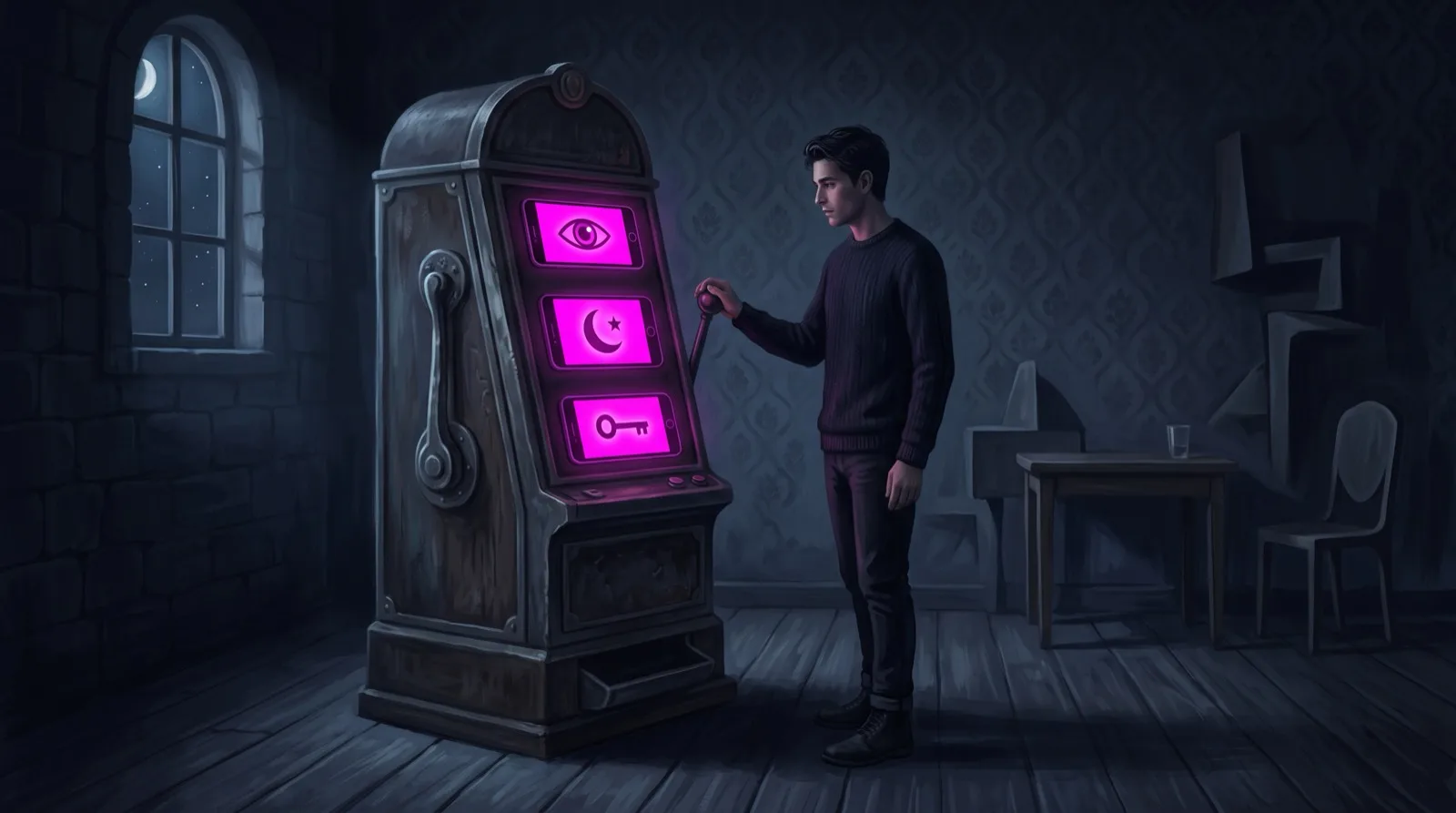
1. Your phone and social media apps are designed as a slot machine
In the 1950s, the psychologist B. F. Skinner discovered something strange.
When the lever gave food every single time, the animal learned quickly to pull the lever to get food.
When the food came randomly, sometimes after three presses, sometimes after twenty, the animal became persistent and compulsive about pressing the lever.
He called it variable-ratio reinforcement. It’s the most habit-forming reward schedule ever documented, and it’s the schedule slot machines run on.
It’s also the schedule your phone and your social media feed run on.
Sometimes you reach for your phone to check a message, a like, comment, or reply. There’s something exciting.
Sometimes, there’s nothing.
Your phone and your social media apps become a slot machine designed to keep you addicted.
2. Your brain rewards you for anticipation of the reward rather than the reward itself
Most of us assume dopamine is the pleasure chemical. It is closer to a wanting chemical.
Kent Berridge at the University of Michigan spent years separating wanting from liking. Animals with their dopamine stripped out still enjoyed sugar when it was placed in their mouths. They simply stopped wanting it.
Wanting and liking run on separate systems, and your phone has hooked into the wanting one.
The neuroscientist Wolfram Schultz showed when that wanting fires hardest. It fires in anticipation of an uncertain reward rather than when the reward arrives, and it peaks when the odds are about fifty-fifty.
Fifty-fifty is roughly what your social media feed and your phone give you. Sometimes there is something exciting waiting. Sometimes there is nothing.
Wanting and anticipating something exciting showing up on your social media feed or your phone is what fires the dopamine, rather than using the phone itself.
3. You are already hypnotised before you open that social media app

You know that feeling when you look up from your phone and think, where did the last hour go? That’s a sign you were in a trance.
In hypnosis, one of the ways to induce a trance is to narrow your attention and fix your gaze on a single spot.
Think about what you’re actually doing when you scroll. A bright screen, held close to your face. The whole room around you fading out.
The induction has already started before you’ve even had a thought about which content to scroll.
The conscious mind can only hold a small amount of information at once, and it keeps only what feels most relevant.
That’s why our phone numbers are built around the magical number, seven plus or minus two: the upper limit of what the conscious mind can comfortably retain.
And when fresh, unrelated content floods your brain every few seconds, one video about creativity, the next about a cute dog, the next about seven signs someone is a narcissist, it becomes too much for the conscious mind to process.
When the conscious mind gets overwhelmed, the unconscious mind starts to take over.
That’s why you unconsciously keep doomscrolling without being able to stop.
I’ve broken down all five hypnotic techniques social media borrows in How social media hypnotises you. The short version: you’re scrolling in a trance, and no one ever taught you how to come out of one.
4. Your phone or social media addiction is an unconscious habit
Bits of information processed by the human brain every second
0
The human brain processes 11 million bits of information per second. Your conscious mind handles 50. Your unconscious processes the remaining 10,999,950.
Neuroscientist Manfred Zimmermann, 1986
When you reach for the phone, your conscious 50 bits think you’re just checking the time. The other 10,999,950 have already fired an old habit reflex, running on autopilot, to pull you out of a feeling you don’t want to face, whether it’s boredom, loneliness, or anxiety.
That’s why you can know it’s bad for you and still do it forty times a day.
That’s why conscious willpower only works for a while, and then the old unconscious habit creeps back in.
How does the unconscious habit form?
Neuroscientists at MIT, led by Ann Graybiel, found that if you repeat a sequence of actions enough times, the brain chunks it into the basal ganglia, the structure that runs your routines without conscious oversight.
The habit loop
And underneath the reflex, there’s a feeling. Each reach is doing a job: soothing boredom, escaping loneliness, postponing the email you’re dreading.
Once you repeat a habit unconsciously for long enough, it becomes automatic. Whenever you feel bored, tired, or understimulated, you are already unconsciously reaching for the phone.
You’ve tried to quit. None of it lasted.
You’ve set screen-time limits, but you find a way around them within a week.
You’ve deleted the apps, but you reinstall them a few days later.
You’ve put your phone on greyscale, but you switch it back to colour after a while.
You’ve switched to a dumb phone, but you always end up back on the old one.
You’ve deleted Instagram and Twitter, but now you just scroll Reddit all day instead.
None of these failed because you didn’t try hard enough. They failed for the same reason.
Most solutions ask your conscious mind to overpower your unconscious one. That’s why they don’t work.
You don’t need willpower or discipline to override an unconscious behaviour when under hypnosis, because you are directly accessing the unconscious mind.
Willpower belongs to the conscious 50 bits. The craving comes from underneath it, an automatic habit loop that conscious willpower struggles to override.
And because the feeling underneath still needs handling, the habit just migrates. Block one app, and the same reflex finds another.
Swipe the table sideways →
| App blockers and greyscale | Deleting apps or dumb phones | Working with the unconscious | |
|---|---|---|---|
| Addresses the root cause | |||
| Works with your unconscious | |||
| Builds self-awareness | |||
| Sustainable after it ends | Rarely | ||
| Works without willpower | |||
| Daily time needed | Constant vigilance | Cutting yourself off | 20-30 min |
| Ongoing cost | Subscription | None | None |
How do you break the phone trance?
You start by making the unconscious conscious.
Most reaching starts with a feeling. Boredom, stress, loneliness, being tired, or something you would rather not sit with. Once you can catch which one is running, you can see the reach coming before your hand moves.
Then you give that trigger somewhere else to go. You install a healthier pattern in its place, so the feeling still arrives but the phone stops being the automatic answer to it.
One of the fastest ways to reprogram your habit is under hypnosis, when your brain is naturally in an altered state of consciousness and the brainwave state of Theta. In that state, you are directly interacting with your unconscious mind.
That’s the whole idea behind the 7-Day Mindful Phone Use Challenge. It goes to the source, the unconscious, where the habit actually lives, and works in its own language to change the programming running underneath.
Each day for seven days, you get a guided hypnosis session and one short exercise. Twenty to thirty minutes in total, plus a bonus eighth session to keep.
By the end, the phone starts to become something you pick up on purpose.