How to Use Jungian Active Imagination to Solve Business Problems
Carl Jung built a method for talking to the unconscious in metaphor. I used it to ask what my business actually looked like, and the answer changed how I ran it. A practical exercise for founders who want to see what their unconscious knows about their business.
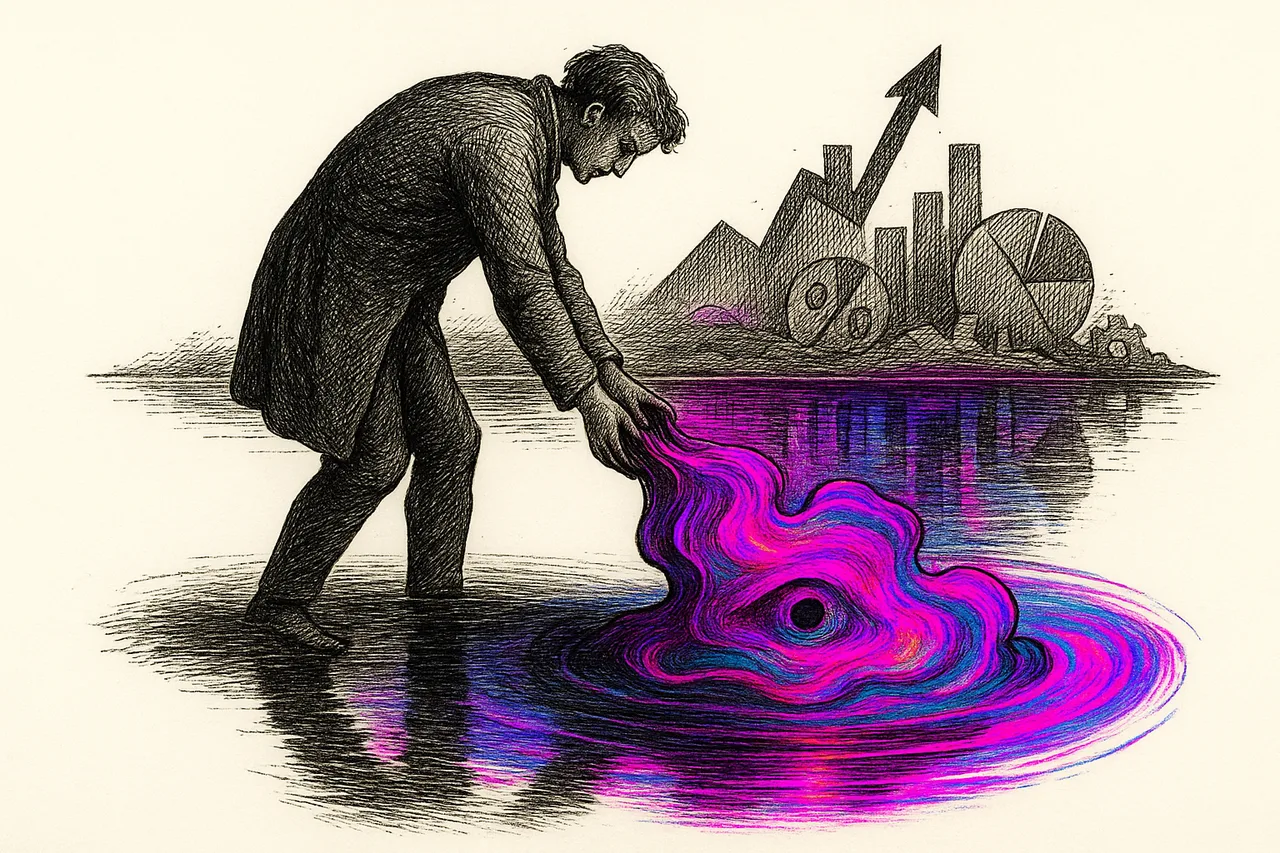
The unconscious doesn't speak in arguments. It speaks in metaphors, symbols, and stories that bypass logic and go straight to truth.
This is the practice Carl Jung used to navigate his "confrontation with the unconscious" between 1914 and 1930, and the practice you can use to map any area of your life or business that feels stuck. It's called active imagination.
What is active imagination?
Active imagination is a Jungian technique for entering an altered state of consciousness where stories from the unconscious surface and can be dialogued with. It is a deliberate, attentive practice of letting the unconscious surface its messages for us.
The map my unconscious drew for me
"If your current business were a garden, what would it look like?"
An image appeared: a small, cosy garden on the coast of Capri.
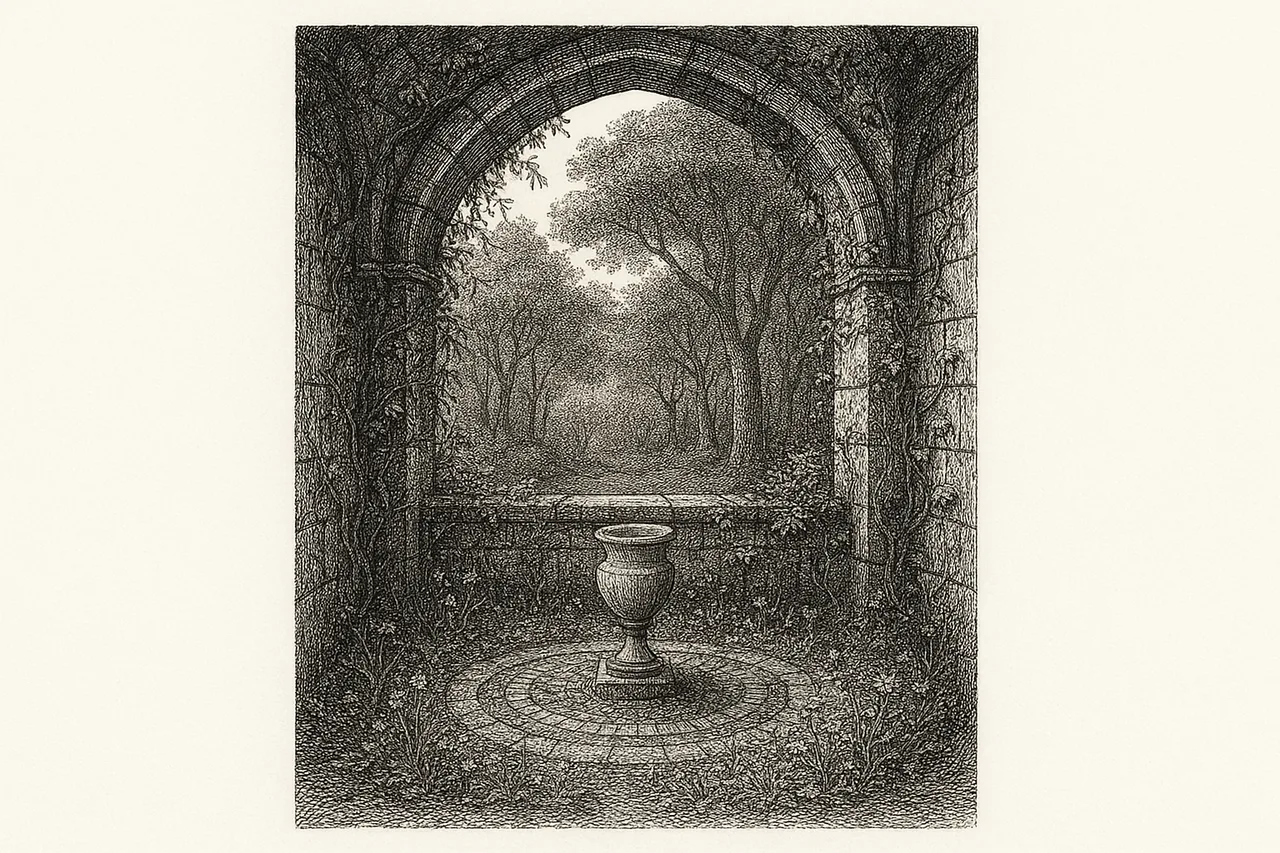
A beautiful undiscovered gem, but with dusty sculptures hidden behind overgrown vines. Small flowers bloomed here and there, tangled, half-hidden, almost forgotten.
I didn't consciously think this garden up. It just appeared.
The dust? My fear of being seen.
The few flowers? The habit of shrinking myself.
The overgrown vines? A lack of structure and support.
The gifts I was offering to the world were there, but obscured, unpruned, invisible. I hadn't been tending to them.
Then I imagined my ideal garden.
A new image emerged: the formal French gardens at Château de Vaux-le-Vicomte, just outside Paris.
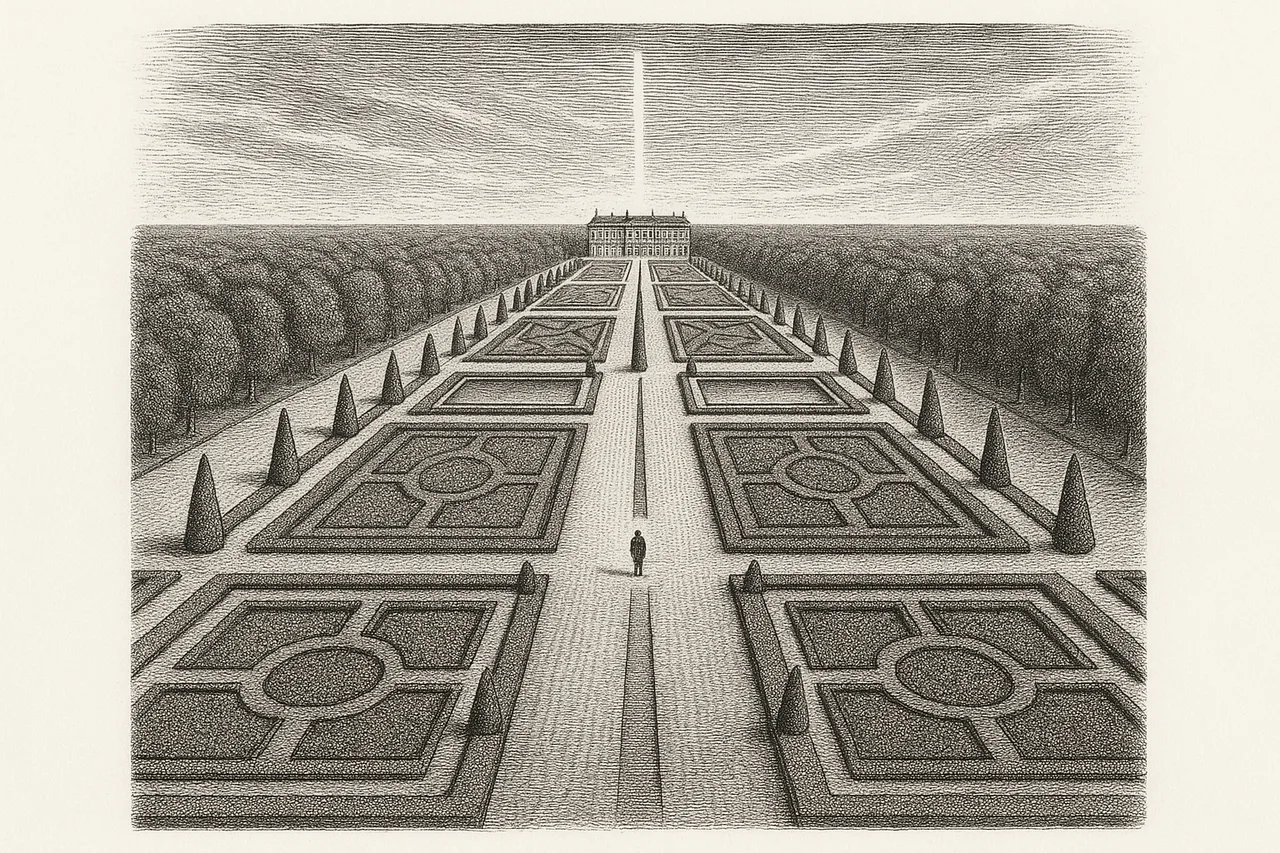
Neatly pruned trees. A glowing fountain. Pathways lined with symmetry, light, and flow.
Order. Rhythm. Elegance. Precise, but not rigid.
It felt alive, awake, seen.
My unconscious mind had given me a map, showing the gap between where I was and where I wanted to be.
The message was clear: to reach that version of life, I needed systems. Clarity. Visibility.
This is the power of metaphor.
Jung's bone chariot
Carl Jung called this practice active imagination.
Between 1914 and 1930, during his "confrontation with the unconscious," Jung developed a method of entering an altered state where he could dialogue with figures emerging from his psyche.
Sometimes he drew mandalas, circular images that emerged spontaneously from his unconscious.
Other times, he received narrative visions, stories that carried symbolic meaning.
One disturbed him deeply. He saw himself ambushing and shooting Siegfried, the archetypal Germanic hero, riding in a "bone chariot" across a mountain path.
Jung was horrified. Why would he kill a hero?
When he sat with the metaphor, its meaning revealed itself. The "bone chariot" represented inherited, rigid ideals, the rational persona he had constructed during his years as Freud's protégé. Killing Siegfried meant releasing that identity to make space for something softer, more whole.
The story told him what his conscious mind couldn't admit: he needed to let his old identity die.
If Jung had asked directly, "Should I end my partnership with Freud?", he would have rationalised and overthought.
But the unconscious doesn't speak in arguments. It speaks in metaphors, symbols, and stories that bypass logic and go straight to truth.
Why direct questions don't work
When we ask direct questions like:
"What's wrong with my business?"
"Why am I stuck?"
"What's my purpose?"
…we usually hit a wall. The mind goes blank. Or spirals into overthinking.
But when we ask metaphorical questions, something unlocks:
- If your business were a famous painting from history, what would it be?
- If your last relationship were a house, what kind of house would it be?
- If your work were a song, what would it be?
- If your inner critic were an animal, what would it be?
- If your burnout were a scene from a movie, what would be happening?
Suddenly, your inner storyteller takes over.
The answers don't come in bullet points or logical arguments. They come as metaphors, stories, images, symbols, in the native language of your unconscious.
Active imagination vs visualisation
People confuse these. They are not the same.
Visualisation is conscious construction. You decide what to picture (a goal, an outcome, a calm beach) and direct your imagination toward it. It's top-down.
Active imagination is unconscious surrender. You ask a question, soften your control, and let whatever appears appear. It's bottom-up. The point is not to picture what you want, it's to discover what your unconscious is already telling you. Visualisation reinforces what you already think. Active imagination reveals what you didn't know you knew.
If you want to actively understand the messages your unconscious sends you in your dreams, you can apply to be a beta tester for Surreal Guide. The app has a few guides built on Jungian psychology, designed to help you make better decisions and decode your dreams.
Exercise: map the metaphor
Choose one area of your life or business you feel unclear about, your company, your relationship, creativity, emotional state.
Pick a question and ask:
- If it were a garden, what would it look like?
- If it were a movie character, who would it be?
- If it were a city, what would it look like?
- If it were a weather pattern, what's the forecast?
Describe it in detail, without censoring or "figuring it out."
Then ask: What is this image telling me? What does it need from me?
Then imagine the ideal version. If your current reality were that same metaphor, but transformed into exactly what you want, what would it look like now?
What's different?
Let the gap between the two images become your map.
Your unconscious already knows the truth.
Further reading
The Red Book: A Reader's Edition by Carl Jung, edited by Sonu Shamdasani (The Philemon Series). Jung's private record of his confrontation with the unconscious. Hundreds of pages of dialogues, visions, and the hand-painted mandalas that emerged as the work surfaced. This is the source text. View on Amazon.
FAQ
What is active imagination in Jungian psychology?
Active imagination is a method developed by Carl Jung between 1914 and 1930 for engaging directly with the unconscious. It involves entering a relaxed, attentive state and allowing images, figures, or narratives to emerge spontaneously, then dialoguing with them as if they were real. Jung considered it one of the most important paths to individuation, the integration of the conscious and unconscious self.
Can active imagination help with business decisions?
Yes. Founders and creatives use active imagination to surface what their conscious strategy is missing. Asking "if my business were a garden, what would it look like?" or "if my company were a building, what state is it in?" lets the unconscious return an honest answer the analytical mind would have rationalised away. The metaphor reveals the underlying state. Conscious strategy then has something real to respond to.
Is active imagination the same as visualisation?
No. Visualisation is consciously directed (you decide what to picture). Active imagination is consciously surrendered (you let the unconscious produce the material and engage with what appears). They are opposite directions of the same skill.
Is active imagination dangerous?
For most people in stable mental health, no, it's a well-established therapeutic technique. Jung himself cautioned against it for people with active psychosis, dissociative tendencies, or severe trauma history without professional support, because the unconscious material can be overwhelming. If you're unsure, do it with a Jungian-trained therapist.
How long does an active imagination session take?
Anywhere from 15 minutes to 90+. The exercise above is a short form designed to take 20, 30 minutes. Longer sessions tend to surface deeper material, but quality of attention matters more than duration.
What's the difference between active imagination and dreaming?
Both come from the unconscious. Dreams happen in sleep, beyond your conscious participation. Active imagination happens awake, with you participating in real time, you can question the figures that appear, sit with the images, ask what they want. It's the daytime, dialogic version of dream material.
Continue the work
Metaphor is one doorway into the unconscious. Body, breath, and movement are others.
- Coaching for Entrepreneurs, the broader pillar this practice sits inside.
- Tap into the Power of the Unconscious, the depth-psychology hub for the inner material this exercise surfaces.
- Feeding Your Demons, embodied practice for working with the parts of you that show up in active imagination.
- Shadow Work & Self Discovery, Jung's larger framework for what you're meeting in the metaphors.
With so much love,
Ginny Wan
This post contains affiliate links. As an Amazon Associate I earn from qualifying purchases, at no additional cost to you.
Related
Read next
Coaching for Entrepreneurs & High Achievers
15 Mental Models From The World's Top Performers
The most successful people consciously design their mental models. 15 frameworks from Warren Buffett, Jeff Bezos, and Steve Jobs you can install today.
Coaching for Entrepreneurs & High Achievers
Abundance vs Scarcity Mindset: How One Habit Made Wahei a Billionaire
Most rich people aren't happy. The ones who are share one filter, abundance. How Wahei Takeda built a fortune on a single morning ritual.