How to Improve Intuition: A Practical System
Discover how to improve intuition with a practical, science-backed system. Cut through the noise and enhance your decision-making without 'woo' in 2026.
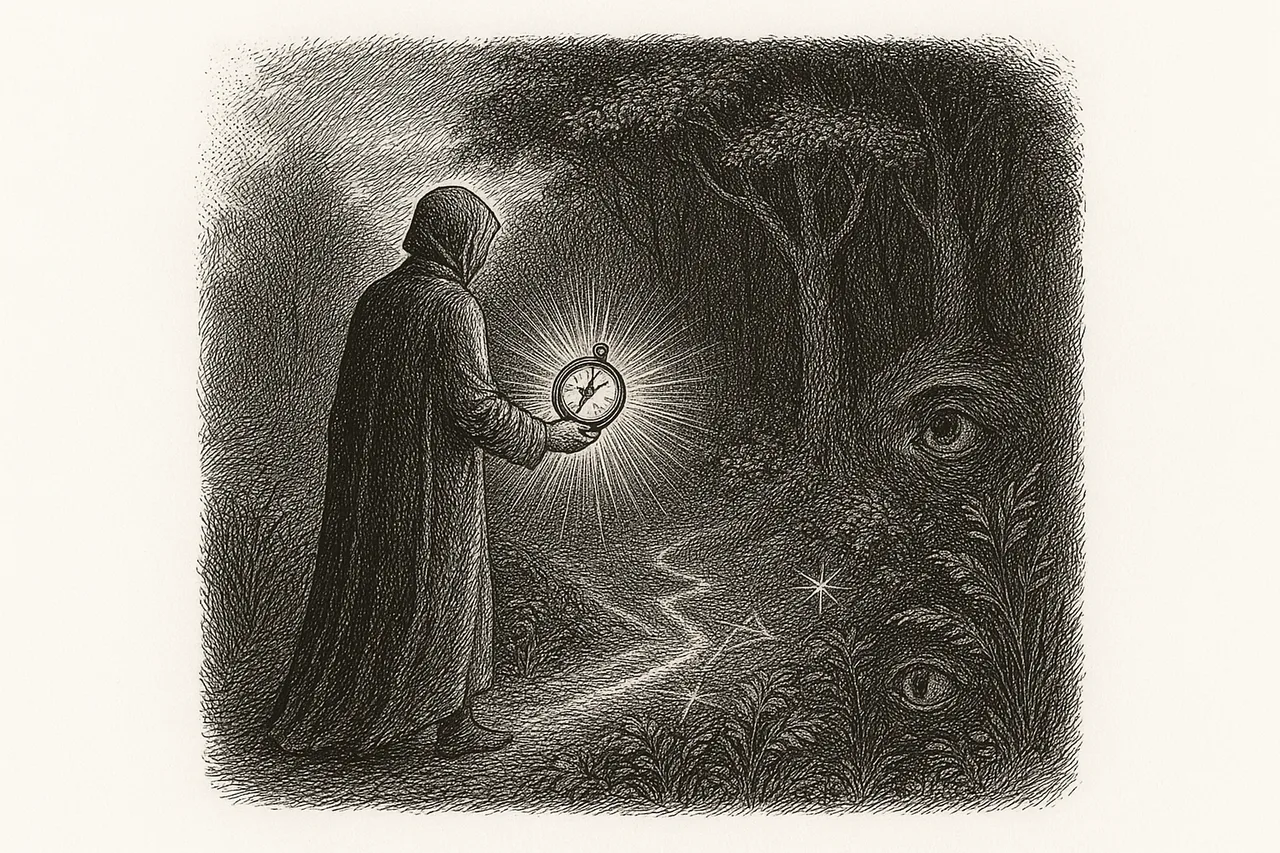
I once watched a founder reject a lucrative collaboration because “something felt off”, then spend three days trying to sound rational about it. Two weeks later, the other party revealed exactly the pattern she'd picked up in the first ten seconds. Her problem wasn't intuition. It was that she had no method for proving to herself when her signal was clean.
That's where most advice on how to improve intuition falls apart. It tells you to trust your gut, as if your gut arrives pre-calibrated, house-trained, and immune to stress.
Table of Contents
- Your Gut Feeling is a Skill Not a Gift
- Distinguishing Intuition from Anxiety
- Your Daily Five-Minute Intuition Workout
- An Intuitive Protocol for High-Stakes Decisions
- Navigating Your Unconscious Through Dreams and Journals
- How to Measure Your Intuitive Accuracy
Your Gut Feeling is a Skill Not a Gift
A violin maker doesn't pick up a piece of maple, close her eyes, and wait for the universe to whisper. She taps it. She listens for resonance. She feels density through her hands. Then she compares what she sensed with what the finished instrument later does when used.
That's intuition.
Not magic. Pattern recognition trained so thoroughly that it starts speaking faster than language.
Why talented people still mistrust their own signal
A lot of bright people secretly hold a childish model of intuition. Either you were born with it or you weren't. Either you have the witchy gift or you're condemned to spreadsheets forever. It's nonsense, and not even intricate nonsense.
If you want a more useful frame, treat intuition as a learned decision skill. That's far more grounded, and it fits what we see in practice. The CMI found that 69% of managers in a UK study said they had received no formal management training, a useful reminder that many people are making judgement calls all day without ever being taught how to refine them through feedback and reflection. The better route is documented decisions, review, and repeated exposure to uncertainty, as discussed in this exploration of developing intuition through pattern learning.
That also happens to be why some people sound “naturally intuitive” in one arena and bizarrely unreliable in another. They haven't developed a universal mystical power. They've logged reps.
The unconscious is noticing more than your conscious mind can narrate
When Richard Bandler taught sensory acuity, one of the less glamorous but more important lessons was this: people are always responding to patterns they haven't consciously named yet. Tiny shifts in tone. Timing. Congruence. Hesitation. A smile that arrives half a beat late. The body often registers the mismatch before the intellect assembles a clean paragraph about it.
Jung would say the psyche compensates. It presents material through image, symbol, sensation, dream, projection. Milton Erickson would have smiled and let the unconscious do the heavy lifting while the conscious mind tried to feel clever.
Practical rule: stop asking whether intuition is real and start asking whether your internal pattern detector has been trained.
That shift matters. Once intuition becomes trainable, you stop waiting for a special gift and start building a practice.
If you're curious how trance, suggestion, and unconscious processing fit into that picture, this explanation of how hypnotherapy works gives the cleaner version than most wellness content on the internet.
What training actually looks like
The useful version of “trust yourself” is less romantic than Instagram would prefer:
- Record the decision: Write down the hunch before events tidy themselves into a neat story.
- Name the cues: What did you notice? Body tension, excitement, a tonal mismatch, an image in the mind, a phrase you couldn't shake.
- Check the outcome: Then compare signal with reality.
- Repeat across contexts: Low-stakes choices are where your calibration gets built.
That last part is where the artisan metaphor matters. The maker gets good because wood keeps answering back. Intuition improves the same way. Reality becomes your teacher.
Distinguishing Intuition from Anxiety
Individuals don't have an intuition problem. They have a signal contamination problem.
They feel a surge in the body and immediately promote it to prophecy. Sometimes that surge is a clean read. Sometimes it's old fear wearing expensive spiritual jewellery.
A major gap in mainstream advice is exactly this confusion. It matters because, in Great Britain, the Office for National Statistics reported that in April to June 2024, nearly 1 in 5 adults experienced anxiety, which can distort gut feelings when people don't have a method for separating intuition from stress reactivity, as noted in this discussion on strengthening intuition.

The body gives different signatures
In practice, intuition often arrives subtly. It may be firm, but it rarely needs theatrics. Anxiety tends to have more noise in it. More urgency. More repetition. More catastrophic cinema.
That doesn't mean intuition always feels pleasant. Sometimes the clearest signal is a sober no. But the texture is different.
Here's a simple comparison:
| Signal | Common feel in the body | Mental quality | Behavioural tendency |
|---|---|---|---|
| Intuition | settled, direct, grounded | simple, uncluttered, oddly clear | move, pause, or decline with steadiness |
| Anxiety | tight, buzzy, contracted, jagged | looping, persuasive, urgent | overanalyse, freeze, chase reassurance |
NLP people would call this a matter of submodalities. What's the internal image like? Bright or dim? Fast or still? Close or far away? What tone of inner voice accompanies it? Sharp and panicked, or matter-of-fact? Those distinctions sound small until you start noticing that your nervous system has a vocabulary.
A somatic mapping exercise that actually helps
Try this with two memories. First, recall a time you knew something and later discovered you were right, even though you couldn't fully explain why. Then recall a moment of spiralling fear where your prediction turned out to be more drama than data.
For each memory, write down:
- Location: Where did you feel it first? Chest, throat, gut, jaw, back of neck?
- Movement: Was the sensation expanding, dropping, clenching, buzzing, pulling?
- Tempo: Did it feel slow and decisive, or fast and chaotic?
- Language: What was the internal sentence? Intuition often speaks in shorter lines. Anxiety writes fan fiction.
- Impulse: Did you want to act cleanly, or compulsively?
Do this a few times and your personal map starts to emerge. Not a generic one. Yours.
Your body has patterns. Learn those patterns before you appoint them as trusted advisors.
If you tend to get trapped in mental loops after a body signal appears, these NLP techniques to stop overthinking can help you interrupt the spiral before it hijacks the original message.
When writing helps more than “processing”
Some people need to get the excess charge out of the system before they can hear anything subtle. In that case, structured journaling can be useful, especially if the prompt isn't just “how do I feel?” but something more specific. A resource like these powerful prompts for anxiety relief can help settle the internal static enough for a cleaner read.
A practical distinction I use is this: intuition gives information, anxiety demands obedience.
When a feeling says, “Notice this”, pay attention. When it says, “Act now or everything collapses”, slow down and verify.
Your Daily Five-Minute Intuition Workout
If you want to know how to improve intuition, start where the stakes are boring. The unconscious learns beautifully in low-pressure environments. It gets slippery when every exercise is secretly a referendum on your life path.
Daily practice matters more than dramatic effort. Short, repeated embodiment work is a strong place to begin, and UK-relevant guidance around mindfulness supports brief daily practice to improve attention to internal signals. The emphasis is consistency rather than occasional heroic sessions, as reflected in this intuition and embodiment article.

Minute one with the data gathering body scan
Forget the angelic spa voice. This is reconnaissance.
Sit down. Let your eyes soften. Run attention through the body from forehead to feet and note sensations without interpretation. Warmth in the chest. Tightness in the diaphragm. Tingling in the hands. Heaviness behind the eyes. You're not fixing anything. You're collecting data.
That matters because many people try to improve intuition while being almost comically disconnected from physical sensation. Then they wonder why every inner signal arrives translated into thought loops.
Minute two with projective sentence completion
Sentence completion slips past the polished conscious self. It's one of the simplest projective methods because it reveals tendencies before your identity has time to curate them.
Use one unfinished line each day and complete it quickly, several times without editing:
- When I already know the answer, I usually...
- The pattern I keep pretending not to see is...
- If I trusted my deeper read on this, I'd...
- What feels off, but I keep trying to explain away, is...
Jungian work lives here beautifully. The shadow rarely enters through the front door announcing itself with excellent branding. It leaks through slips, aversions, attractions, recurring symbols, and strangely charged sentences.
Minute three with peripheral vision expansion
Stress narrows perception. You can feel this in your eyes. The world turns tunnel-like. Your thoughts become narrower too.
An old NLP move for shifting state is to let your gaze widen into peripheral vision. Pick a point ahead. Keep looking forward while noticing what else enters awareness at the edges. Colours. Light. Shapes. Movement. As peripheral awareness opens, many people feel the body drop out of defensive over-focus.
For anyone who lives in analysis, this is one of the fastest ways to change the platform from which thought is happening.
A short visual guide can help if you want a demonstration before trying it:
Minutes four and five with low-stakes intuitive reps
Use the calmer state immediately. Ask small questions.
Which email needs replying to first? Which draft title has more life in it? Which meeting should move? Which route home feels cleaner? Choose quickly, then note the result later.
Field note: intuition grows when the unconscious gets fast feedback from reality.
If your brain tries to turn this into another optimisation project, these techniques for stopping overthinking are useful because they restore movement. Intuition hates being cross-examined for so long that it leaves the building.
The point of a five-minute workout isn't profundity. It's repetition. You're building sensitivity, then calibration.
An Intuitive Protocol for High-Stakes Decisions
A major business decision shouldn't be handed to either pure logic or pure instinct. Both become ridiculous when overpromoted.
The strongest founders I know do something subtler. They gather information thoroughly, then stop forcing the answer long enough for the unconscious to process what the conscious mind can't yet organise. After that, they interrogate the signal instead of worshipping it.

Information before incubation
Do your homework first. If the decision concerns a hire, collaboration, launch, relocation, or offer, collect what you need. Facts. Timelines. Constraints. Trade-offs. Contradictions. Then stop.
That pause matters more than people realise. Many bad decisions aren't intuitive at all. They're exhausted. If you've been pushing your mind through too many choices, it helps to understand the mechanics of mental exhaustion and decision fatigue before you mistake depletion for insight.
The four-part protocol
Here's the framework I use.
Information
Gather the available facts and define the actual decision in one sentence. Not “What should I do with my life?” More like, “Do I sign this partnership in its current form?”Incubation
Step away on purpose. Walk. Shower. Sleep on it. Cook something repetitive. Let the unconscious sort pattern from noise without the executive mind barging in every thirty seconds.Interrogation
When a felt answer appears, test it. Where is it in the body? Is it settled or frantic? What image comes with it? What future scene does it produce if you mentally step into the outcome?Integration
Bring the felt signal and the factual picture back together. If they agree, the decision often gets simpler. If they clash, don't panic. That clash is information.
Future pacing without fooling yourself
Future pacing is one of the most useful NLP tools here. Mentally rehearse each option as if it has already happened. Notice the body's response, but don't stop at “good” or “bad”. Get specific.
If you sign the deal, how do you feel the morning after? Expanded? Dull? Heavier in the sternum? Relieved but somehow smaller? If you decline it, is the discomfort clean disappointment or contaminated dread? The body is often more candid than the biography your ego prefers.
A compact check looks like this:
| Option | Body response | Image quality | Interpretation |
|---|---|---|---|
| Path A | grounded but sober | clear, stable | often points to congruence |
| Path B | charged and noisy | cluttered, jumpy | often suggests status hunger, fear, or fantasy |
The protocol works because it treats intuition as testable. That's the grown-up move. The UK CMI finding that 69% of managers reported no formal management training is a useful reminder that many leaders are improvising judgement in real time. The more reliable route is to train intuition through documented decisions and post-action review, as discussed in this piece on developing intuition as a learned skill.
If you want a broader decision framework that includes both felt sense and analysis, this guide to intuitive decision making is a strong companion.
Use experiments, not grand declarations
You don't have to marry every hunch. You can prototype it.
Send the email before signing the contract. Try the collaboration with a smaller scope. Test the offer with one audience slice. Have the difficult conversation before redrawing your entire business model. Intuition gets smarter when reality answers in smaller loops.
Navigating Your Unconscious Through Dreams and Journals
Dreams are rarely subtle. They're theatrical, rude, funny, symbolic, and occasionally more honest than your entire waking brand identity.
A founder once described a recurring dream to me: she was hosting an elegant dinner party while a wolf paced just outside the glass doors. In waking life she insisted everything was under control. In the dream, the instinctive part of her had already arrived and was getting bored of waiting.
Journaling that reveals pattern rather than performance
Most journaling fails because it becomes memoir. You produce a polished account of your day, then call it self-awareness.
Reflective decision journaling is far more useful when it captures the hunch before analysis cleans it up. UK-relevant decision-quality guidance supports structured reflection because it helps make assumptions and biases visible, and the practical method is to record the hunch, rate confidence, note the cues, revisit the outcome, and watch for patterns over time, as described in this overview of intuition training.
Try prompts with enough bite to disturb your usual narrative:
- What pattern am I pretending not to see because seeing it would require a change?
- Where am I overexplaining what my body already rejected?
- Which person, project, or plan gets unusually charged in my writing?
- What do I keep calling “confusing” that may be inconveniently clear?
That last one is especially useful for clever people. Confusion is often a socially acceptable disguise for unwillingness.
The unconscious will usually tell the truth before your self-image approves the wording.
Dream work without the cheesy symbol dictionary
A snake doesn't always mean transformation. A house doesn't always mean the self. Sometimes a snake means the precise quality of threat, intelligence, seduction, or vitality that snake carries for you.
Treat dreams as personalised data visualisations. The psyche is rendering a pattern in symbols because symbols can carry more contradiction than ordinary language. Jung knew this. So did anyone who has ever woken from a dream knowing more than they could yet explain.
A simple method works well:
Set an intention before sleep
Ask one clean question. Keep it narrow. “Show me what I'm not seeing about this partnership” works better than “Reveal my destiny.”Catch the dream on waking
Write fragments first. Not interpretation. Just images, people, mood, actions, colours, repeated objects.Find the living element
Ask what in the dream has the most energy. The locked room? The child? The delayed train? The animal? That's often where the message concentrates.Translate symbol into function
Don't ask, “What does this symbol universally mean?” Ask, “What role does this element play in my inner economy?”
If you want to go deeper into symbolic dialogue, this guide to active imagination and Jungian metaphor is one of the better ways to work with imagery without flattening it.
The shadow improves intuition because it removes distortion
One of the more awkward truths is that intuition gets cleaner when shadow material gets less hidden. If you've disowned ambition, you'll call clear desire “a sign”. If you've disowned aggression, you'll miss predatory cues in others because your own teeth are locked in the basement.
The psyche projects what it doesn't want to own. That projection interferes with signal.
So part of learning how to improve intuition has very little to do with mystical receptivity and quite a lot to do with becoming less divided against yourself.
How to Measure Your Intuitive Accuracy
If you never measure your intuition, you're left with vibes and selective memory. Human beings are brilliant at remembering the eerie hit and forgetting the ten dramatic misfires around it.
A better system is a calibration journal. Before a decision, write the hunch, the confidence level, and the cues. Afterwards, record what happened. Include the misses. Especially the misses.
Calibration beats self-mythology
Intuition ceases to be a personality trait and emerges as a trainable faculty.
Use a simple log with five fields:
- Decision
- Initial hunch
- Confidence
- Cues noticed
- Outcome
That's enough. You don't need a velvet notebook and moon water. You need evidence.

Protect the conditions that make good signal possible
Measurement only helps if the instrument is in decent condition. Overloaded minds produce muddy reads.
That matters in ordinary working life, not just in dramatic personal moments. The UK Health and Safety Executive reported that 1.7 million workers experienced work-related stress, depression, or anxiety in 2022/23, and these conditions accounted for 49% of all work-related ill health cases, leading to 17.1 million lost working days. In practical terms, chronic overload narrows attention and makes it harder to distinguish clear internal signals from panic or reactivity, as discussed in this piece on teaching intuition about uncertainty.
So if your intuitive accuracy seems to collapse when you're tired, overbooked, and swallowing six open loops before lunch, that isn't spiritual failure. It's poor signal conditions.
Keep score, but also protect bandwidth. A flooded system can't calibrate cleanly.
The discipline is simple. Track enough decisions to notice where your intuition is strongest. Maybe you read people well but misjudge timing. Maybe your body is accurate on creative direction but unreliable when scarcity gets triggered. That's useful. It gives you a map.
And once you've got a map, intuition stops being a mysterious visitor and starts becoming part of your working method.
If you want a more structured way to spot the unconscious patterns shaping your decisions, Surreal Experiments offers tools for self-discovery built around Jungian psychology, NLP, hypnotherapy-inspired reflection, and AI-guided pattern analysis. It's designed for entrepreneurs and creatives who want more than generic mindset advice, with an assessment and app experience that helps you track tendencies, uncover blind spots, and practise this work with more consistency.
Related
Read next
Coaching for Entrepreneurs & High Achievers
Business Mindset Coaching: Your Path to Entrepreneurial Flow
Stop generic advice. Discover how business mindset coaching works on unconscious patterns to end burnout and unlock entrepreneurial success.

Coaching for Entrepreneurs & High Achievers
How Does Hypnotherapy Work: How Hypnotherapy Works
Ever wonder how does hypnotherapy work? Discover the neuroscience & psychology of rewriting unconscious patterns. Go beyond stage myths for peak performance!
Coaching for Entrepreneurs & High Achievers
What Is a Life Coach? a Guide for People Who Hate Coaches
Wondering what is a life coach, really? We cut through the fluff to explain coaching's role in decoding unconscious patterns for entrepreneurs and creatives.