
What Is a Life Coach? a Guide for People Who Hate Coaches
Wondering what is a life coach, really? We cut through the fluff to explain coaching's role in decoding unconscious patterns for entrepreneurs and creatives.
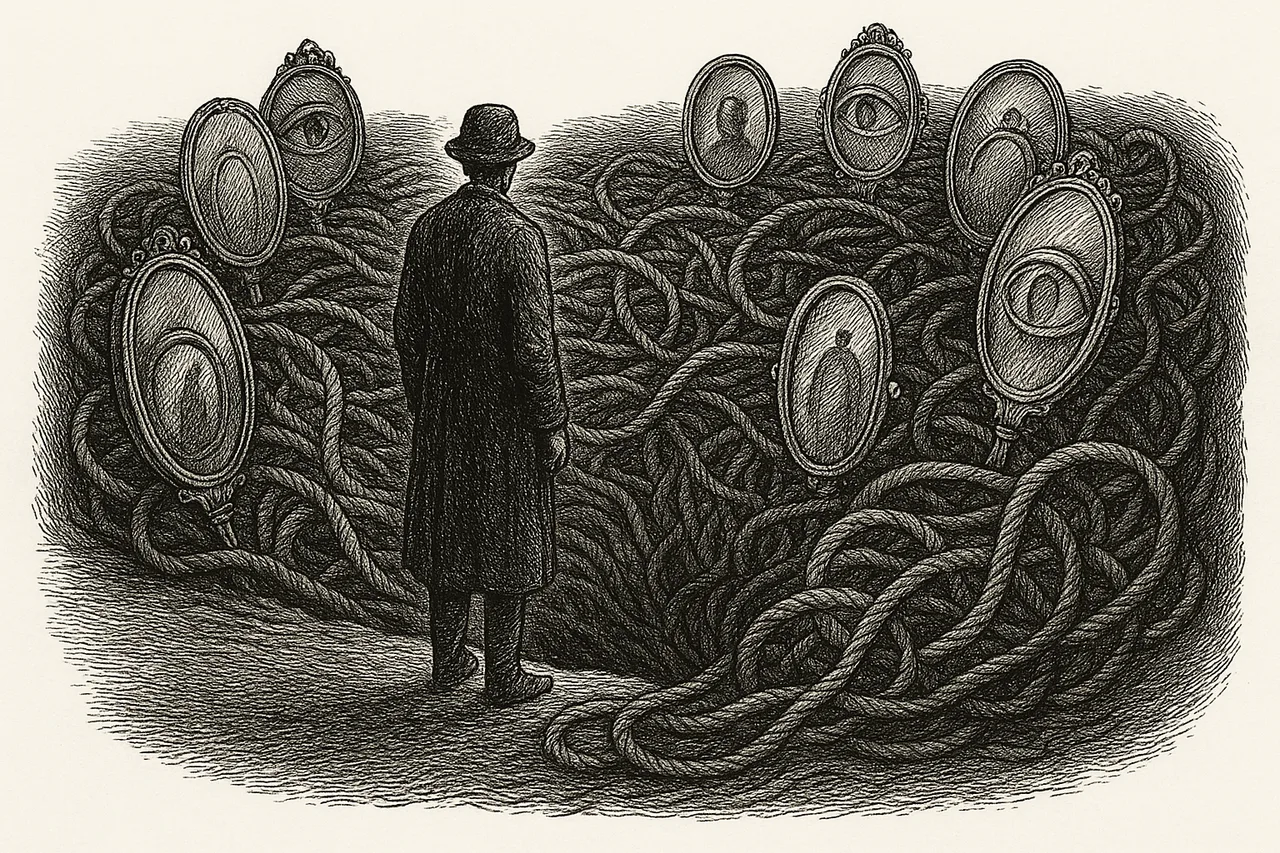
Most advice about life coaching gets the premise wrong. It assumes the problem is that you need better goals, tighter habits, a more inspiring morning routine, or someone to clap for you on Zoom. For sharp people, that usually isn't the issue. The issue is that your conscious plans keep getting vetoed by unconscious loyalties, identity patterns, and old internal scripts.
A traveller once asked for a perfect map. The map-maker handed over something pristine, elegant, beautifully labelled. The traveller followed it for days and got nowhere useful, because the map was for the wrong country. That is how a lot of high-achievers feel after books, courses, frameworks, and even years of solid insight. The map isn't always bad. It just doesn't match the terrain they inhabit.
That is where good coaching earns its keep. Not as motivational theatre. As a form of psychological navigation for people whose outer strategy is fine, but whose inner terrain is full of contradictory instructions.
Table of Contents
- Let's Be Honest About Life Coaching
- Coach Therapist or Mentor Drawing the Lines
- The Coachs Toolkit Beyond Goal Setting
- Who Actually Benefits from a Life Coach
- What a Real Coaching Engagement Looks Like
- How to Find a Coach Who Goes Deeper
- Your First Experiment in Consciousness
Let's Be Honest About Life Coaching
A lot of life coaching deserves the eye roll. The market is crowded with vague motivation, borrowed wisdom, and performative certainty. If your reference point is a feed full of affirmations and morning-routine sermons, scepticism is a sane response.

The map problem
High-performers rarely lack options. They lack access to the hidden pattern that keeps overriding the option they already chose.
Founders bury it under strategy. Creatives bury it under refinement. Operators bury it under optimisation. On the surface, each person looks disciplined and self-aware. Underneath, some older organisation of the psyche is still running the show. It may be a Jungian shadow dynamic, a nervous system that equates visibility with danger, or a learned identity pattern that makes expansion feel unsafe.
That is where a serious answer to what is a life coach begins. Coaching is not just external accountability for people who cannot manage a calendar. At its best, it is structural work. It helps a person spot the unconscious loyalties, emotional associations, and embodied reactions that keep breaking alignment between intention and behaviour.
Good coaching helps people locate the part of themselves that keeps overruling the plan.
What coaching is for
The clients who get the most from coaching are often the ones who already know what to do. They have read the books, built the plans, hired the team, and set the targets. Then they keep hesitating at the same edge, picking the same fight, delaying the same launch, or collapsing right after momentum builds.
That pattern is rarely solved by more information. It usually needs closer examination at the level of language, image, sensation, and identity. A strong coach listens for the structure beneath the story. They notice repeated metaphors, emotional charge, shifts in posture, contradictions between stated goals and felt responses. They may use NLP to track how experience is coded internally, somatic work to surface what the body is holding, or hypnotic methods to loosen rigid responses that conscious effort cannot seem to touch. If self-sabotage is part of the pattern, this piece on why people repeat self-defeating loops under pressure gives useful context.
This is why shallow coaching irritates serious people. It reduces a deep craft to positivity and accountability, when the work is often closer to precise pattern recognition with behavioural follow-through. The trade-off is simple. Surface coaching can be easier to sell and easier to consume. Deep coaching asks for honesty, discomfort, and a willingness to meet parts of yourself that have been driving far more than your goals spreadsheet admits.
Coach Therapist or Mentor Drawing the Lines
Confusion starts when people use coach, therapist, and mentor as if they are interchangeable. They are not. A good practitioner knows the difference and behaves accordingly.

Three roles, three jobs
| Role | Primary orientation | What they mainly offer |
|---|---|---|
| Coach | Present and future | Goal clarity, pattern recognition, action, accountability |
| Therapist | Clinical and emotional care | Treatment within a defined therapeutic scope |
| Mentor | Experience-based guidance | Advice drawn from having walked a similar path |
A mentor may tell you how they built a company, handled a board, priced a service, or survived a creative drought. Useful, sometimes invaluable. But mentoring is directional. It often rests on transferable experience.
Coaching is different. The coach isn't there to turn you into a copy of them. They are there to help you see how your own mind and behaviour are organised so you can act with more precision.
Therapy has its own lane. In the UK, “life coach” is not a legally protected title, and coaching is generally treated as a non-clinical, goal-focused support service rather than a regulated health profession. Guidance aimed at UK audiences also stresses that coaching should focus on present and future goals, avoid diagnosis or treatment of mental health conditions, and refer clients with clinical needs to qualified therapists or medical professionals, as outlined in this explainer on life coaching boundaries.
Why the boundary matters
This isn't administrative trivia. Scope protects the client. A responsible coach understands when someone needs coaching, when they need mentorship, and when they need clinical support.
Practical rule: if a practitioner blurs every boundary and claims to handle everything, they are usually less sophisticated than they sound.
For founders and creatives, this distinction matters because many problems are not clinical, yet they are not simple either. A founder can be highly functional and still keep replaying a self-sabotage loop around visibility, delegation, money, authority, or intimacy. Coaching can be useful there because it works with execution, internal conflict, and behavioural patterns. A deeper look at those loops often starts with understanding why we self-sabotage.
What each approach sounds like in practice
- A mentor might say “When I hired my first creative director, I made these three mistakes.”
- A therapist might explore the emotional history and clinical context around your distress.
- A coach might ask “What identity does your current behaviour protect, and what becomes unsafe if you stop performing this pattern?”
That last question tends to annoy people in a useful way. It moves past surface tactics. It assumes your behaviour has an internal logic, even when that logic is costly.
The strongest coaches stay in their lane while still working at depth. That takes more skill than vague inspiration and more humility than most branding suggests.
The Coachs Toolkit Beyond Goal Setting
Basic coaching often stops at goals, accountability, and a neat worksheet. Those tools have their place. They are not enough for someone whose intellect already outruns their behaviour.
Language reveals the structure
One of the most useful frames from Neurolinguistic Programming is that people don't respond to reality directly. They respond to their internal representation of reality. That representation is built through language, imagery, sensation, memory, and learned filters.
A coach trained in NLP listens for meta-programmes, the recurring filters that shape how someone sorts experience. Toward or away from. Internal or external reference. Options or procedures. Match or mismatch. If a founder says, “I only move when there's pressure,” or “Every time things get stable I lose interest,” that is not just a mood report. It is data about the operating pattern.
Bandler-style work was never interesting because it sounded clever. It was interesting because it treated subjective experience as something with form. Once form is visible, intervention becomes more precise.
Why talking alone often stalls
Insight doesn't automatically alter behaviour. Plenty of people can describe their pattern beautifully while continuing to live inside it. That is because the pattern is often held not only in narrative, but in state.
Ericksonian hypnotherapy, sentence completion work, and carefully chosen language patterns prove useful. Not as stage hypnosis nonsense. As methods for changing the conditions under which the mind receives new instructions. In a trance-adjacent state, people often access responses that are less defended and more honest. They stop performing the version of themselves that sounds coherent and start contacting the version that is in fact running the show.
Jung is useful here too. Especially the idea of the shadow, the disowned material that keeps leaking into behaviour. The perfectionist who despises “lazy people” often carries an exiled need for rest. The endlessly generous leader may have banished their aggression so thoroughly that boundaries feel impossible. The polished, visionary founder may be secretly organised around humiliation, and every expansion triggers collapse. That kind of material rarely responds to motivational slogans. It does respond to projective methods, symbolic work, dream material, and the disciplined decoding of contradictions. If that territory interests you, this introduction to shadow work and unconscious patterning is a useful companion.
The unconscious is rarely subtle. It repeats itself with different costumes until someone finally pays attention.
The body is part of the conversation
A lot of self-help still treats the mind as if it floats a few inches above the body issuing managerial instructions. Real coaching has to be more honest than that. People store tendencies somatically. You can hear it in the breath, see it in the jaw, watch it in the shoulders when a certain topic arrives.
Somatic work in coaching can be simple and exacting. Tracking a contraction. Slowing speech until the body catches up. Noticing the difference between a true no and a fear-based no. Distinguishing activation from intuition. Many behavioural loops persist because the body has learned that visibility, intimacy, authority, or stillness is unsafe, even when the conscious mind claims to want all four.
Useful tools are not the same as deep tools
If you want a practical list of essential life coaching tools, there are useful starting points there. The deeper question is not which tool sounds impressive. It is whether the tool helps surface an unconscious pattern, shift state, and translate the shift into behaviour.
A coach worth hiring usually works across at least a few layers:
- Cognitive layer through questioning, reframing, and pattern language
- Symbolic layer through dream images, metaphor, projective material, and shadow themes
- State layer through hypnotic language, attentional shifts, and resource installation
- Somatic layer through breath, sensation tracking, posture, and embodied congruence
If the whole process never leaves ordinary conversation, it can still be useful. It often won't be enough for clients who have already read the books, done the journalling, and can explain their own defence mechanisms with unnerving accuracy.
Who Actually Benefits from a Life Coach
The people who benefit most from coaching are often the least likely to admit they need it. They are competent, articulate, self-aware, and outwardly successful enough to keep postponing the deeper work.

Founders with an invisible ceiling
A founder can build products, hire well, survive chaos, and still freeze around the one decision that would materially change the business. It often looks irrational from the outside. Inside, it usually makes perfect sense. Growth threatens an old identity. Visibility triggers an old exposure pattern. Delegation collides with control. Rest feels morally suspicious.
These people don't need another thread about discipline. They need help making the hidden conflict visible. Sometimes the issue isn't “I don't know my purpose.” It's “part of me knows exactly what I want and another part has decided that wanting it is dangerous.” Questions of purpose and meaning in work tend to become much clearer once that conflict is named.
Creatives who can produce but can't release
Writers, designers, artists, and builders often carry a refined version of self-protection. They can generate ideas all day. They can perfect endlessly. What they can't quite do is ship without manufacturing a crisis first.
That pattern often has very little to do with laziness. More often it involves identity and exposure. The unfinished work still contains fantasy. Released work enters relationship with reality, taste, criticism, and money. Coaching helps when the block is not technical but unconscious.
Here is a short conversation on that territory from a different angle:
High-achievers who are tired of being managed by their own patterns
Some clients arrive after therapy. Some after burnout. Some after enough external success that their old coping style stops looking impressive and starts looking expensive.
Common signs that coaching may be useful include:
- Repeated self-interruption when something meaningful is about to happen
- Overthinking dressed up as intelligence where analysis becomes a way to avoid contact with desire
- Chronic internal division where one part wants expansion and another keeps enforcing safety through delay
- Functional success with private emptiness where achievement keeps landing without any real sense of arrival
You don't always need a new strategy. Sometimes you need a new relationship with the part of you that thinks strategy is the safest place to hide.
Coaching isn't for everyone. Some people want advice. Some need clinical care. Some need rest and less input. But for the entrepreneur, founder, or creative whose outer competence conceals an inner stalemate, coaching can become the place where talent stops fighting itself.
What a Real Coaching Engagement Looks Like
A serious coaching engagement does not revolve around weekly motivation or polite accountability. It is a contained piece of work designed to expose the pattern running your decisions, change your relationship to it, and test that change in real life.
The opening phase
The first phase is diagnosis.
A capable coach listens for structure before offering encouragement. They want to know where the problem appears, what precedes it, what state you enter, what payoff the pattern provides, and what would count as evidence of change. In practice, that can include intake forms, timeline work, language analysis, parts work, or a close look at recurring situations where you become less intelligent than you are.
This is often where the underlying issue shows itself. A founder says they need help with visibility, then reveals they become vague every time authority is directed at them. A creative says they need consistency, then it becomes clear they only work well under threat. Through a Jungian lens, you are often meeting a shadow pattern that has been managing behaviour from outside conscious awareness. Through an NLP lens, you are identifying the trigger, internal representation, state shift, and behavioural sequence that keeps reproducing the same result.
Once the mechanism is visible, the work gets sharper.
What happens inside sessions
Good sessions move between observation, intervention, and integration. You bring a live problem. The coach tracks the language, physiology, attention, and emotional logic underneath it. Then they interrupt the sequence.
That interruption may be subtle. A coach might stop you on a repeated phrase, ask you to notice what happens in your chest as you describe success, or shift the image your mind keeps using to represent risk. It may be more active. Some practitioners use guided trance, hypnotic language, somatic tracking, reimprinting, or parts work to reach the level where insight alone has failed.
Typical ingredients include:
- Pattern tracking through words, metaphors, avoidance habits, and decision history
- State change work using attention, breath, imagery, NLP processes, or hypnosis
- Somatic work to identify how protection shows up in the body before it becomes behaviour
- Behavioural experiments between sessions that test whether the new pattern holds under pressure
That final piece is where many engagements either prove their value or collapse into theatre. A moving session means little if you still ghost the pitch, pick the wrong partner, or overwork to avoid feeling exposed. Useful coaching creates behavioural evidence.
The arc of the engagement
Strong engagements are bounded. They have a frame, a method, and a reason to end.
The structure varies, but the sequence is usually clear. Assess the pattern. define the desired shift. identify the obstacle and its function. run interventions. test the change in ordinary life. review what held and what snapped back. If you want a clearer sense of the formats practitioners use, this overview of professional coaching engagements gives a practical reference point.
Trade-offs matter here. Fast pattern work can produce major movement, but it can also destabilise a client who wants insight without disruption. Slow reflective work is easier to tolerate, but it can become expensive self-observation if no one is willing to challenge the identity structure underneath the problem. Good coaching handles that tension directly.
A good engagement leaves you better at catching your own pattern before it recruits your week.
By the end of useful coaching, clients usually have less reverence for the story they have repeated about themselves. They can spot the old sequence earlier. They recover faster when it starts. They make cleaner decisions. That matters whether the issue is leadership, intimacy, money, or visibility. If public presence is part of the work, even something practical like Get Up Productions' branding guide can become relevant once the unconscious resistance around being seen has been addressed.
How to Find a Coach Who Goes Deeper
Good coaching is hard to find because the market rewards confidence, aesthetics, and borrowed wisdom. None of those tell you whether someone can work with the pattern underneath your problem.

A founder can explain their procrastination beautifully and still repeat it for years. A creative can know every visibility strategy and still disappear when it is time to publish. The gap is rarely information. It is usually an unconscious protection pattern, often held in identity, nervous system response, or an old internal image of what success would cost. If a coach cannot work there, you are buying perspective, not change.
Questions worth asking
Skip the vague chemistry test. Ask questions that expose method.
How do you identify the pattern beneath the stated goal?
Strong coaches can explain how they assess recurring loops, internal conflicts, and secondary gains before prescribing action. Some will reference frameworks directly, such as Jungian shadow work, NLP patterning, parts work, somatic tracking, or hypnotic language.What do you do when a client has insight but keeps repeating the behaviour?
This tells you whether they can work beyond conversation. Look for an answer that includes state change, embodied work, rehearsal, or unconscious reconditioning.What are your boundaries, and when do you refer out?
Serious practitioners answer this without wobble. They know the difference between coaching, therapy, mentoring, and clinical treatment.How do you measure progress?
“Feeling better” is not enough. Useful answers include fewer compulsive reactions, cleaner decisions, more follow-through, less avoidance, or a visible shift in how the client handles stress, money, conflict, or visibility.
Green flags and red flags
The strongest green flag is precision. A good coach can tell you how they think, what they listen for, and why they would choose one intervention over another. They can explain their process in plain language without hiding behind mystical branding or corporate jargon.
Watch for trade-offs in their answer. Deep work can move fast, but it can also bring up grief, anger, or disorientation before a new pattern stabilises. A coach who admits that is usually more trustworthy than one who sells permanent transformation in six sessions.
Red flags are easier to spot once you know what depth sounds like.
Green flag
They can describe how they work with unconscious material, not just goals and habits.Green flag
They explain scope clearly and do not present coaching as a cure-all.Red flag
They speak in universal promises that could apply to anyone with a credit card.Red flag
They confuse dependency with depth and keep the process vague so the client stays impressed.Red flag
They claim to work on trauma, diagnosis, or mental illness without the training to do so.
If your work involves visibility, ask whether they understand identity threat. Personal brand work often triggers shame, envy, exposure fear, and old family rules about being seen. That is why a practical resource like Get Up Productions' branding guide can tell you more than marketing tactics alone. It shows how quickly brand decisions become psychological material.
Process matters more than polish
Many coaches can perform certainty on a sales call. Fewer can explain how they move a client from a repeated pattern to a different lived response.
Useful coaching usually has a clear sequence and clear review points, as noted earlier in the article. The details vary by method, but the coach should be able to show how they assess the issue, test what maintains it, intervene deliberately, and evaluate whether the shift holds outside the session. If they cannot describe that, their process may be improvisation dressed up as intuition.
If you want a private way to sharpen your discernment before hiring anyone, start by studying your own patterning. This guide to consciousness expansion and inner patterning is a strong place to begin. It will help you ask better questions and spot the difference between insight that flatters you and work that changes you.
Your First Experiment in Consciousness
A good coach helps you rewrite inner code, not by giving you a prettier personality, but by making hidden instructions visible. Once you can see the pattern, you can work with it. Until then, it tends to keep masquerading as fate, temperament, or “just how I am”.
If you're still exploring, it can help to read how others enrol in coaching programs and compare what different approaches promise. Then bring that same discernment to your own search. The useful question is whether the work deepens awareness, changes behaviour, and expands choice. If you want to keep following that line of inquiry, this piece on consciousness expansion and inner patterning is a strong next read.
If you want a practical starting point, explore Surreal Experiments. It's built for entrepreneurs and creatives who want to identify unconscious patterns, decode self-sabotage, and begin a deeper experiment in self-leadership without the usual self-help fluff.
Related
Read next
Coaching for Entrepreneurs & High Achievers
15 Mental Models From The World's Top Performers
The most successful people consciously design their mental models. 15 frameworks from Warren Buffett, Jeff Bezos, and Steve Jobs you can install today.

Coaching for Entrepreneurs & High Achievers
Abundance vs Scarcity Mindset: How One Habit Made Wahei a Billionaire
Most rich people aren't happy. The ones who are share one filter, abundance. How Wahei Takeda built a fortune on a single morning ritual.

Coaching for Entrepreneurs & High Achievers
How to Use Jungian Active Imagination to Solve Business Problems
Carl Jung built a method for talking to the unconscious in metaphor. I used it to ask what my business actually looked like, and the answer changed how I ran it. A practical exercise for founders who want to see what their unconscious knows about their business.