
How to Overcome Imposter Syndrome: Creative Minds 2026
Learn how to overcome imposter syndrome. Rewire unconscious patterns with NLP, somatic work, & hypnotic reframes. Practical guide for creatives & entrepreneurs.

He'd finish a violin, hold it under the lamp, and hear only the flaw. The room heard brilliance. He heard the future moment when somebody clever would finally point at the seam and say, There. Fraud.
Table of Contents
- The Master Craftsman and the Fraud
- Diagnose Your Specific Impostor Algorithm
- Rewire Your Mind with NLP and Hypnotic Prompts
- Embody Your Competence Through Somatic Exercises
- Collect Evidence with Behavioural Experiments
- Your 30-60-90-Day Integration Plan
- Troubleshooting Your Inner Critic and Seeking Support
The Master Craftsman and the Fraud
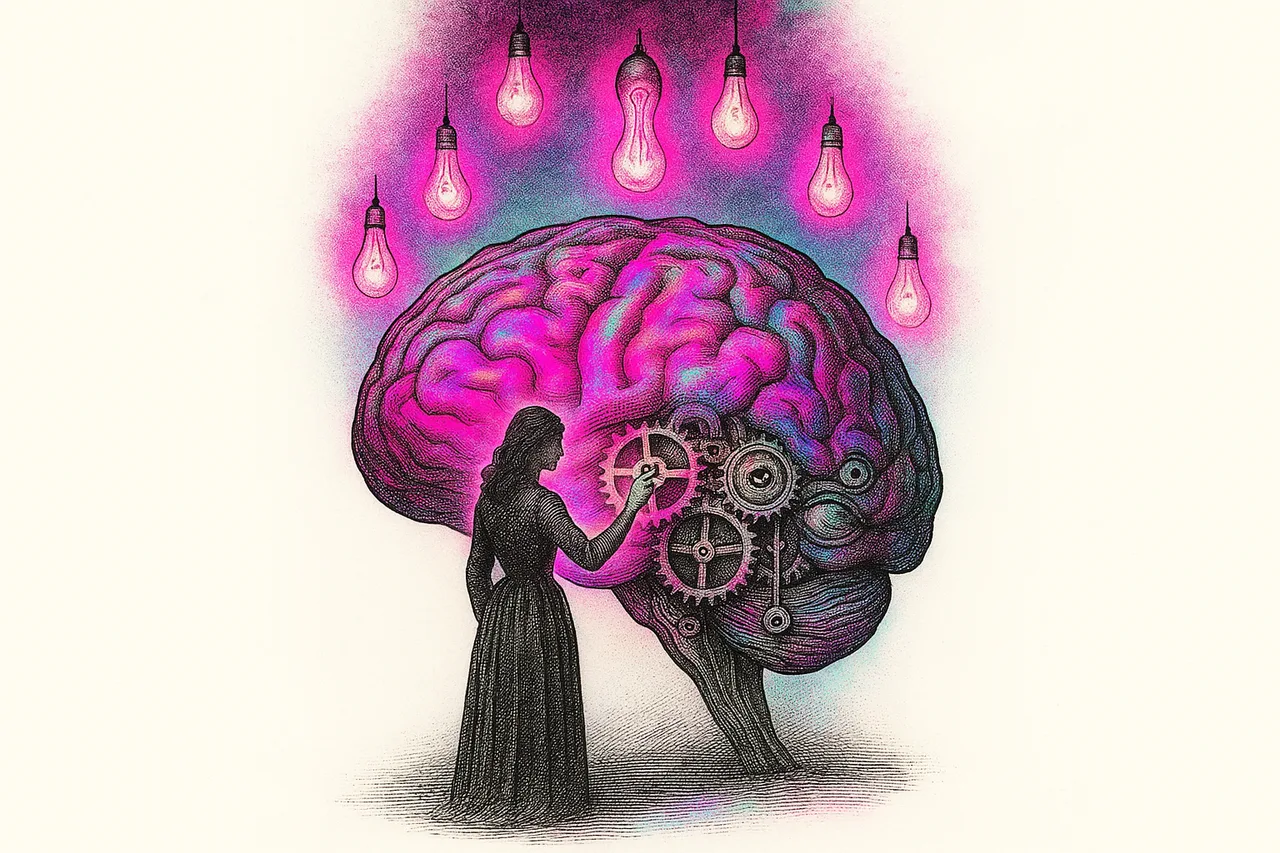
There's a reason high performers often feel as if they're getting away with something. They're operating at the edge of identity, where old self-concepts lag behind current reality. Your business grows faster than your nervous system updates its map.
The violin maker in that little parable isn't weak. He's running an outdated internal programme. His hands know more than his self-image permits. So every success gets filed under luck, timing, charm, or some temporary error in the universe's accounting system.

Why this pattern feels so convincing
If you're an entrepreneur or creative, the pattern often sounds clever. It borrows your intelligence and uses it against you. It says things like, maybe they overestimated me, maybe I spoke well but can't deliver, maybe this only worked because the market was generous that week.
That internal voice feels persuasive because it isn't trying to be fair. It's trying to keep your identity familiar. Familiarity often wins over accuracy.
A widely cited review summarised by the American Psychological Association reported that up to 82% of people experience impostor phenomenon, and that same body of research notes these feelings can reduce career risk taking and contribute to burnout and other forms of emotional strain, as outlined in the APA's review of impostor phenomenon. That matters because it shifts the frame. You're not dealing with a bizarre private defect. You're dealing with a common human distortion.
Practical rule: Stop treating the feeling of fraudulence as evidence. It's a state, not a verdict.
The map is not the territory
In NLP terms, imposter syndrome is usually a faulty internal map. The map says, I am precarious, unqualified, one mistake away from collapse. The territory says, clients paid, work shipped, people returned, decisions held up under pressure.
Jung would call part of this shadow material. Not the dark, melodramatic kind. The disowned competence. The part of you that still feels suspicious of your own authority because somewhere along the line you learned that being fully visible carried a cost. Better to stay gifted but uncertain. Better to be admired while internally self-disqualifying.
That's why generic advice often falls flat. Telling yourself you're amazing while your body is braced for exposure does very little. The unconscious doesn't respond to slogans. It responds to repetition, state, imagery, language patterns, and lived evidence.
If you want to know how to overcome imposter syndrome in a way that is lasting, you have to work at the level where the pattern is generated. That means interrupting the trance, changing the sensory coding, and giving your system a new experience of competence it can believe.
Diagnose Your Specific Impostor Algorithm
Imposter syndrome is often discussed as if it's one thing. It isn't. It has flavours, and each flavour runs on a different set of assumptions. If you misread the pattern, you'll use the wrong intervention and conclude nothing works.

The pattern usually hides in the rules
The clinical literature points to several core tendencies that matter here: perfectionism, fear of failure, denial of competence, and attributing achievement to external factors rather than ability. A systematic review found prevalence estimates ranging from 9% to 82%, depending on population and measurement method, which helps explain why the pattern shows up so often in leadership, startup, and creative settings, as described in the NCBI overview of impostor phenomenon.
Those tendencies usually organise into a few recognisable algorithms.
- The Perfectionist believes a small flaw invalidates the whole performance. One typo in the deck becomes proof of deep inadequacy.
- The Expert moves the goalposts through knowledge. However much they know, they focus on what they haven't yet mastered.
- The Natural Genius expects ease. If something takes effort, they interpret effort as evidence they lack real talent.
- The Soloist makes receiving support feel morally suspicious. Help gets translated into weakness.
- The Overfunctioner tries to earn legitimacy by carrying everything. Rest feels risky because busyness masquerades as proof.
A sharper self-diagnosis
Use these questions projectively. Don't answer with what sounds reasonable. Answer with the first thing your system does in the wild.
- When praise lands, do you absorb it, minimise it, or explain it away?
- When you hit a learning curve, do you get curious or privately ashamed?
- When you ask for help, what identity threat appears?
- When you make a mistake, what conclusion do you draw about yourself?
- When success arrives, where does your mind place the cause: skill, luck, timing, or other people's low standards?
If you notice a familiar style of thinking, that matters more than the label. The label is only useful if it helps you catch the mechanism.
The mind often disguises self-protection as high standards. That's why some “discipline” is really fear in a sharper outfit.
For readers who want a more conventional cognitive frame before going deeper into pattern work, this primer on understanding cognitive behavioral therapy offers a useful baseline for how thought patterns influence behaviour. It's not my main toolset, though it can help you recognise the surface structure before you work with the deeper trance beneath it.
Where the unconscious belief sits
Under every algorithm sits a sentence you rarely say out loud. Something like:
- If I'm not exceptional, I'll be rejected.
- If I need support, I'm not built for this.
- If it looks easy for others and hard for me, I'm lesser.
- If they see the full process, they'll revise their opinion downwards.
That's the live wire.
If you want to trace those belief chains more precisely, this piece on limiting belief examples gives a useful language map for spotting the hidden rules driving your behaviour. Once the rule is visible, it becomes editable.
Rewire Your Mind with NLP and Hypnotic Prompts
Thoughts don't arrive as neutral text. They arrive with tone, distance, urgency, image, posture, and prediction. That's why arguing with an imposter thought often feels like bringing a spreadsheet to a fire.
NLP gives you something more operational. You alter the structure of the experience, not just the content. When the structure changes, the old certainty loosens.
Pattern interrupt in the live moment
The instant you hear the old script, don't wrestle it. Break the trance.
Say internally, That's the old recording. Not because the thought is silly, but because naming the pattern separates observer from programme. Then ask one sharp question: What, specifically, is the task in front of me?
That shift matters. Imposter trance speaks in identity language. Useful action speaks in task language.
Try this sequence:
- Name the loop by labelling it as a familiar pattern.
- Locate the trigger by noticing what just happened. Praise, visibility, pricing, pitching, being in a room with stronger peers.
- Reduce the frame to the next concrete behaviour. Send the proposal. Answer the question. Open the document. Record the first take.
When a thought goes global, bring it back to the specific. “I'm a fraud” is fog. “I need to answer this email clearly” is workable.
Submodality shift for the internal critic
Bandler's genius was noticing that people code experience in sensory form. If your inner critic sounds booming, close, fast, and authoritative, of course it feels convincing. Change the coding and you change the impact.
Take one recurring imposter thought and notice:
- Location. Where do you hear it or sense it?
- Volume. Loud or faint?
- Distance. In your face or further back?
- Tone. Harsh, clipped, parental, sneering?
- Image. If there's a picture, is it bright, close, sharp, looming?
Then alter it deliberately. Move the voice to the far corner of the room. Make it tinny. Slow it down. Give it the absurd tone of somebody trying to sound important while wearing a traffic cone as a hat. Shrink the image until it's postcard-sized and dull around the edges.
This isn't positive thinking. It's sensory engineering.
Hypnotic prompts that bypass the usual resistance
The unconscious responds better to elegant implication than blunt command. Direct affirmations often provoke an internal rebuttal. Hypnotic language slips past that bouncer.
Use sentence completions like these, slowly, with attention to body response:
- The old feeling begins when I imagine...
- What I know from experience is...
- A more precise description of this moment is...
- The part of me trying to protect me assumes...
- What becomes possible when I stop mistaking activation for danger is...
And for future pacing, speak this aloud:
As I move into rooms where I'm seen more clearly, I may notice the old reflex appear. And when it does, I can recognise it sooner, breathe earlier, and return to the work itself. My system is learning that visibility is not exposure. Competence can feel unfamiliar and still be true.
Here's a compact table you can keep open on your phone before calls, launches, or presentations:
| Impostor Thought | NLP Reframe Script |
|---|---|
| They're going to find out I'm not as good as they think | They're seeing a current snapshot of my work. My job is to respond accurately, not perform invulnerability. |
| I should know this already | I'm in contact with a growth edge. Learning speed is not the same as worth. |
| If I ask for help, I'll look weak | Using resources well is part of real competence. |
| That success doesn't count because the timing was lucky | Timing may have helped, and I still had to recognise, decide, and act. |
| If this feels hard, maybe I'm not built for it | Difficulty is information about the task, not my identity. |
If you want more examples of applied language work in coaching contexts, this guide to coaching with NLP is worth a read.
Embody Your Competence Through Somatic Exercises
Imposter patterns rarely stay in the head. They drop into the chest, flatten the breath, tighten the jaw, pull the shoulders slightly forward, and make the body behave as if social exposure were physical threat.
That's why some smart people keep “working on the mindset” and still feel shaky on the call. The body never got the memo.

Breathe for authority, not sedation
A useful breath pattern should make you more present, not vaguely floaty. Try a box variation that steadies attention without making you feel theatrical about it.
Inhale through the nose for a gentle count of four. Hold for four. Exhale for six. Pause for two. Repeat a few rounds and let the out breath soften the sternum and unclench the belly.
The longer exhale tends to cue safety. Not as a miracle trick, just as a reliable shift in state. When your breath becomes less defensive, your mind stops scanning so hard for signs of exposure.
A discreet practice like this pairs well with recovery work around overextension and creative depletion. If that pattern sounds familiar, this piece on how to recover from burnout adds useful context.
The gravity drop
This one is simple and surprisingly effective before a pitch, workshop, pricing conversation, or difficult email.
Stand or sit with both feet planted. Let your attention move down through your legs into the floor. Then allow the weight of your body to drop, not by slumping, but by releasing unnecessary holding. Jaw softens. Tongue unclenches. Shoulders stop trying to help you think.
Now ask, What changes in my decisions when I stop lifting myself against an invisible judgement?
Often the answer is immediate. Speech slows. Voice settles. You stop overexplaining.
Here's a guided demonstration if you want a visual pace setter before practising on your own:
A body cue you can install
Pick one physical gesture that represents grounded competence. Thumb and forefinger together. Palm on chest. Hand on desk. Use it only when you're in a calm, capable state, so the association gets clean.
Then bring that cue in before moments that usually trigger self-doubt. Over time, the body learns the shortcut. Not perfectly, not instantly, but reliably enough that you stop entering key moments as a floating head with a Wi-Fi problem.
Collect Evidence with Behavioural Experiments
The inner critic loves abstraction because abstraction is hard to disprove. “You're not really good enough” can run for years if nobody asks, good enough for what, exactly?
Behavioural experiments force the pattern into contact with reality. You stop debating identity and start gathering evidence.
Treat fear like a hypothesis
The useful question isn't, do I feel confident enough. The useful question is, what result would test the story my mind keeps telling?
That turns a dramatic internal saga into a field experiment.
An effective approach here combines noticing the trigger thought, testing it against observable facts, reframing it into a task specific statement, and then speaking it aloud to a trusted person rather than letting it ferment privately. The guidance summarised in HelpGuide's article on impostor syndrome coping tips also recommends reducing comparison triggers such as social media, which often pour petrol on an already overheated self-evaluation.
Better experiments for creatives and founders
Weak experiments are vague and emotionally expensive. Strong ones are narrow, trackable, and designed to teach you something either way.
Consider options like these:
- Share unfinished work earlier with one trusted peer. If your pattern says, only polished output deserves daylight, this tests whether usefulness exists before perfection.
- Raise your price on one proposal where undercharging has become your camouflage. Notice not only the response, but what story your mind tells before you send it.
- Ask one cleaner question in the room instead of performing certainty. This is especially good for the Soloist who equates competence with carrying everything alone.
- Post one specific opinion rather than a safely generic one. Imposter patterns often prefer broad, pleasant content because precision feels riskier.
- Keep a receipt file of praise, renewals, referrals, finished work, and solved problems. Not as vanity. As counterevidence.
Social disclosure changes the game. Shame thrives in secrecy and weakens when spoken plainly to someone steady.
For founders who notice the same loop bleeding into procrastination, perfectionism, or strategic hesitation, this guide on how to stop self-sabotage is a useful companion.
How to read the result without sabotaging it
Suppose you try the experiment and it goes well. The old pattern will often rush in to reinterpret the outcome. They were being nice. The client was easy. Anybody could have done that. Timing.
Don't let the mind tamper with the evidence after the fact.
Write down three things:
- What I predicted
- What happened
- What this suggests about my current ability
If the experiment goes badly, that is still usable data. Maybe the offer needs tightening. Maybe the skill needs more reps. Maybe the room was wrong for the message. None of those conclusions require the identity verdict your inner critic is desperate to issue.
Skill gaps can be trained. Fraudulence is a fantasy category.
Your 30-60-90-Day Integration Plan
Insight is cheap if it never leaves the notes app. Patterns change when the practice is regular enough to become boring.

Days 0 to 30
Start by tracking the choreography of the pattern. Not every thought. Just the recurring sequence.
Keep a short daily record with these prompts:
- Trigger. Where did the feeling flare up?
- Interpretation. What meaning did your mind attach to it?
- Body state. What happened physically?
- Action. What did you do next?
Use the pattern interrupt from earlier whenever the loop starts. Keep it simple enough that you'll be able to do it in real life. The goal in this phase is recognition, not perfection.
Days 31 to 60
Once the pattern is easier to spot, work on changing state before the mind writes another gothic novel about being exposed.
Bring in:
- The breath sequence once a day, and again before known triggers
- The gravity drop before calls, proposals, presentations, or difficult conversations
- Submodality shifts for one recurring inner critic script
This stage matters because insight without state change often leaves you intellectually fluent and physically unconvinced.
Your nervous system learns through repetition under real conditions. A clever insight during a calm evening means less than a clean interruption during an activated moment.
Days 61 to 90
Now put the new wiring under load. Choose a small number of behavioural experiments and run them deliberately.
A practical rhythm looks like this:
- One visibility experiment each week
- One support experiment, where you ask for input, help, or collaboration
- One evidence review, where you read the actual record instead of relying on mood
By this stage, you're no longer trying to eradicate all self-doubt. You're building a different relationship with it. The voice may still appear. It just stops running the meeting.
The most useful thing about a 90 day frame is that it lets identity catch up with behaviour. Competence often arrives first. Self-concept is slower. Give it repetitions.
Troubleshooting Your Inner Critic and Seeking Support
When a pattern starts losing ground, it can get louder for a bit. That doesn't mean you're failing. It often means the old strategy has noticed it's no longer in charge and is making one last theatrical speech on the way out.
When the backlash arrives
You price higher, speak more clearly, ask for support, and suddenly the critic becomes operatic. Fine. Expect that.
Use a short recovery loop:
- Name the backlash instead of treating it as a revelation
- Return to the body with one breath cycle or grounding cue
- Shrink the timeframe to the next task
- Review evidence only after state settles
If you need extra language for handling a hostile internal narrator, this piece on the inner critic is a solid next read.
When extra support is the smart move
Sometimes the pattern is sticky enough, or entangled enough with older material, that solo work turns into clever avoidance. That's a good moment to bring in support from a qualified therapist, counsellor, or other trained professional you trust.
That isn't a collapse of self-reliance. It's what competent people do when they want better tools, sharper reflection, and a steadier container for change.
Choose somebody who can tolerate complexity without flattening you into a label. If you're a creative or entrepreneur, that matters. Your intensity, intuition, and ambition aren't the problem. The outdated pattern wrapped around them is.
Learning how to overcome imposter syndrome is less about becoming fearless and more about becoming accurate. Accurate about your skill. Accurate about your body's signals. Accurate about the stories you've mistaken for truth.
And once accuracy comes online, confidence tends to stop being the prerequisite. It becomes the side effect.
If you want a deeper, more experimental way to decode the unconscious patterns driving self-doubt, Surreal Experiments offers psychology-informed tools for entrepreneurs and creatives who are done with generic mindset advice and ready for sharper pattern analysis.
Related
Read next
Coaching for Entrepreneurs & High Achievers
15 Mental Models From The World's Top Performers
The most successful people consciously design their mental models. 15 frameworks from Warren Buffett, Jeff Bezos, and Steve Jobs you can install today.

Coaching for Entrepreneurs & High Achievers
Abundance vs Scarcity Mindset: How One Habit Made Wahei a Billionaire
Most rich people aren't happy. The ones who are share one filter, abundance. How Wahei Takeda built a fortune on a single morning ritual.

Coaching for Entrepreneurs & High Achievers
How to Use Jungian Active Imagination to Solve Business Problems
Carl Jung built a method for talking to the unconscious in metaphor. I used it to ask what my business actually looked like, and the answer changed how I ran it. A practical exercise for founders who want to see what their unconscious knows about their business.