
How to Recover From Burnout: A 2026 Guide for Founders
Learn how to recover from burnout with a practical 2026 plan for entrepreneurs. Use somatic techniques and NLP reframes to reclaim your energy today.
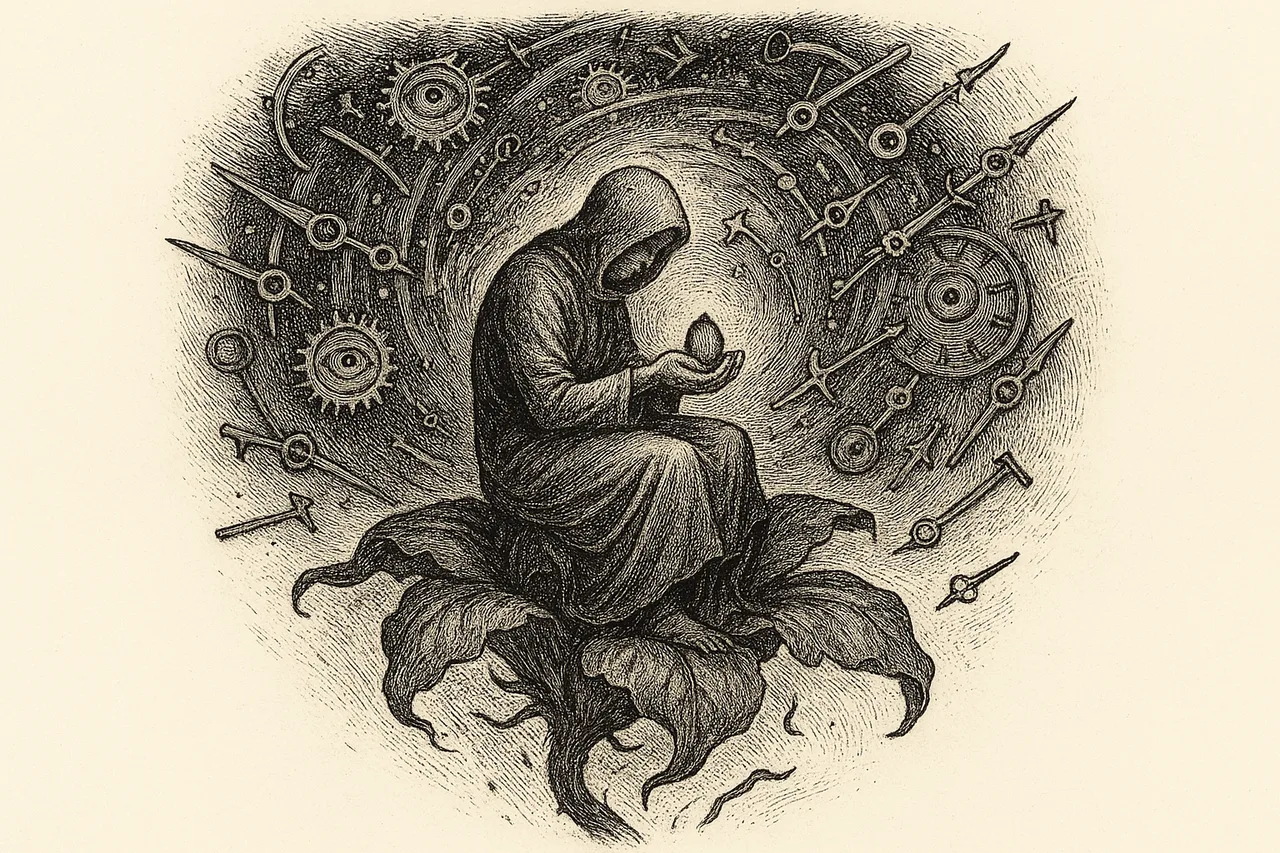
I knew I was burned out when I opened my laptop, saw a normal email, and my body reacted as if a tiger had sent it. That's the piece most high performers miss. Burnout doesn't begin as a calendar problem. It begins as a system problem.
If you're a founder, creative, or the person everyone relies on, generic advice about “taking a little more time for yourself” can sound almost offensive. Useful in theory. Comically detached in practice. You can't just vanish for a month if payroll, clients, and delivery all still point at you.
Table of Contents
- The Parable of the Over-Tuned Engine
- A Burnout Self-Assessment You Haven't Taken
- Immediate Relief and Somatic Resets
- Your 30/90-Day Recovery Roadmap
- Building Your Anti-Burnout Operating System
- When and Who to Call for Professional Support
The Parable of the Over-Tuned Engine
A racing engine is a beautiful piece of engineering. Tuned properly, it responds instantly, runs hot, and performs brilliantly under pressure. Then someone decides to drive it through city traffic, potholes, and long idle stretches as if it were a family saloon. Before long, something cracks. Not because the engine was weak, but because it was calibrated for the wrong environment.
That's how burnout works in ambitious people. You didn't fail because you lacked grit. You often burned out because your inner machinery got over-optimised for urgency, pressure, novelty, and consequence. You became excellent at sprint conditions and then tried to live there permanently.

Founders get especially bad advice here. A lot of burnout content assumes there's a manager above you, a team to catch things, and a clean distinction between work and life. Yet the UK's Health and Safety Executive reported 875,000 cases of work related stress, depression or anxiety in 2022/23, while guidance for people who are the decision maker remains thin, especially when revenue cannot pause and the business still depends on them, as discussed in this UK-focused burnout recovery guide for entrepreneurs.
Why founders don't recover with ordinary advice
When you are the system, “switch off” isn't a strategy. It's a fantasy unless you redesign the system itself.
I've seen this pattern repeatedly in entrepreneurs. They try the polite version of recovery. A weekend off. A yoga class. A better morning routine. Then they walk straight back into the same load, the same client dynamics, the same compulsive self-pressure, and wonder why they feel worse by Wednesday. The unconscious mind is annoyingly loyal to familiar identity. If your identity says, “I'm the one who holds everything together,” your body will keep paying the bill.
Burnout usually looks like exhaustion on the surface and over-identification underneath.
Jung would have called part of this the shadow. Not your dark villain side. Something more ordinary and more disruptive. The hidden bargain you made with achievement. Be exceptional and you'll be safe. Be indispensable and you'll be loved. Be needed and you'll matter. Those bargains drive heroic output for a while, then become expensive.
If you want a useful way to think about unconscious metaphor, this piece on active imagination and Jung's unconscious symbolism is worth reading. Burnout often speaks in symbols before it speaks in sentences. Leaking energy. Frozen thinking. A sense of being hunted by your own to do list.
Recovery means recalibration, not retreat
The goal isn't to become softer, less ambitious, or spiritually allergic to deadlines. The goal is to stop treating a race engine like public transport. Sustainable high performance comes from range. Your system needs intensity, yes, but also recovery, variation, control, and periods where nothing is extracting from you.
That's where how to recover from burnout gets interesting. Meaningful work isn't just rest. It's learning which unconscious settings created the overload in the first place, then changing them without collapsing your life.
A Burnout Self-Assessment You Haven't Taken
Most burnout quizzes ask if you're tired, cynical, or struggling to focus. Fair enough. Useful as far as a weather app is useful when your roof is already gone. The better question is this: what pattern in you made burnout feel normal for so long?
In a survey of nearly 200 people recovering from burnout, 47% were willing to change jobs and 40% would take a sabbatical, which tells you something important. By the time many people seek recovery, their internal setup already feels so unsustainable that a total overhaul seems more realistic than a small adjustment, according to Gabe Kwakyi's burnout recovery survey findings.

The questions that actually tell the truth
I prefer sentence completions to self-scoring checklists because they bypass your polished public self. Write the endings fast. Don't curate.
- Success without struggle feels ...
- If I slow down, people will ...
- The part of me that keeps pushing believes ...
- Rest means I am ...
- I feel most valuable when ...
- If I disappoint someone, it means ...
Those endings usually reveal the hidden contract. Burnout isn't only too much work. It's often too much meaning attached to work.
The NLP filters that quietly run the show
NLP calls these meta programmes, which is a fancy phrase for recurring filters in attention and behaviour. You don't need jargon for them to be useful.
Here's a quick map:
| Pattern | How it sounds in burnout | What it tends to create |
|---|---|---|
| Toward | “I need the next win” | Endless acceleration |
| Away from | “I can't let things fall apart” | Fear-driven overwork |
| Internal reference | “I'll know when it's good” | Relentless self-editing |
| External reference | “I need proof people approve” | Dependence on praise, clients, metrics |
| Matcher | “What's missing here?” | Over-focusing on flaws |
| Mismatcher | “This still isn't right” | Chronic dissatisfaction |
None of these patterns are bad. They become costly when one dominates your whole operating style. A founder driven hard by an away-from pattern often looks disciplined from the outside and hunted from the inside.
Practical rule: If your motivation collapses the moment external pressure disappears, you were probably running on threat more than purpose.
If you want a deeper lens than personality typing, Surreal Experiments has an unconscious pattern assessment built around belief patterns, reframes, and next steps. That sort of tool is useful when you already know the obvious facts and want to see the machinery beneath them.
Borrow clues from adjacent burnout patterns
Burnout also leaves behavioural fingerprints in places people don't expect. The patterns described in these warning signs of treatment burnout are relevant because they show how exhaustion can distort motivation, connection, and follow through even in people who care significantly and mean well. Different setting. Similar mechanics.
A better self-assessment asks three things:
What am I repeatedly proving?
Competence, worth, safety, superiority, belonging.What emotion am I trying not to feel?
Shame, helplessness, envy, fear, emptiness.What would break in my identity if I recovered fully?
That's usually the gold. Many people want relief while secretly protecting the pattern that made burnout inevitable.
Immediate Relief and Somatic Resets
When your system is overloaded, insight alone has terrible timing. You can understand your childhood, your attachment style, and your quarterly targets, then still feel your chest tighten because your body is ahead of your interpretation.
Burnout recovery has to address sleep disruption, cognitive overload, and physiological strain together. UK-facing guidance often misses that point, which is why targeted body-based resets matter before higher-level mindset work, as noted in this step-by-step burnout recovery guide.

The physiological sigh
This is the least glamorous useful thing I know.
Take one inhale through the nose. Before you exhale, take a second small inhale on top of the first. Then exhale slowly through the mouth. Repeat a few times. The point isn't performance. The point is signalling to your body that the alarm can come down a notch.
Do it when you notice mental static, shallow breathing, doom-scrolling, or that awful sensation that every task is urgent and none of them are clear.
Somatic pendulation
Pendulation sounds technical. It's simple. You move attention gently between activation and steadiness instead of trying to force calm.
Try this for a minute or two:
- Notice the charge by finding where stress is loudest in the body. Throat, jaw, chest, belly.
- Shift to a neutral or pleasant zone such as your feet on the floor, your hands, or the support of the chair.
- Move back and forth slowly between the charged area and the steadier area.
- Let the body lead. If the stressful area gets too intense, return to the neutral one and stay there longer.
This helps because a burned out system often can't tolerate being commanded into tranquillity. It responds better to being guided.
For a related approach to meeting difficult internal states without brute force, this piece on feeding your demons as a trauma release exercise offers a surprisingly practical frame.
An NLP pattern interrupt for rumination
Rumination feels intelligent because it's busy. Usually it's repetition in a suit.
Use a pattern interrupt when your mind starts rehearsing the same loop.
- Stand up and change physical position.
- Say out loud, “That's the old loop.”
- Name five visible objects in the room.
- Ask one directional question: “What requires action today, and what merely wants more mental theatre?”
That last line matters. NLP works well when you shift subtext, not just wording. A good interrupt breaks state, names the pattern, then redirects attention towards choice.
Here's a short demonstration you can follow along with if your nervous system needs something guided rather than conceptual.
Your first job in recovery is not to become inspired. It's to become less physiologically hijacked.
What works and what usually doesn't
A quick contrast helps here.
Useful in the first wave
Breath regulation, low stimulation walks, reducing evening input, body scans, shorter work blocks, simpler decisions.Usually overrated at this stage
Forcing gratitude, doing mindset work while highly activated, productivity overhauls, pretending one day off will undo chronic overload.
If you want to know how to recover from burnout without lying to yourself, start by respecting state. A distressed body turns every inbox into philosophy and every minor choice into existential theatre.
Your 30/90-Day Recovery Roadmap
A proper burnout plan needs humility. Research summarised in burnout recovery literature indicates the full process can take between one and three years, depending on severity, which is why a 90-day plan is useful as a foundation rather than a fantasy finish line, as outlined in this burnout recovery timeline overview.

The first 30 days
The first month is not for reinvention. It's for reducing damage and restoring enough stability that your thinking becomes trustworthy again.
I'd focus on five moves.
- Create hard off-hours
Decide when work stops being allowed to recruit your nervous system. That might mean no email after a certain hour, no laptop in bed, no Slack on the phone, or a literal change of room when your shift is over. Psychological detachment sounds abstract until you realise it often starts with very boring decisions about devices and doors.
Triage your workload brutally
Burnout turns many intelligent people into curators of unnecessary complexity. Make three lists: must do, can delay, remove entirely. If you're the founder, assume some tasks are surviving only because you're sentimentally attached to being the person who still does them.
Set a sleep baseline
Sleep won't fix everything, but without it almost nothing sticks. Use a consistent wind-down time, lower stimulation in the evening, and stop treating late-night admin as noble. It's often just expensive.
Add one mastery activity outside work
Recovery research points to mastery as an important ingredient. Choose something mildly challenging and unrelated to revenue. Strength training, sketching, learning a language, cooking properly, piano, boxing drills, pottery. The point is to rebuild competence where your worth isn't at stake.
Use weekly micro-goals
Keep them small enough to complete on a bad week. “Leave the office by X.” “Delegate one recurring task.” “Take one walk without a podcast.” Burnout recovery improves when goals reduce internal friction rather than decorate ambition.
Field note: If your recovery plan makes you feel immediately behind, you've smuggled your old operating system into the new one.
Days 31 to 90
This phase is about redesign. You're no longer just stopping the bleed. You're changing the architecture that made overload feel normal.
A useful place to begin is language. NLP pays close attention to the sentences people use without noticing. Founders in burnout often speak in trance-inducing absolutes. “It all depends on me.” “If I don't push, everything slips.” “I should be able to handle this.” Repeating those lines trains the body into pressure.
Replace them with language that preserves responsibility without worshipping strain:
Old script
“Everything is urgent.”Better script
“A few things are important. The rest can wait or move.”Old script
“I'm bad at boundaries.”Better script
“I have trained availability. I can train a different pattern.”Old script
“Rest puts me behind.”Better script
“Recovery protects judgement.”
You also need fewer decisions. Decision fatigue is one of burnout's favourite hobbies.
A basic redesign table helps:
| Area | Old pattern | New system |
|---|---|---|
| Constant checking | Fixed windows and template replies | |
| Client intake | Custom every time | Standard questions and boundaries upfront |
| Calendar | Meetings scattered everywhere | Clustered calls and protected focus blocks |
| Admin | Founder as bottleneck | Delegate, automate, or delete |
| Evenings | Work bleeds into sleep | Repeatable shutdown routine |
For many founders, this is the month where grief appears. Not dramatic grief. Practical grief. Grief that your old way “worked” by consuming you. Grief that some relationships benefited from your over-functioning. Grief that being impressive may have become part of your attachment strategy.
That's normal. Useful too.
A 90-day roadmap works best when it changes both behaviour and identity. Otherwise you just become a more organised version of the same exhausted person.
Building Your Anti-Burnout Operating System
Recovery becomes durable when you stop treating it as a side project and start treating it as infrastructure. The research-backed model I trust most centres on psychological detachment, relaxation, mastery, and control, which gives founders a much saner blueprint than vague advice about balance, as described in this recovery science summary on the four recovery experiences.
Meet the shadow at the wheel
Jung's shadow is often misunderstood as something sinister. In practice, it's usually the part of you that learned to earn safety through overperformance and then hid the invoice.
The shadow says things your polished self would never admit:
- If I stop achieving, I disappear.
- If I'm not the strongest one here, I lose status.
- If I make this easy, it won't count.
- If I let people help, they'll see the mess.
Those beliefs don't respond well to scolding. They respond to integration. You bring them into awareness, name the bargain, and choose consciously rather than compulsively.
A useful prompt is: What quality do I secretly admire in people I also judge?
Often the answer is spaciousness, ease, receptivity, or the ability to leave work unfinished without turning it into a morality tale.
Build for detachment, mastery, relaxation and control
The anti-burnout operating system needs visible mechanics. Otherwise it stays inspirational and dies by Thursday.
Try building from these four pillars:
Psychological detachment
Use rituals that tell the mind work is over. Shut the laptop with intention. Change clothes. Walk around the block. Keep your phone out of the bedroom. The ritual matters because the unconscious responds to repeated cues faster than to noble intentions.Relaxation
Choose activities that lower stimulation instead of just filling time. That might be slow stretching, breathwork, a bath, wordless music, prayer, gardening, or lying on the floor like a Victorian woman who has seen too much.Mastery
Learn or practise something where progress is measurable and your business identity isn't involved. This repairs a burned out person's relationship with competence.Control
Reduce unnecessary choices and reclaim agency over recurring friction points. Rebuild your week so your calendar serves your attention rather than colonises it.
For strategic thinking about decisions and systems, I like this piece on mental models drawn from Buffett, Bezos, and Jobs. It's useful when your problem isn't effort but design.
Strategic sloppiness helps. Some things should be done competently, then left alone before they become a shrine to your nervous system.
The point isn't to work less in some moralistic sense. It's to stop confusing self-erasure with excellence.
When and Who to Call for Professional Support
If you've already read the books, journalled, and built better habits, but the same pattern still takes the wheel under pressure, outside support can save a lot of time. The trick is choosing the right kind.
Choose support by problem type
Different practitioners do different jobs, and confusion here wastes energy.
Therapists
Useful when burnout is tangled with older emotional material, persistent distress, relationship patterns, or experiences that keep repeating despite insight. A good therapist helps you understand and process what keeps recruiting the same reactions.Coaches
Better when the issue is implementation, decision-making, leadership behaviour, accountability, or business structure. Coaching works well for forward movement when you're stable enough to act consistently.Hypnotherapists or NLP practitioners
Worth considering when you can describe the problem perfectly and still keep reenacting it. That usually suggests the pattern sits deeper than conscious intention. Work at this level often targets language, imagery, state shifts, and the meanings attached to pressure, visibility, money, and worth.
For a clearer distinction between support roles, this guide on coaching and related helping approaches gives a practical overview.
Questions worth asking before you hire anyone
Don't ask whether someone is “good”. Ask how they think.
Here are better filters:
- How do you work with recurring patterns that return under stress?
- How do you distinguish insight from actual change in behaviour?
- What do you do when a client understands the issue but still can't interrupt it in the moment?
- How much of your approach includes body-based regulation, not just talking?
- How do you handle ambition without pathologising it?
Good support shouldn't shame your drive. It should help you stop feeding it with your bloodstream.
One last thing. Relapse prevention in burnout is mostly signal detection. The warning signs matter precisely because they are useful data. Irritation, dread, mental fog, revenge bedtime scrolling, weird resentment at tiny requests, difficulty switching off, loss of play, a body that braces before opening the laptop. Those are not character flaws. They are indicators that the old engine tuning is creeping back.
If you want a structured way to spot the unconscious beliefs and recurring patterns behind overwork, perfectionism, and self-sabotage, Surreal Experiments offers educational tools for self-inquiry, including pattern assessments and AI-guided reflection for entrepreneurs and creatives. It's designed for self-discovery rather than diagnosis, which makes it a useful complement to proper professional support when you want more than generic burnout advice.
Continue reading
Explore the full Burnout & Nervous-System Recovery pillar