
What Is Self-Sabotage? Why You Do It (And How to Stop)
The science and psychology of why we self-sabotage, what's running underneath each pattern, and how to stop.
Contents
- What is self-sabotage?
- What are self-sabotaging behaviours?
- Why do we self-sabotage? The common patterns amongst all behaviours
- Why are self-sabotaging behaviours so persistent?
- How to stop self-sabotaging
- A note on secondary gains
What is self-sabotage?
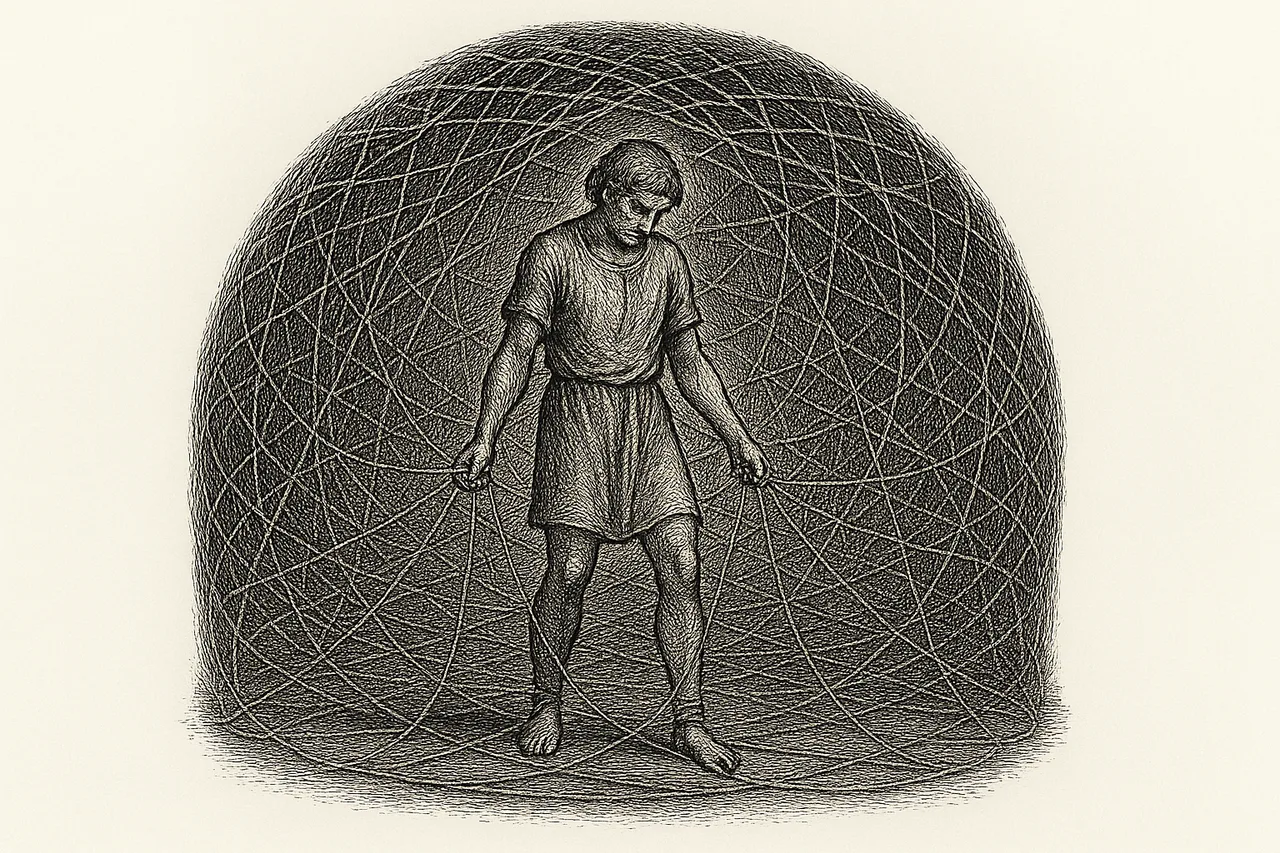
Self-sabotage is the act of repeating behaviours that you consciously or unconsciously know are not good for you. They don't support what Aristotle called eudaimonia, or human flourishing: what contributes to your long-term happiness, wellbeing, and fulfilment in life.
Sometimes you consciously know a behaviour is bad for you and you do it anyway. You know there's a deadline tomorrow, but you watch Netflix instead. You know that extra drink isn't doing you any favours, but you have it.
Sometimes you don't consciously know how or in what way you're sabotaging yourself; you only know you're not happy with where you are. You feel stuck, burned out, depressed, lost, or unfulfilled. For some people, prolonged burnout also begins to show up in physical symptoms.
I know that experience. I burned out and my body started showing the cost after building a successful 6-figure online business, without realising that the way I'd built the business was self-sabotaging. I had unconsciously commercialised my people-pleasing and was overworking to compensate for the unconscious belief that I am not good enough.
Although consciously I thought what I was doing was aligned with my long-term goals, the way I had built the business didn't contribute to my long-term wellness, happiness, or fulfilment.
After a deep descent into my unconscious and examining my unconscious beliefs, I realised how and in what way my behaviours were self-sabotaging, and I changed the way I built the business to align with my long-term goals.
What are self-sabotaging behaviours?
Self-sabotaging behaviours fall into six common patterns: procrastination, perfectionism, self-criticism, people-pleasing, toxic relationship patterns, and physical compulsions. Some are visible and manifest physically. Others are quieter and manifest mentally or emotionally.
| Pattern | Common behaviours | Unconscious beliefs or fear driving the behaviours | Impact on high achievers and entrepreneurs |
|---|---|---|---|
| Procrastination | Doom-scrolling, "productive" busywork, overthinking, endless preparation, never quite launching | Fear of success; fear of failure or criticism; fear of "not being good enough"; fear of losing the creative spark | Stalled launches, perpetual preparation, products that never ship or never get marketed, the goal that never arrives |
| Perfectionism | Endless tweaking, workaholism, imposter syndrome | I am not good enough; worth must be earned through hard work | Burnout, products that never ship, the Sisyphus loop |
| Self-criticism / negative self-talk | Inner judging voice, rumination, shame spirals | My self is broken and must be disciplined; love is earned through performance | Confidence collapse, depression, fuel for other sabotage patterns |
| People-pleasing | Saying yes when meaning no, no boundaries, chronic depletion | Love is conditional on what I give; fear of abandonment | Resentment, burnout, commercialised people-pleasing in business |
| Toxic relationship patterns | Repeating with unavailable partners, draining clients, lopsided friendships | Repetition compulsion; the painful familiar feels safer than the unknown | Recurring crises, unsustainable partnerships, identity drain |
| Physical compulsions | Skin picking, hair pulling, overeating, alcohol or substance use, shopaholism | Avoidance of uncomfortable emotion; sadism turned inward | Health collapse, secondary shame, displaced focus |
Recognise any of these patterns in yourself? The personal patterns quiz helps you trace which of these is most active in your personal life. The business patterns quiz does the same for your business.
Procrastination
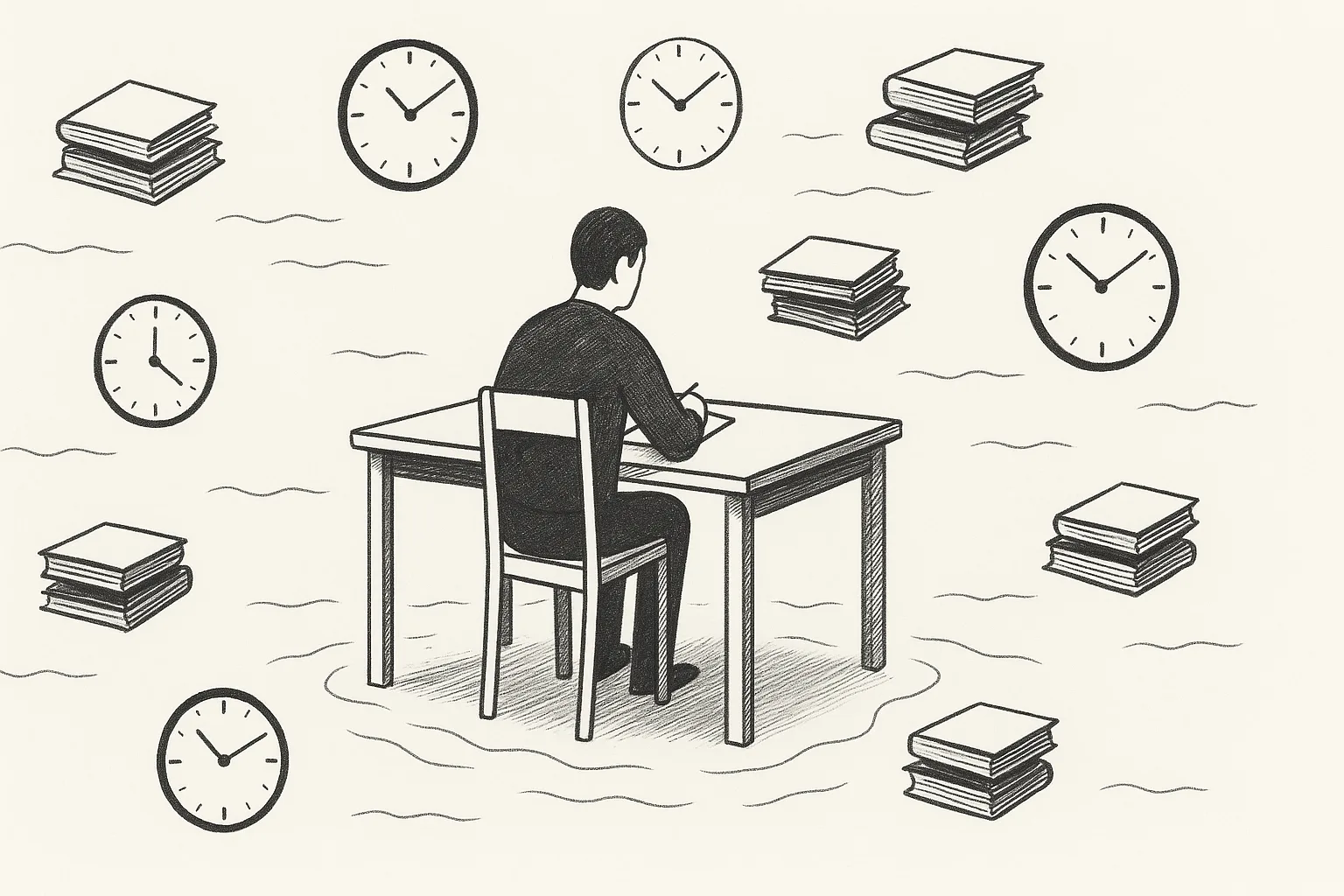
Procrastination is the unconscious delay of important tasks, often masked by other "productive" activity. You delay the important task, telling yourself you don't have enough skill or knowledge or time, that you'll do it when you feel ready, or when the timing and circumstances finally align, when Mercury isn't in retrograde.
You know you have a deadline and that you should be working on the task, but you doom-scroll instead. The email you could send today would generate revenue, but the part of you that doesn't want to send it decides you need to finish another email-marketing course first.
High achievers fall into a particularly subtle version called productive procrastination.
It doesn't look like procrastination on the surface because you are "doing" things that seemingly help you reach your goal.
You seem perpetually busy, with a calendar full of events you've convinced yourself you "have to" attend, but that don't move the needle.
You might have a full "to learn" list, YouTube videos, blogs, courses, books, that you think you have to consume before acting on the goal you say you want to pursue.
Overthinking is another form of subtle procrastination: you mentally create more things to consider, more factors to weigh, more things to do, before making the decision to just do it.
Why do you procrastinate?
On the unconscious level, several beliefs may be running:
- Fear of success. If you actually become successful, it may bring consequences a part of you does not want. For an entrepreneur who has burned out before, more success can read as the most direct path back to burnout, because the added pressure and responsibilities of a launch feel like the same conditions that broke the body last time. Procrastination quietly becomes a form of protection, on the logic that as long as nothing launches, the collapse cannot repeat.
- Fear of failure or criticism. If you never finish or launch the work, no one can judge it. For many entrepreneurs, criticism of the work is registered unconsciously as criticism of the self, so an imperfect product begins to feel like proof of an imperfect person, and procrastination becomes the quiet way of staying out of that exposure altogether.
- Fear of "not being good enough". If you unconsciously believe you are not good enough, finishing the thing could prove you wrong. For the entrepreneur waiting to launch, succeeding would mean meeting a bigger version of yourself than the one you have been carrying around, and for some people that prospect is more threatening than failure itself. Procrastination keeps the old self-image intact and quietly reconfirms the familiar story that you were never quite up to it.
- Fear of having creativity taken away. Some part of you fears that finishing the work means losing the creative magic that drew you to it in the first place. This is common amongst creatives and among entrepreneurs who love the early innovation phase, and it is one I have wrestled with myself. The fun part is the making itself, the part where the idea is still being shaped and the product is still becoming. The marketing and selling that follow feel like an entirely different kind of work, one the unconscious quietly refuses to count as creative. Some entrepreneurs never finish the product, because finishing means having to do the part their unconscious has decided is soulless; others finish but freeze at launch, where fear of criticism or failure takes over.
If you recognise yourself in any of these, you can find out which unconscious beliefs are actually influencing your behaviours, and the personal patterns quiz maps the beliefs driving your personal life while the business patterns quiz does the same for your business.
If you want to overcome procrastination in 10 minutes with our AI-powered guide, you can apply to be a beta tester for the app.
Perfectionism
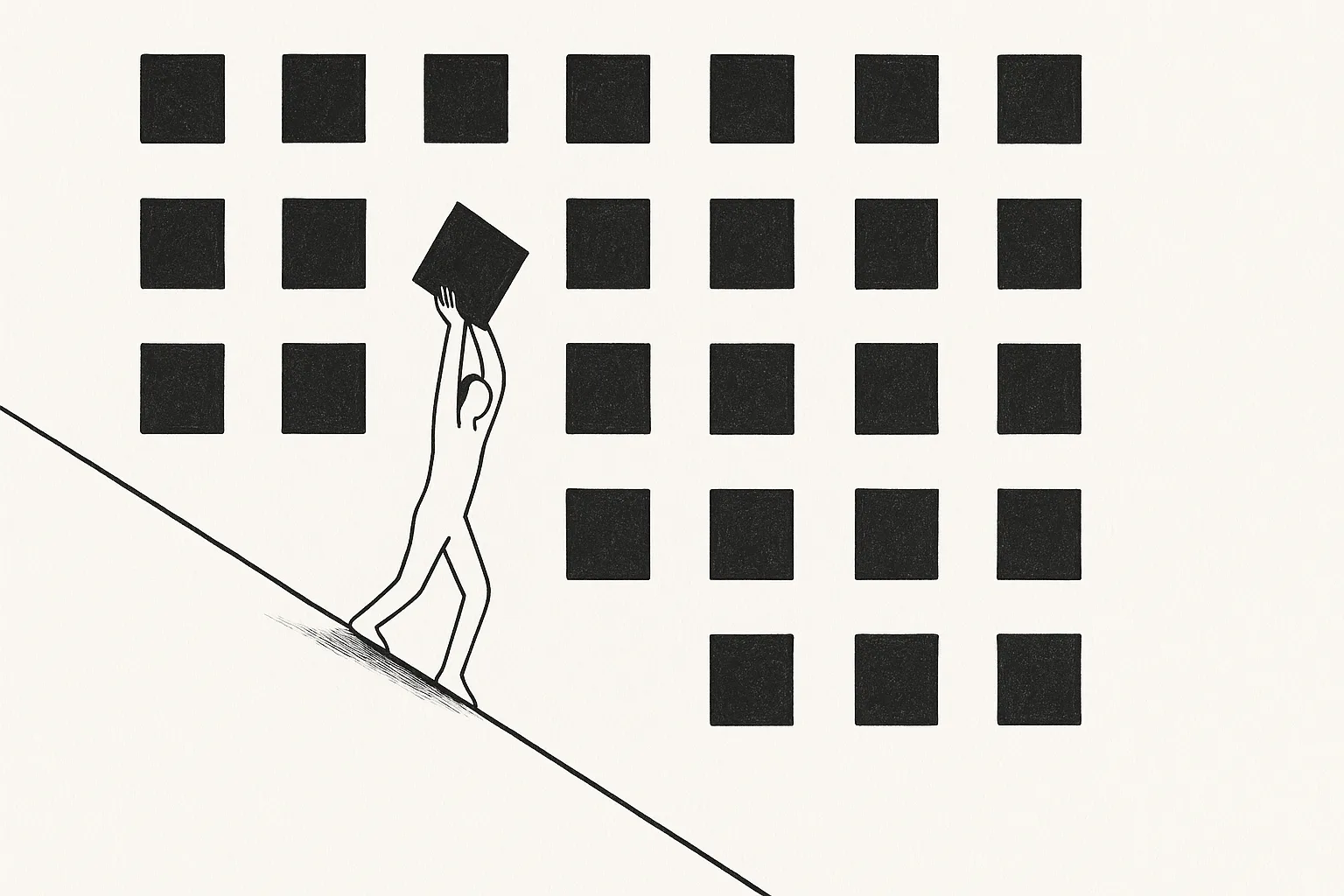
Perfectionism is the compulsion to keep improving the work past the point of usefulness, driven by the belief that any flaw in the work reflects on the self. You tell yourself the work is not good enough, so you keep tweaking and improving small details instead of launching. When you finally do launch and the result is not what you wanted, you blame yourself for not having worked harder.
Workaholics often fall into this group too, driven by the unconscious belief that one is only worthy of success when one produces more work, and that if the work wasn't painful, the success doesn't really feel earned.
Imposter syndrome is a subtler form of perfectionism, the feeling that your achievements were down to luck rather than competence, and that you were never quite competent enough to deserve what you have.
Why are you a perfectionist?
Underneath sits the belief that you, or your work, are never quite good enough, that there is always something lacking before you can be deemed worthy. To be worthy of success, love, or recognition, you must keep becoming a better version of yourself, and keep working harder.
The reality, of course, is that there is always another goal to reach and always more to improve. The perfectionist traps themselves in a never-ending Sisyphean loop, pushing the boulder uphill to reach the milestone, and as soon as they get there the boulder rolls back down and they have to push again. The loop reconfirms the perfectionist's deepest fear, that they are never quite good enough, and that there will always be a next thing to do before they can be.
If you want to overcome perfectionism in 10 minutes with our AI-powered guide, you can apply to be a beta tester for the app.
Self-criticism and negative self-talk
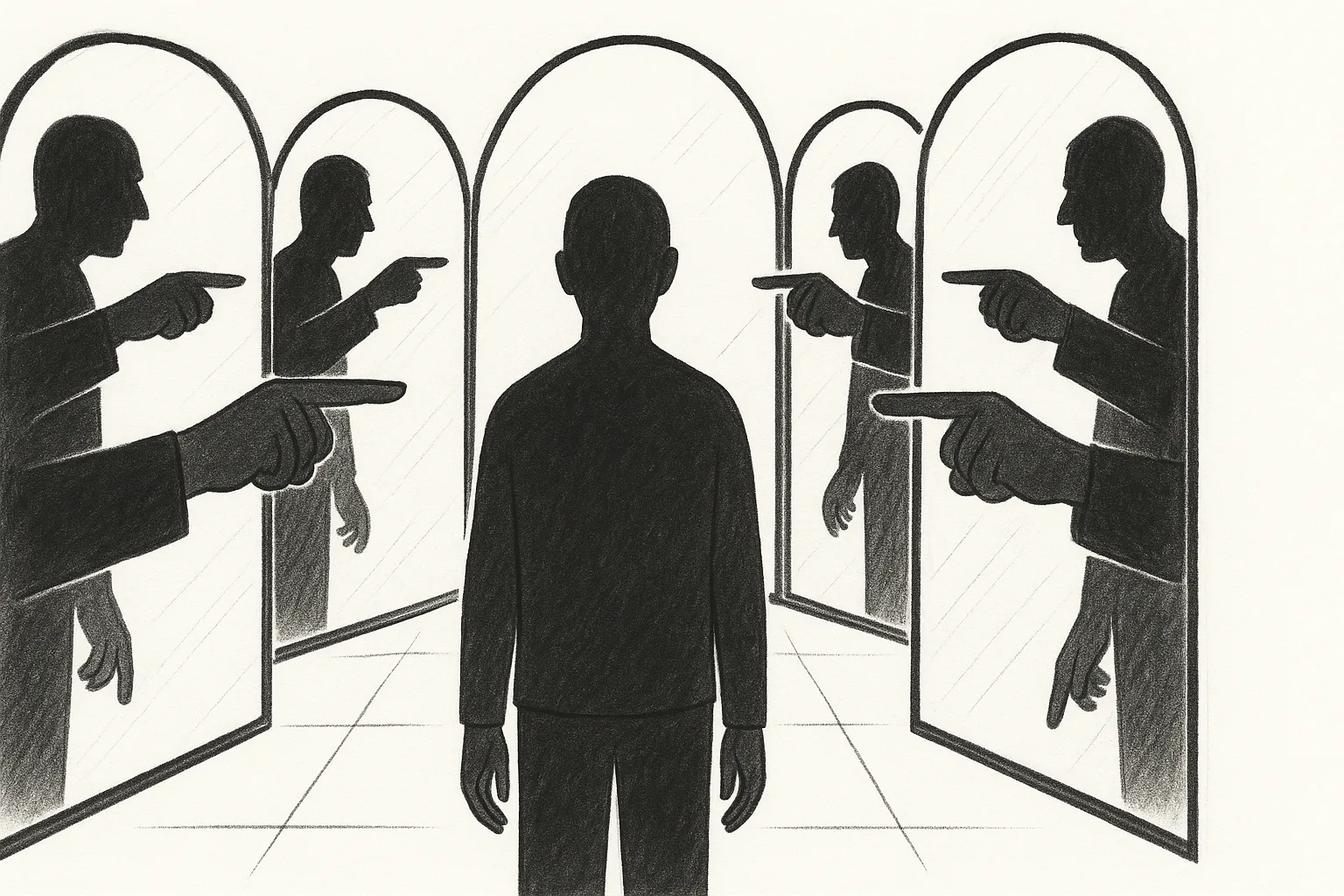
Self-criticism is a chronic inner-judging voice that runs in the background, often borrowed from early authority figures and internalised as your own. You have an inner voice that judges what you do in the background, a voice that says things like That was stupid of me to do that, or Why did you forget the keys again, until you find yourself in a negativity spiral, ruminating on your mistakes and failures. Often this overlaps with perfectionist tendencies, and the voices are rarely originally your own. They usually began as the judgements of parents, teachers, or other caregivers in your early developmental years, internalised so completely that they now sound like your own thoughts.
Sometimes the spirals themselves cause the next round of self-sabotage: you feel ashamed and guilty and overwhelmed by your mistakes, you buy into the story those inner voices are telling you, and you engage in self-sabotaging behaviours to punish yourself for it.
Why are you so hard on yourself?
The unconscious belief is that the self you have constructed is in some sense broken, and self-criticism becomes the way of disciplining that self, constantly reminding you that you are not worthy or lovable.
This shows up often in people raised by parents or teachers who showed love or approval only when the child had achieved something. The child grew up experiencing conditional love that tied achievement to self-worth, rather than the unconditional love that would have recognised them as worthy of love no matter what they had achieved.
At the root of self-criticism is self-rejection, sometimes as strong as self-hatred, because you have not learned to treat yourself with compassion, or to love yourself unconditionally. The shift, when it comes, is to love yourself not for what you have achieved, but unconditionally for who you are.
People-pleasing
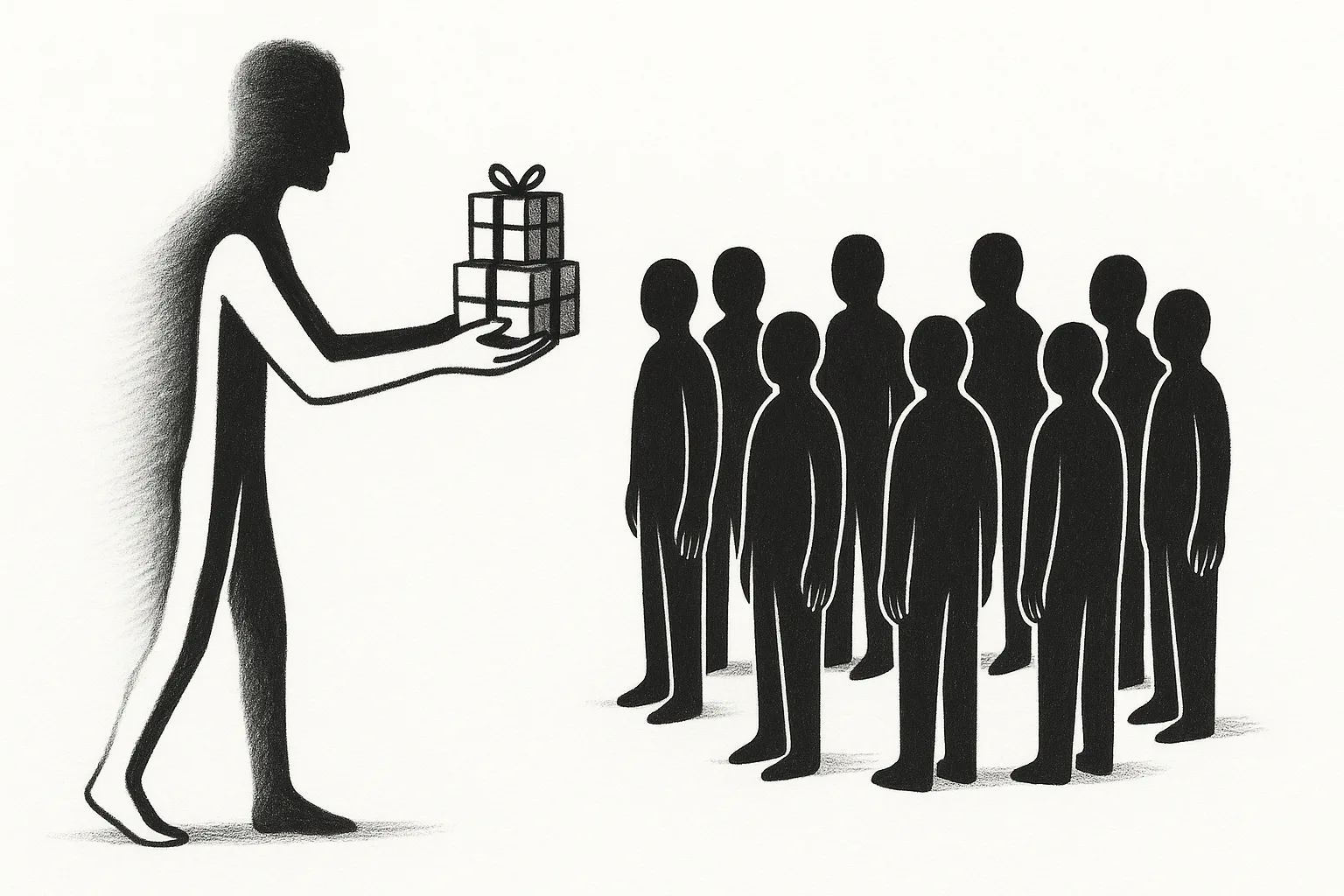
People-pleasing is the behaviour of chronically prioritising others' needs, feelings, and opinions over your own.
You know your own needs and opinions, but you cannot voice them, for fear of rejection or abandonment, or simply of being left alone. You keep saying yes when you mean no, and you find it hard to set boundaries because you unconsciously believe that the moment you do, people will leave. You make yourself small, you stop standing up for your own interests, anything to avoid upsetting or disappointing the people around you.
As a result, you often feel like you are over-giving, drained physically and mentally, burned out, and resentful. Your boundaries keep being crossed, because the people around you cannot see them, and so they keep pushing.
Why do you people-please?
The people-pleaser learned early that love is conditional: I am only worthy of love if I give people what they need and sacrifice my own needs in the process. They often grew up in chaotic environments where they were loved and recognised only for what they could provide for others, rather than for what they wanted or who they were. Unconsciously, they learned a substitution: I give, therefore I am.
Giving and earning love becomes their identity, and their strategy to avoid abandonment: if I'm useful to them, they will need me, and if they need me, they won't leave.
The cost of that strategy is the loss of the self, because to keep earning love, the people-pleaser has to keep prioritising other people's needs, interests, and opinions, and abandoning their own.
Gradually, other people's needs and opinions become indistinguishable from their own. They need others to validate their identity and to give it back to them, and over time they no longer know what they want or who they are.
Underneath all of it is the unconscious belief that you are not inherently worthy of love, that love cannot be generated from within, and that without external approval you have no reliable proof of your own value. The work, then, is to re-develop a sense of self from the inside out: to learn again what you actually need, what makes you happy, and how to give yourself the love and compassion that you have been outsourcing to other people.
Repeating draining or toxic relationships
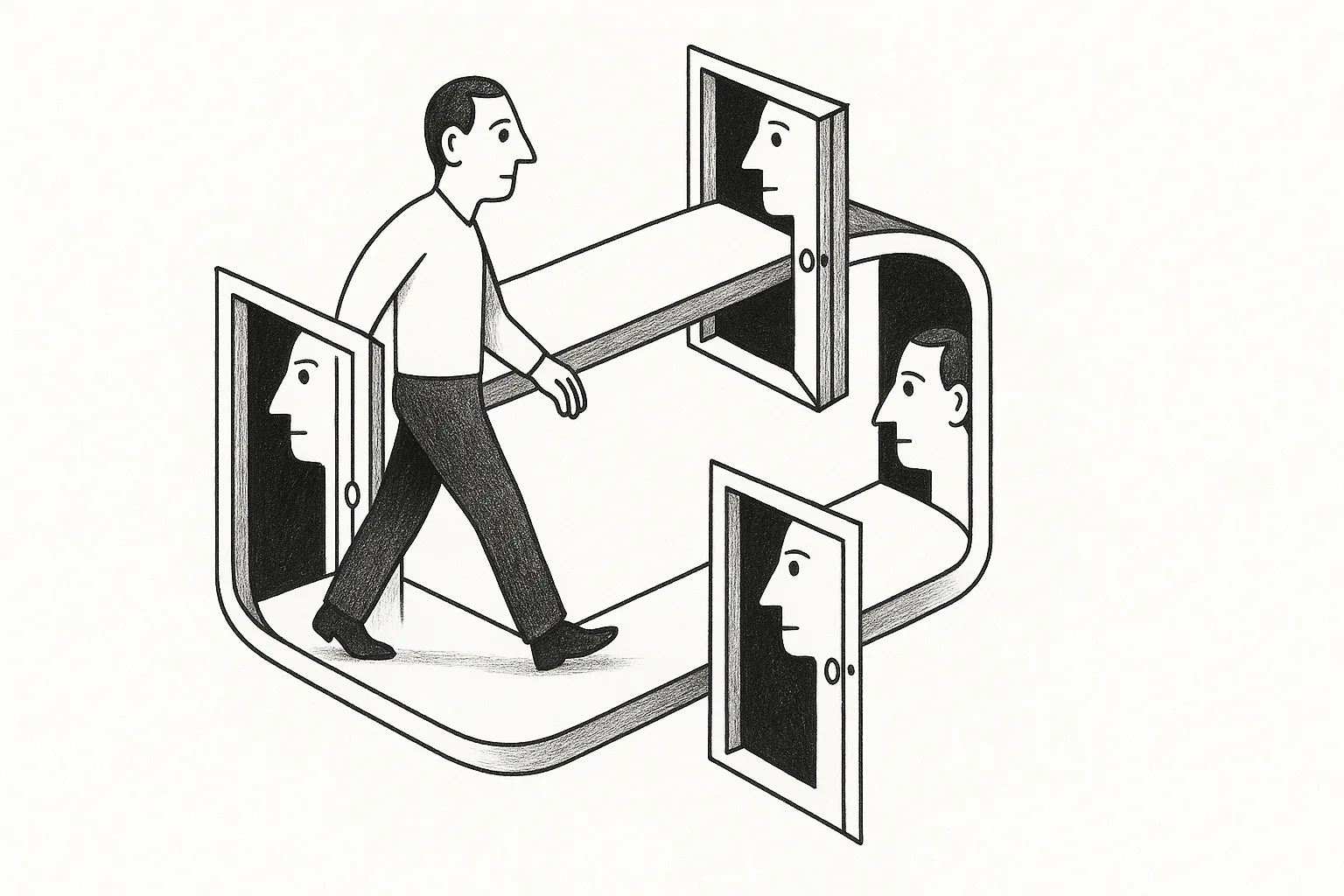
Repeating toxic relationship patterns is the unconscious tendency to recreate dynamics from earlier dysfunctional environments: chaotic partners, draining clients, lopsided friendships. In personal life this shows up as repeatedly ending up with emotionally avoidant or chaotic partners, attracting people on the narcissistic or borderline spectrum, or finding yourself in lopsided friendships where you're always the giver. In business, it shows up as repeatedly attracting clients who demand a lot but resist paying for it, or clients who energetically drain you.
Why do you keep choosing toxic relationships?
Freud calls this repetition compulsion: people unconsciously recreate painful situations they've experienced in the past because the psyche is trying to master the unresolved trauma, even when those situations produce suffering again.
If you grew up in a dysfunctional family, especially if you have never experienced what a loving, secure relationship feels like, it is deeply uncomfortable to step out of your comfort zone and explore other possibilities. Unconsciously, you repeat certain patterns because they are the only dynamics you know. This explains why you keep choosing the unavailable lover, the chaotic business model, or the condescending client.
Unconsciously, the belief driving the pattern is some version of I am too much or I am not enough to have balanced relationships or friendships. Beneath it sits a quiet lack of self-esteem. When I undervalued myself and undercharged, for instance, I often attracted the cheap and toxic clients who demanded a lot and undervalued my work. The unconscious belief that I am not good enough attracted exactly the clients who would confirm it. But when I changed my mindset and doubled my price, I started attracting aligned clients, because I had finally stepped into my own self-worth.
Physical self-sabotage
Physical self-sabotage lives in the body. It shows up in behaviours that visibly harm or destabilise your physical wellbeing, often repeated for years despite a quiet knowing that they are not serving you.
These behaviours are symptoms, not causes.
- Skin picking (dermatillomania)
- Hair pulling (trichotillomania)
- Nail biting and cuticle pulling
- Overeating and binge eating
- Anorexia and restrictive eating
- Compulsive shopping and overspending
- Alcohol and substance addiction
If any of these behaviours are interfering with your daily life or your safety, please seek support from a qualified clinician.
Why do you self-sabotage physically?
Someone who skin picks or hair pulls might be feeling anxious or bored, and engages in the behaviour to avoid those feelings. Someone who misuses alcohol or goes on a shopping spree might be numbing a feeling they don't want to face, whether emptiness or discomfort.
The driving belief is that I cannot bear what I feel. The discomfort cannot be felt directly, so it gets routed elsewhere: discharged through the skin, numbed through food, outsourced to a substance.
Each of these behaviours also produces a short-term neurochemical reward.
The brain releases dopamine the moment the discomfort lifts, encoding the act as relief.
Repeated, that circuit becomes dedicated to delivering relief on demand (Volkow, Wise & Baler, 2017).
This is why trying to change through willpower alone often falls short.
The brain has shifted from goal-directed control toward habit-driven responding, and the conscious mind has less leverage over what happens next.
Underneath that is a second, older belief: that the self deserves to be punished. Nietzsche described how destructive instincts that cannot discharge outward turn inward. Freud carried this into clinical territory: the aggression we cannot direct outward is redirected at the self. Sadism becomes masochism. A punishment we administer to a self we never learned to love.
Why do we self-sabotage? The common patterns amongst all behaviours
Behind each behaviour is a set of unconscious beliefs shaped by our past experiences and exposures. Those beliefs create a kind of mental movie of what we expect to happen if we act, and that movie generates uncomfortable emotions in us, most often fear.
To avoid feeling those emotions, we engage in the self-sabotaging behaviour. It gives us short-term relief and a hit of dopamine, even when we know it will cost us in the long run.
For instance, in my coaching sessions with creatives, many of them unconsciously believe that marketing and sales are inherently manipulative, often because they grew up hearing that.
The belief plays as a mental picture of what marketing their work would look like: manipulating and influencing people to buy something they don't want or need.
Underneath it sits another belief, that marketing is fundamentally uncreative and steals time away from real creative work.
So the mental image they hold about marketing is heavily negative, and that movie runs quietly in the back of the mind every time they sit down to do marketing tasks.
Anyone would feel uneasy doing marketing with that movie playing.
You can see, then, why so many creatives self-sabotage when it comes to selling their work.
They procrastinate.
They become inconsistent.
They'd do anything to avoid the movie playing in their head.
We are wired to choose the path of least resistance, the behaviour that brings temporary relief and pleasure right now, even when what would actually contribute to our long-term flourishing lies somewhere else.
Why are self-sabotaging behaviours so persistent?
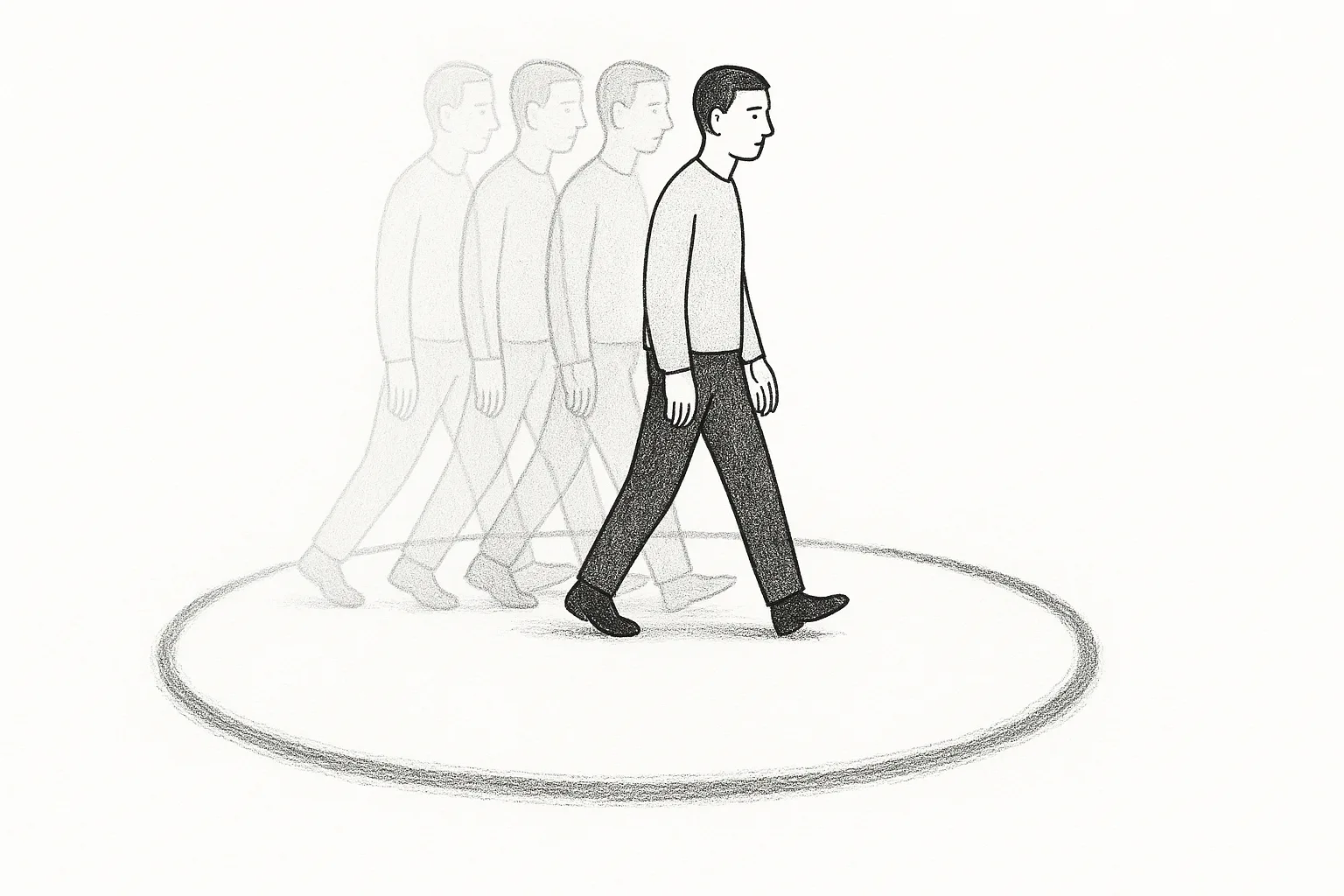
Self-sabotage persists because the brain automates it.
When a behaviour is repeated enough, it becomes automated through the cortico-striatal circuits in the basal ganglia, a process Graybiel and others have mapped in detail (Graybiel, 2008).
It moves from a conscious choice to an unconscious, automatic habit loop.
The neural pathways become deeply entrenched.
The loop typically follows a pattern:
- Trigger: an emotion or fear (stress, boredom, fear of rejection, fear of uncertainty).
- Behaviour: the protective response (procrastinate, withdraw, binge, attack, overwork, numb, abandon).
- Reward: a temporary sense of relief or regained control.
What makes self-sabotage feel so out of control is that the loop has been delegated from the conscious, decision-making parts of the brain to the unconscious, automatic, pattern-executing parts. It runs like a script.
In hypnotic terms, when you're doing the self-sabotaging behaviour you're already in a trance, with your unconscious quietly in charge. Ask a chronic nail-picker when they decided to start picking and they can't tell you; it just happens, the same way you brush your teeth without consciously thinking about each motion.
To rewire the loop requires repetition in the opposite direction, sustained long enough to produce genuine neuroplastic change.
Before you can interrupt the loop, you have to see which loop you are running. The personal patterns quiz surfaces the unconscious beliefs driving your personal life, and the business patterns quiz surfaces the ones driving your business.
How to stop self-sabotaging
Stopping self-sabotage requires four steps: recognising the pattern, facing the fears and emotions underneath it, re-patterning the unconscious (ideally under hypnosis), and practising daily self-compassion. Here are the four steps I have found fastest and most effective.
1. Recognise and identify the patterns
Awareness is the first step. If you can't see the pattern, you can't change it. Map the triggers, the situations, and the thought patterns that drive the behaviour.
- What triggers it?
- When is it most likely to happen?
- What story are you telling yourself?
- Which unconscious beliefs are driving the pattern?
- What kind of thoughts arise in your mind preceding or during that behaviour?
To uncover the unconscious beliefs running your personal life, take the personal patterns quiz.
To uncover the ones running your business life, take the business patterns quiz.
2. Face the fears and emotions underneath the patterns
Self-sabotage often begins as a way to avoid feeling certain emotions. Once you have identified the pattern, recognise the feeling underneath it: the feeling you are trying not to feel when you reach for the behaviour.
To learn how to face and work with those emotions, read more about the Tibetan practice of feeding your demons.
3. Re-pattern the patterns (ideally under hypnosis)
Try to do the opposite of what you usually do. For instance, if you feel a sense of emptiness or abandonment and you feel pulled to open that bottle of white wine, choose yoga or breathwork instead.
Most behavioural change and talk therapy asks the conscious mind to recognise the trigger, name the behaviour, and override it through repetition, on the theory that if you can stop reaching for the white wine enough times, the pattern will eventually break. Awareness helps, but willpower-based cognitive approaches usually work for only a few days or a few weeks at most before the old pattern returns, because they ask the limited conscious mind to overpower the vastly more powerful unconscious.
The unconscious processes vast quantities of information automatically and outside of awareness, handling roughly 11 million bits per second compared to the conscious mind's 50 (Zimmermann, 1989). By the time you are consciously thinking about whether to engage in the self-sabotaging behaviour, you are already in a trance state. Just as you tie your shoelaces without thinking about how to tie them, your unconscious is already preparing you to open that bottle of white wine.
Asking the conscious mind to overpower a habit entrenched in the unconscious is a little like wearing snorkel gear to dive 50 metres: very ineffective. It is far more effective to ask the unconscious to interrupt the trance it is already in. This is why hypnotherapy and NLP-informed practices that engage the unconscious mind can disrupt behavioural patterns far faster and more effectively than cognitive-behavioural approaches that work only with the conscious mind.
To explore your unconscious beliefs, face your fears, and begin the re-patterning in trance states, you can book a hypno coaching session with me.
4. Cultivate self-love, gratitude, and self-compassion daily
We are evolutionarily wired to focus on the negative, but we can actively and consciously rewire our thoughts and change the lens through which we see reality. Many of the world's top performers keep a gratitude journal to cultivate gratitude on a daily basis. I write about the daily ritual that Wahei Takeda, Japan's Warren Buffett, uses to rewire the way he sees reality in this article.
Keep a journal noting what you have done well each day, alongside what could be improved. Celebrate the small victories along the way.
We cannot pour from an empty cup, and we cannot love others unconditionally until we have learned to love ourselves. The journey of stopping self-sabotage often begins with kindness, compassion, and tolerance for our own mistakes and failures. It begins with knowing you are enough as you are, and allowing yourself to be perfectly imperfect: a human being, not a human doing.
Enjoy every moment of being alive.
A note on secondary gains
It's important to be aware that sometimes self-sabotaging behaviours provide secondary gains. Staying in a victimhood narrative, for instance, might provide the attention and validation someone needs, so they unconsciously continue the pattern in order to retain those gains.
Even if the person consciously thinks they want to stop self-sabotaging, unconsciously they may continue the behaviour to hold onto what it provides.
It's going to take time, and it's going to be uncomfortable, and it's going to cost you. It might mean leaving that job, relationship, friendship, routine, habit, or the ideas you hold about what success means to you. It means leaving behind the identity you had built for yourself, as you walk toward your worst fears.
But the cost of not changing is higher. It's the cost of a life that never quite becomes yours, a life where eudaimonia, the flourishing you are capable of, stays permanently out of reach. Not because you couldn't get there, but because something in you kept pulling you back.
You can stop pulling.
If you are ready to start, the first step is naming the pattern. Take the personal patterns quiz to map what is running in your personal life, or the business patterns quiz to map what is running in your business.
This article is for reflective and educational purposes and is not a substitute for diagnosis or treatment by a qualified clinician. If you are struggling with disordered eating, addiction, or persistent depression, please reach out to a licensed professional.
Continue reading
Explore the full Stop Self-Sabotage pillar