
What Is Self-Sabotage? Why You Do It (And How to Stop)
The science and psychology of why we self-sabotage, what's running underneath each pattern, and how to stop.
Explore other pillars
Pillar 02
Self-sabotage is the act of repeating behaviours you consciously or unconsciously know are not good for you. They don't support what Aristotle called eudaimonia, or human flourishing: what contributes to your long-term happiness, wellbeing, and fulfilment in life.
Sometimes you consciously know a behaviour is bad for you and you do it anyway. Sometimes you don't consciously know how or in what way you're sabotaging yourself; you only know you're not happy with where you are. The patterns wear many costumes: procrastination, perfectionism, self-criticism, people-pleasing, toxic relationship patterns, and physical compulsions like overeating, drinking, skin picking, or shopaholism.
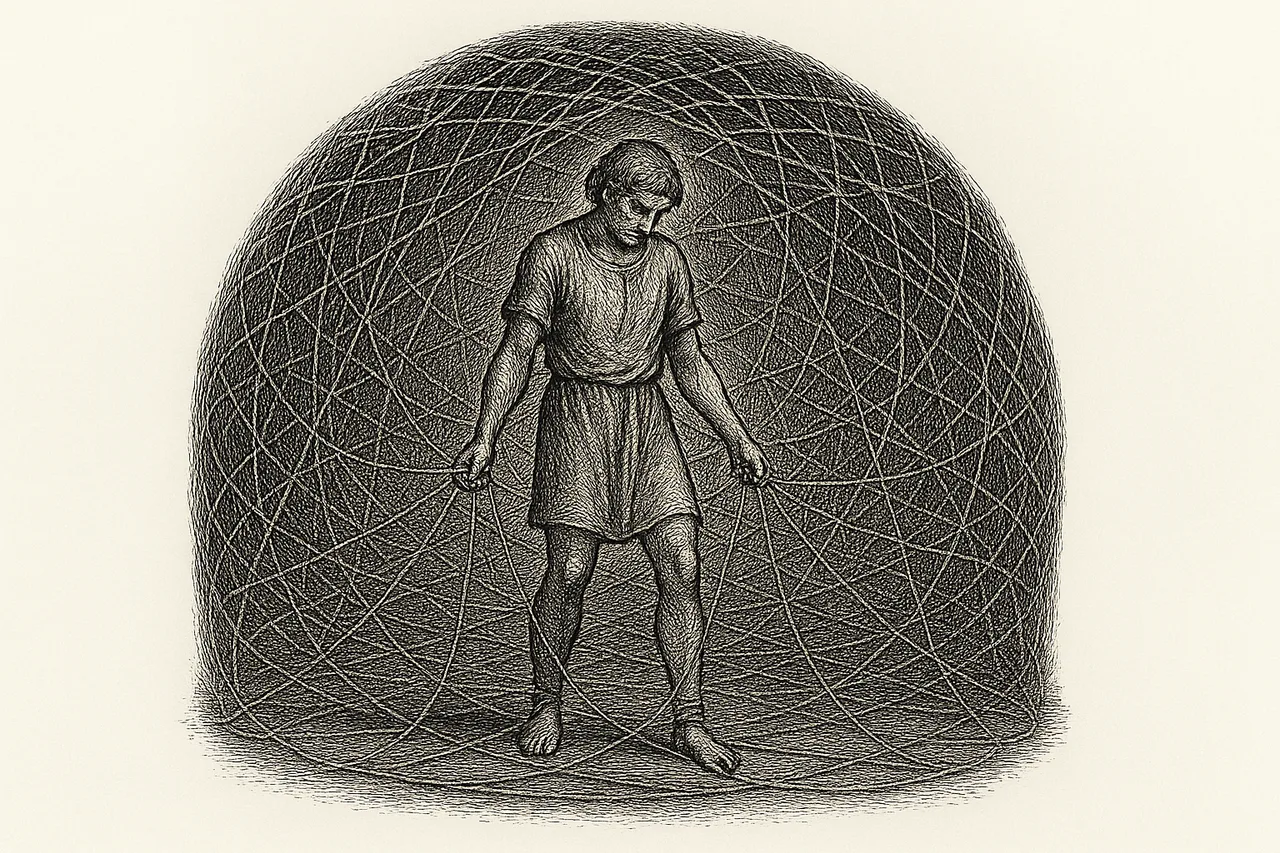
By the time you notice the behaviour, the unconscious is already running it. You are inside a trance, and willpower alone rarely interrupts a trance.
This pillar is a guide to the work of seeing your specific pattern clearly and beginning to interrupt the loop, often through trance, hypnotherapy, and NLP-informed approaches that engage the part of the mind that is actually running the show. The cost of never changing the pattern is a life where eudaimonia, the flourishing you are capable of, stays permanently out of reach.
1 article in this pillar

The science and psychology of why we self-sabotage, what's running underneath each pattern, and how to stop.
Explore other pillars