Finding Your Purpose: A Roadmap for Entrepreneurs 2026
Stop searching. This practical roadmap helps entrepreneurs decode their unconscious for finding your purpose. Work with your mind, not against it. Start today!
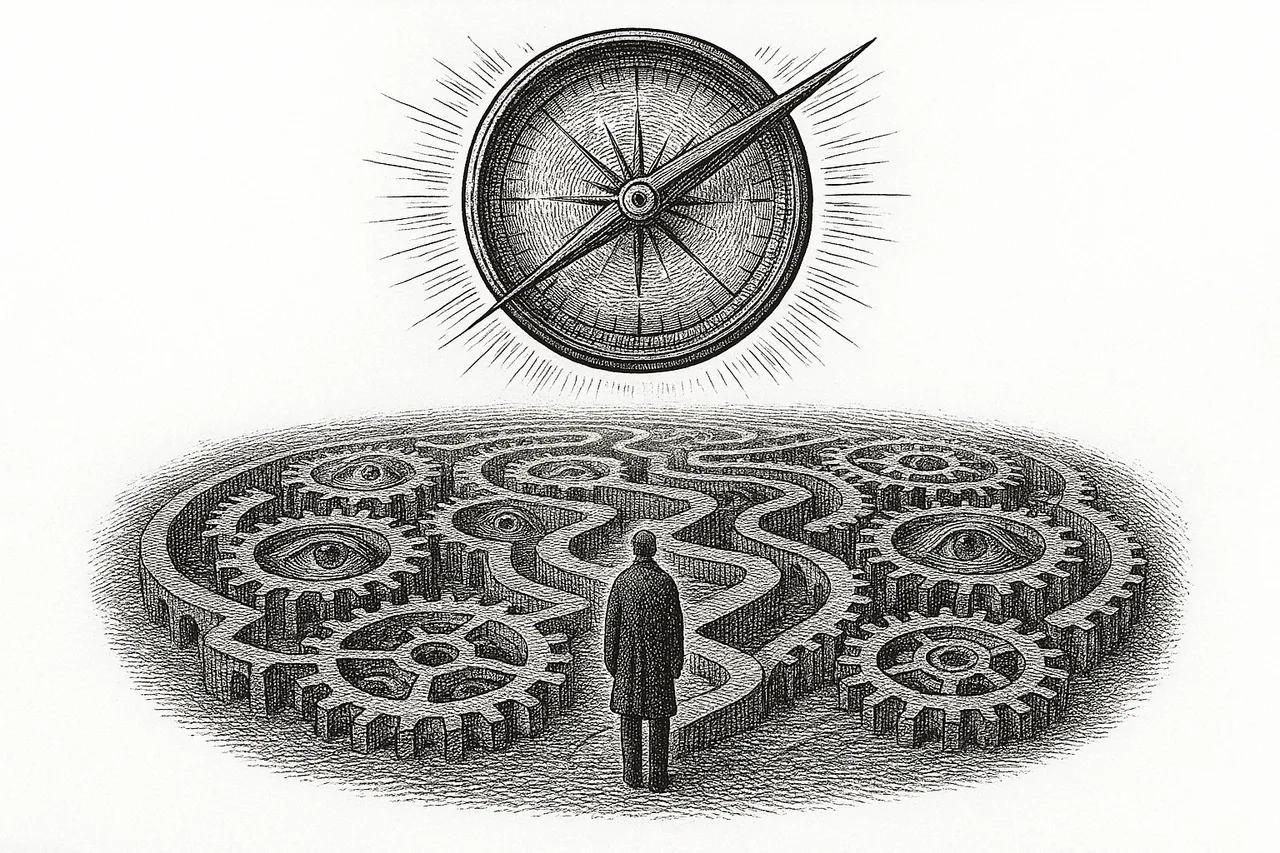
A founder once told me they'd spent three years trying to find their purpose and had somehow turned it into a part-time job with no salary. Their notebooks were full, their calendar was packed, and their actual decisions were still being made by fear dressed as practicality.
Table of Contents
- Forget Finding Your Purpose Let's Excavate It
- Your Unconscious Already Knows Your Purpose
- How to Decode Signals from Your Body and Dreams
- Run Purpose Experiments in Business and Life
- The Identity Shift Required for a Purpose-Led Life
- Your Next Experiment Starts Here
Forget Finding Your Purpose Let's Excavate It
At a certain point, purpose advice starts to sound like a scavenger hunt designed by people who have never met an unconscious pattern. Find your purpose. Chase your bliss. Follow the spark. Meanwhile, plenty of intelligent, self-aware adults are doing the worksheets, reading the books, and building respectable lives that feel weirdly airless from the inside.
The problem is the verb.
Purpose is not usually something you go out and locate like a missing charger. It behaves more like buried material. It gets covered by adaptation, family loyalty, status hunger, trauma responses, and identities that were useful at 19 but expensive at 39.

A sculptor works by removing what obscures the form. Purpose work is similar. The task is to strip away distortion until the pattern underneath becomes hard to ignore.
Why the usual advice falls flat
A lot of mainstream advice assumes people lack inspiration. In practice, the stuck ones usually have the opposite problem. They have too much input and too many polished identities. They know how to be competent, pleasant, high-functioning, and marketable. They also know how to confuse those traits with truth.
That is why “follow your passion” fails so often. Passion is real, but it is not always clean data. Sometimes it is compensation. Sometimes it is a trauma bargain dressed up as ambition. Sometimes the thing that excites you is the thing that wins approval fastest.
Competence makes this harder, not easier.
People who are good at reading a room can build an entire life around being rewarded for the wrong pattern. They become the reliable one, the insightful one, the high-achiever, the helper, the fixer. The role works. The feedback is good. Then they lose contact with what has actual psychic charge because the approved version of self keeps cashing the checks.
Excavation is messier and more honest
Jung's insights are particularly relevant. The psyche has depth. Some motives are conscious. Others get edited out because they threaten the self-image you learned to protect. The shadow is not a gothic accessory. It is often where your authority, appetite, aggression, creativity, ambition, and inconvenient truth have been parked.
If your conscious identity says, “I just want to be of service,” while another part of you wants influence, money, beauty, recognition, or erotic aliveness, you do not have a morality problem. You have a split.
And splits create static.
NLP is useful here for a different reason. It helps identify the filters through which experience gets coded. What do you consistently move toward? What do you avoid even when you claim to want it? What kind of language do you use when you talk about success, safety, freedom, or responsibility? Those patterns reveal more than a vision board ever will.
Good purpose work starts there. With signal. With recurring themes. With the parts of you that keep leaking through despite all the branding.
If you want a deeper read on how meaning, identity, and the buried material interact, purpose and meaning is a useful place to continue.
Your Unconscious Already Knows Your Purpose
A client once told me, with a straight face, that she had no idea what her purpose was. Then she spent twenty minutes describing the same pattern in six different disguises. She lit up when she talked about exposing bad systems, mentoring people through hard transitions, and saying the thing everyone else was too polite to say. Her conscious story was confusion. Her unconscious story was painfully consistent.
That happens a lot.
The mind that plans your week is rarely the part that reveals your direction. Purpose leaves a messier trail. It shows up in obsessions, envy, repeated conflicts, fantasies you keep dismissing, work that gives you clean energy, and work that makes you feel like a hostage in your own calendar. The unconscious tracks all of it. Long before you produce a tidy mission statement, it has already been voting.
So the first job is to stop asking for a grand answer and start collecting evidence.

Use NLP to catch your sorting patterns
NLP gets mocked because plenty of people use it like a bag of stage tricks. Strip out the nonsense and one part remains useful. It helps you spot meta-programs, the habitual filters your mind uses to decide what matters, what feels safe, and what gets ignored.
A few are especially revealing for purpose:
- Towards or away from. Do you act to build, teach, create, lead, solve? Or do you act to avoid shame, instability, criticism, dependence, obscurity?
- Internal or external reference. Do you know something fits because your system relaxes and sharpens? Or because someone impressive approves of it?
- Options or procedures. Do you come alive inventing routes forward, or refining a method until it becomes elegant and repeatable?
- Self or others orientation. Does motivation intensify around mastery, protection, service, status, stewardship, influence, or transmission?
Write your answers fast. Fast is useful here. Slow gives the internal PR department time to put a blazer on everything.
Patterns matter more than ideals. Someone can claim they want freedom, then repeatedly choose roles with clear authority, structure, and measurable progression. That is not failure. That is data. Purpose often hides inside the discrepancy between the identity you advertise and the life your nervous system keeps selecting.
Sentence completions get past your polished persona
This tool looks simple enough to insult your intelligence, which is part of its charm. Used properly, it works because speed reduces censorship.
Set a timer for five minutes. Complete each sentence at least six times without editing:
- If nobody needed me to be sensible, I would...
- The work I secretly want credit for is...
- I get irrationally angry when I see people...
- I always end up helping others with...
- I feel most legitimate when I am...
- The life I keep postponing begins with...
The first few answers are often house-trained nonsense. Keep going. By answer four or five, the cracks open. Jung would call this a cleaner route to the material that the persona tries to manage. In plain English, it gets you closer to the part that tells the truth before your social conditioning tidies the room.
One warning. Raw answers are not sacred just because they arrived from the basement. Some are compensations. Some are shadow material. Some are genuine direction. The point is to gather enough honest material that the signal becomes harder to deny.
Analyse the structure of desire
Bandler's work on internal representation still earns its place here. Content matters, but structure often tells you more. Two careers can sound equally respectable and produce completely different internal responses.
Track what happens when you imagine specific forms of contribution. Do not ask whether they make sense yet. Ask how they are coded inside your system.
Use four columns:
| Cue | Internal image | Internal self-talk | Body response |
|---|---|---|---|
| Teaching live | Bright, close, energetic | “This matters” | Chest open, alert |
| Consulting retainer | Grey, distant, static | “I should do this” | Jaw tight, flat |
| Writing essays | Spacious, absorbing | “I can go deep here” | Calm focus |
| Scaling a team | Fast, noisy, fragmented | “Too many moving parts” | Stomach drop |
This is less mystical than it sounds. You are identifying the difference between desire, duty, fear, and borrowed ambition. Many people stay stuck because they treat all motivation as equal. It is not. "I should" and "I am pulled" produce very different lives.
If your deeper material is hard to access because your conscious mind keeps interrupting, altered-state work can help surface what ordinary reflection misses. This explanation of how hypnotherapy works covers the mechanics without the incense and dramatic hand-waving.
How to Decode Signals from Your Body and Dreams
Purpose isn't only a cognitive question. The body has opinions long before the intellect writes its press release. Most high achievers miss this because they've trained themselves to override sensation in favour of output. That strategy is impressive right up until it starts producing a life that looks functional and feels faintly dead.
The body usually flags alignment through expansion, steadiness, warmth, grounded excitement, cleaner breathing, and a sense of being more present in your own skin. Misalignment tends to show up as contraction, static, heaviness, odd procrastination, emotional numbness, over-caffeinated urgency, or the peculiar fatigue that appears when a task is technically manageable and psychically wrong.
Somatic signal is quieter than ambition
This doesn't require mystical theatrics. It requires noticing. When a decision appears, pause before you justify it and ask three things.
- What happens to my breath? If it gets shallow, held, or effortful, pay attention.
- What happens to time? Some work expands attention. Other work turns every ten minutes into a hostage situation.
- What happens after the task? Certain activities leave you used in a satisfying way. Others leave you strangely depleted, even if you did them well.
That distinction matters because purpose has been linked with outcomes beyond career motivation. A four-year review published in PMC found that people in the highest versus lowest purpose quartile had a 46% lower risk of mortality and a 43% lower risk of depression, along with other broader wellbeing associations. The point here isn't to turn purpose into a health hack. It's to stop pretending it's merely decorative.
The body often recognises a truthful direction before the ego approves the optics.
Dreams speak in symbols, not slogans
Jung's contribution still cuts through because he treated dreams as communications from the unconscious, not random cinematic nonsense. A dream doesn't hand you a tidy career plan. It shows you a drama. The symbols are personal, emotionally loaded, and often embarrassingly accurate.
If you keep dreaming of missed trains, collapsing houses, hidden rooms, floods, broken phones, old teachers, babies, wolves, stages, or oceans, don't run to a universal dream dictionary and outsource your meaning. Ask projective questions instead:
- If this symbol were a part of me, what part would it be?
- What attitude in waking life does this dream challenge?
- Where am I underdeveloped, overcontrolled, or split?
- What wants expression that I've kept in the basement?
The shadow self shows up in dreams all the time. It may appear as the rude woman, the wild animal, the criminal, the seducer, the chaos agent, the neglected child, the impossible artist. Usually it carries qualities your conscious identity rejects and secretly needs.
A simple dream decoding method
Keep it lean so you'll do it.
- Record the dream immediately. Fragments count.
- Circle charged symbols. Not every detail matters equally.
- Name the feeling tone. Panic, awe, grief, excitement, disgust, seduction, relief.
- Translate each major figure into a possible sub-personality.
- Ask what action the dream implies. Not forever. This week.
This same listening stance helps with intuition. The point isn't to become vague and floaty. It's to become more accurate about your own signal. If you want a grounded way to strengthen that faculty, how to improve intuition is a useful companion.
Run Purpose Experiments in Business and Life
Purpose becomes usable when it enters behaviour. Until then it's a private theatre production with excellent lighting and no audience. Entrepreneurs usually understand experiments better than revelations, which is helpful, because experimentation is the cleaner route.
If a theme keeps surfacing, don't announce a reinvention. Test it.

Treat purpose like a hypothesis
Suppose your notes keep pointing to teaching, synthesising complexity, and helping people see hidden patterns. The dramatic move would be burning your current business down and declaring a new identity online by Thursday. The sane move is smaller.
You might host a tiny workshop. Write a sharp essay. Offer one advisory session in a slightly different format. Build a short audio training. Test whether the thing that feels meaningful also survives contact with real people, real timing, and real payment.
That's where the life crafting method is useful. A review on life crafting in PMC describes a sequence that includes identifying values and passions, reviewing current and desired competencies, reflecting on social and career domains, writing an ideal future narrative, converting that into specific goals, adding if-then implementation plans, and making a public commitment. It also notes that writing sessions longer than 15 minutes tend to have larger effects.
Build experiments that answer one question at a time
A bad experiment tries to solve your whole life. A good one isolates signal.
Try questions like these:
- Does this work energise me when there's structure around it?
- Do I like the craft itself, or only the fantasy of being seen doing it?
- Do people consistently come to me for this problem?
- Can this form of contribution coexist with the business model I need?
For founders, this matters more than most purpose content admits. Time pressure and cash-flow concerns are a reality for small businesses, which is why purpose has to survive operating reality rather than float above it. If your deeper pattern points toward thought leadership, for instance, one practical route is turning lived expertise into a coherent idea platform. Resources on building a marketable book concept can help you test whether your message has enough shape to carry beyond private insight.
A structured tool can help here too. Business mindset coaching explores how unconscious patterns affect decisions, visibility, and momentum. For some people, that's the missing layer between “I know what matters” and “I still don't act like it”.
A short explanation often lands better in motion, so this is worth a watch:
Use if-then plans so insight survives Tuesday
An experiment needs a behavioural hook. Otherwise it becomes another noble intention floating around your Notes app.
Examples:
- If I notice myself delaying the workshop idea because it feels too exposed, then I'll outline a 30-minute version and invite five people, not fifty.
- If I feel pulled toward writing but resist because it won't pay immediately, then I'll publish one piece a week for a fixed period and track energy, enquiries, and quality of thinking.
- If a client conversation lights me up more than delivery work, then I'll test a strategy day offer before redesigning the whole business.
Purpose gets clearer when action is specific enough to produce feedback.
The Identity Shift Required for a Purpose-Led Life
This is the part people skip because it's less glamorous than insight. You can uncover a meaningful direction and still fail to live it because your current identity has a job description of its own. It keeps you familiar, acceptable, productive, protected. Purpose often asks for a renegotiation.
A founder might say they want a more expressive, truth-led business while still operating from the identity of “the reliable one who never upsets anyone and always delivers what's expected”. Those two positions do not peacefully cohabit for long.
Why trying harder usually backfires
Behaviour change falls apart when the unconscious reads the new direction as unsafe, disloyal, grandiose, selfish, unstable, financially reckless, or likely to trigger rejection. In NLP terms, you can call that an ecology issue. One part wants the future. Another part is guarding against a cost.
That's why discipline alone doesn't solve it. If your nervous system associates visibility with scrutiny, or leadership with loneliness, or creative risk with humiliation, you'll produce exquisite forms of delay. Not laziness. Protection.
The question isn't only “What is my purpose?” It's “Who would I have to stop being to live it consistently?”
A lot of advice also ignores the commercial reality. For entrepreneurs, purpose is constrained by time pressure and cash-flow concerns, and effective purpose work has to function as a decision filter under weekly business pressure, as noted in this article discussing founders, purpose, and practical constraints.
Identity changes through evidence
You don't install a new identity by chanting in the mirror until your bank account and calendar surrender. You install it by collecting congruent evidence.
Use this table for a week:
| Old identity script | New identity script | Daily evidence |
|---|---|---|
| I'm useful when I over-deliver | I'm valuable when I create clarity | Published one concise opinion piece |
| I need permission before I pivot | I test and learn in public | Ran a small pilot offer |
| My worth comes from being needed | My work has value when it reveals truth | Said no to a draining request |
That's also where shadow work becomes practical rather than ornamental. If you've disowned ambition, authority, sensuality, money, or visibility, your purpose will keep shrinking to fit the parts of you that feel socially acceptable. How to do shadow work is useful if you want a structured way to meet the parts you keep pretending aren't involved.
Build a life that can hold the signal
Purpose-led doesn't mean chaotic. It means organised around what matters. Sometimes that means pruning offers, changing client criteria, simplifying marketing, altering your schedule, or letting your public voice become more specific.
If your work increasingly depends on being recognised for a distinct perspective, there's nothing shallow about shaping how that perspective is seen. For creators working in fast-moving platforms, guidance on a personal brand for TikTok creators can be surprisingly relevant, not because everyone needs TikTok, but because it forces the useful question: can people tell what you stand for?
Identity becomes stable when your decisions, calendar, offers, language, and standards all start agreeing with one another.
Your Next Experiment Starts Here
A woman I worked with once had three competing stories about her life. In one, she was the capable operator who kept everything afloat. In another, she was the artist she missed being. In the third, she was the guide other people kept accidentally hiring for perspective. She thought she needed a final answer before making a move.
What she needed was a sequence.
She stopped asking for certainty and started collecting evidence. She paid attention to what her body softened around. She took her recurring dream imagery seriously enough to stop dismissing the bolder parts of herself. She ran a few small experiments. Some worked commercially. Some didn't. The useful thing was that they all clarified the pattern.

Clarity likes movement
People often assume purpose arrives first and action follows. In practice, action sharpens signal. That matters because one of the main reasons goals collapse is the gap between intention and execution. An evidence-based approach from Michigan State University recommends breaking a goal into smaller tasks, using weekly check-ins, and adding contingency planning so the plan survives ordinary life in this guide to achieving goals with follow-through.
That same principle applies to finding your purpose. Keep the next move concrete.
- Choose one thread that has repeated across your notes, dreams, body cues, or experiments.
- Turn it into one small behaviour you can complete this week.
- Schedule a review point so you learn from the result rather than merely having an experience.
- Plan for friction because your old identity will absolutely have commentary.
Use tools that reveal pattern, not just preference
If you've already done the books, the tests, and the reflective worksheets, the next useful tool is often one that surfaces unconscious patterning rather than asking your conscious mind to invent better answers. That's where structured prompts, projective questions, and experimentation become more valuable than another round of “what are your strengths?”
And if part of your purpose involves being seen more clearly in your work, it can help to think about expression as well as essence. Guides on proven steps to personal branding are useful when you need to translate an inner pattern into a public signal people can recognise.
Purpose usually doesn't arrive as a trumpet blast. It shows up as a pattern that keeps asking for your attention until you either build with it or keep paying the cost of ignoring it.
If you want a structured place to begin, Surreal Experiments offers self-discovery tools built around unconscious pattern analysis, Jungian prompts, NLP-informed reframes, and small behavioural experiments. You can start with the assessment to spot recurring belief patterns, then use the app as an ongoing companion for decoding signals, testing purpose hypotheses, and turning insight into something you can put into practice.
Related
Read next
Coaching for Entrepreneurs & High Achievers
How to Overcome Imposter Syndrome: Creative Minds 2026
Learn how to overcome imposter syndrome. Rewire unconscious patterns with NLP, somatic work, & hypnotic reframes. Practical guide for creatives & entrepreneurs.

Coaching for Entrepreneurs & High Achievers
How to Improve Intuition: A Practical System
Discover how to improve intuition with a practical, science-backed system. Cut through the noise and enhance your decision-making without 'woo' in 2026.
Coaching for Entrepreneurs & High Achievers
Business Mindset Coaching: Your Path to Entrepreneurial Flow
Stop generic advice. Discover how business mindset coaching works on unconscious patterns to end burnout and unlock entrepreneurial success.