
Your Personality Test Is Lying to You (Mostly)
Tired of your personality test results changing nothing? Discover what MBTI & Big Five miss and how to uncover the unconscious beliefs that truly run your life.
Most advice about a personality test is backwards. It assumes that if you can label yourself accurately enough, you'll finally behave differently. You won't. You might understand your habits a bit better, you might annoy your friends by announcing you're an INTJ with an Enneagram twist and a nervous system that needs magnesium, but behaviour rarely shifts because a label felt neat.
That's the problem. Personality tests can describe your surface pattern, but they often stop where things get interesting. They tell you how you tend to show up. They don't tell you why you keep repeating the same business mistakes, why visibility suddenly feels dangerous, or why you can advise everyone else brilliantly and still stall on your own next move.
For entrepreneurs, creatives, and high-functioning overthinkers, that gap matters more than the label. Insight without action is just elegant procrastination.
Table of Contents
- Another Personality Test Wont Save You
- A Quick Tour of the Personality Test Menagerie
- Why Your Personality Type Is a Comforting Lie
- The Real Engine Room Your Unconscious Beliefs
- From Diagnosis to Dialogue With Your Unconscious
- Stop Collecting Maps Start the Expedition
Another Personality Test Wont Save You
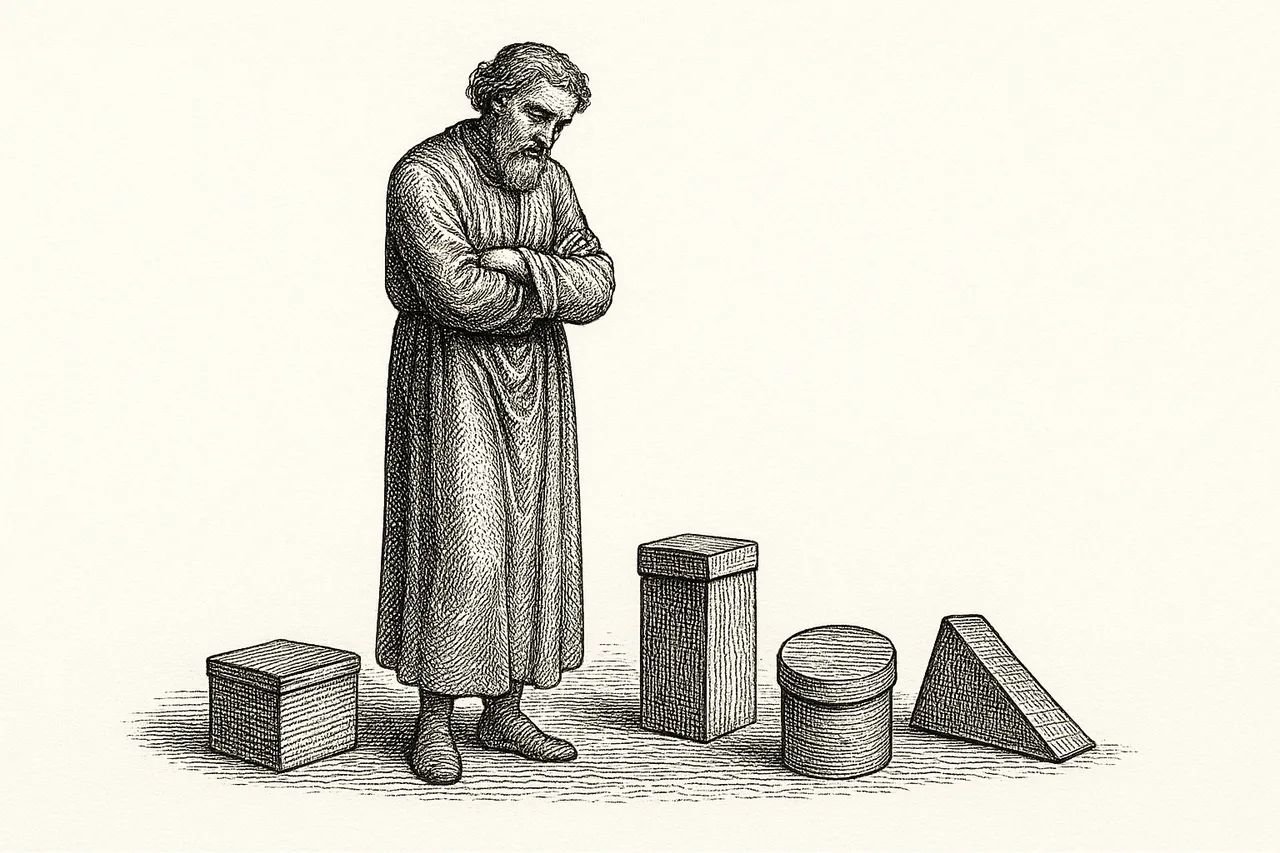
A man spent his whole life buying maps.
He had maps of deserts he never crossed, cities he never visited, mountain trails he never walked. His study looked impressive. Leather cases, folded charts, pins, annotations. If you visited, he'd explain terrain, trade routes, weather patterns, danger zones. He knew everything except what it felt like to leave the house.
That's how a lot of people use a personality test.
They collect frameworks the way some people collect expensive notebooks. MBTI. DISC. Enneagram. A strengths profile. Maybe a human design chart for flavour. It feels productive because naming yourself gives the nervous system a little hit of certainty. The mind relaxes when chaos turns into categories.
Why labels feel useful and still change very little
There is a reason personality testing became so attractive in work settings. As this history of personality testing in organisations notes, by 1952, a third of USA organisations were using personality tests for recruitment, and white-collar work later rose to 60% of the workforce by 2002. Once work depended less on lifting things and more on judgment, communication, and attention, people wanted cleaner ways to predict behaviour.
That makes sense in hiring. It makes far less sense as a substitute for real self-inquiry.
A label can help you recognise a tendency. It can't do the uncomfortable part for you. It can't tell you why you freeze when you need to raise your rates, why you pick clients who drain you, or why your perfectionism suddenly becomes "discernment" whenever launch day approaches.
Practical rule: if a personality test gives you language but not leverage, you've bought another map.
The tourist map problem
Most tests work like a tourist map. They show landmarks. They highlight broad preferences. They may even point out familiar strengths. Useful, up to a point.
But serious change needs something more like field navigation. It needs your hidden reactions, blind spots, internal contradictions, and the shadow material you don't put on LinkedIn.
If you've been looping through labels and still meeting the same sabotage pattern in different outfits, you're not failing at self-awareness. You're probably just working at the wrong depth. That's why so much advice on how to stop self-sabotage starts making sense only when you move below the polished story you tell about yourself.
A Quick Tour of the Personality Test Menagerie
The personality test world is a strange little zoo. Some models wear a lab coat. Some wear startup casual. Some wear incense and speak in archetypes. Most are trying to answer the same question from different angles: what kind of person are you, and how do you tend to behave?
Exploring popular frameworks and their core approach to understanding human traits.

The main species in the zoo
| Framework | What it does well | Where it starts wobbling |
|---|---|---|
| MBTI | Gives people a memorable shorthand and a strong sense of identity | Turns fluid human behaviour into rigid boxes |
| Big Five | Offers the strongest scientific footing and treats traits as spectrums | More rigorous, less emotionally satisfying |
| DISC | Simple language for workplace behaviour and communication preferences | Can become cartoonishly reductive very fast |
| Enneagram | Speaks to motivation, defence patterns, and identity narratives | Often depends heavily on self-typing and interpretation |
| StrengthsFinder | Directs attention toward talents rather than deficits | Doesn't automatically reveal sabotage patterns |
The Big Five is the grown-up in the room. According to this review of the science behind personality test accuracy, it's the most scientifically validated framework, while the widely used MBTI has around 2 million assessments administered annually and still faces criticism around reliability and validity. That's the key trade-off in this entire category. The tests people enjoy most are not always the ones with the strongest psychometric backbone.
What each framework is really selling you
MBTI sells identity. It hands you a four-letter badge and says, there you are.
Big Five sells measurement. Less poetry, more signal. If you're sceptical by nature, that's often the better trade.
DISC sells speed. Sales teams love it because it compresses people into a language that's easy to use in meetings.
Enneagram sells meaning. It feels psychologically richer because it deals in fear, desire, defence, and self-image.
StrengthsFinder sells optimism. It assumes people work better when they build from what's already strong.
None of these is useless. That's not the argument. The issue is that people confuse description with intervention.
A test can sort you. It can't negotiate with the unconscious pattern that keeps hijacking your decisions.
When a quick framework is enough
Sometimes a lighter-touch assessment is exactly what you need. If you want a practical snapshot of how prepared you are to integrate new tools into your practice, something like an AI readiness assessment for coaches can be useful because it focuses on operational behaviour rather than personality theatre.
That distinction matters. Good assessments help you make a decision. Bad ones become identity jewellery.
If you're interested in the business side of categorisation, entrepreneur personality types can be a useful lens, provided you treat the result as a working hypothesis rather than destiny.
Why Your Personality Type Is a Comforting Lie
The seduction of personality typing is obvious. It relieves you of mystery.
You get a result and think, right, that explains everything. My intensity. My avoidance. My need for control. My inability to answer WhatsApp messages. The label gives your behaviour a tidy narrative, and the ego loves a tidy narrative because it turns mess into meaning.

Description is not transformation
Most personality test conversations encounter a critical failing. As this discussion of the limits of trait testing makes clear, the central gap is the jump from self-knowledge to behavioural change. These systems are often good at categorising traits and poor at helping you use that knowledge to make better decisions or undo limiting patterns.
That's why someone can know their type for years and still repeat the same script in business and relationships. They haven't changed the underlying pattern. They've just become more articulate about it.
You can hear this in everyday language:
- "I'm just not disciplined."
- "I'm a classic overthinker."
- "I'm the sort of person who needs pressure to perform."
- "I'm too introverted for that kind of visibility."
That isn't insight anymore. That's hypnosis by identity.
The shadow doesn't care about your label
Jung's shadow is useful here because it names the parts of you that don't fit the story you've decided is you. If your type says you're rational, strategic, and self-contained, the shadow may hold your dependency, envy, neediness, mess, irrational ambition, or hunger for approval.
If your type says you're empathic, collaborative, and heart-led, the shadow may contain aggression, selfishness, precision, and the ability to disappoint people cleanly.
Growth usually doesn't happen by polishing the preferred identity. It happens by integrating the disowned material. That's why a personality test can become a cage if you hold it too tightly.
If you want a sharper way to think about this, mental models from Buffett, Gagosian, and Jobs offer a useful reminder that high performance often comes from range, not from overidentifying with one mode.
A brief example helps. A founder says she's "not a salesperson" because every test she's taken reinforces a gentle, thoughtful, non-pushy self-image. Underneath that polished identity sits a shadow fear: if I'm visible, I'll be judged; if I sell well, people will expect more; if I become powerful, I'll have to become someone dangerous. No personality label fixes that.
Here's a useful lens on the same point:
The comfort is the trap
A type can become a permission slip.
Not always. But often enough that it's worth saying bluntly. People use personality language to excuse underdeveloped capacities all the time. They call avoidance authenticity. They call fear discernment. They call rigid habits self-knowledge.
The moment a personality label explains why you can't grow, it's stopped being insight and started being a defence.
The Real Engine Room Your Unconscious Beliefs
If personality is the dashboard, unconscious belief is the engine room.
That's where the action is. Not in the polished answers you give on a quiz when you're trying to be honest and flattering at the same time, but in the buried assumptions that organise perception before conscious thought catches up.

What mainstream tests usually miss
Most mainstream frameworks look at conscious traits. They ask what you prefer, how you behave, what sounds like you. Useful, but partial. As this overview of common personality survey types points out, these models largely miss the unconscious limiting beliefs beneath self-sabotage, procrastination, perfectionism, imposter feelings, and scarcity patterns.
That omission is not small. It's the whole game for a lot of founders and creatives.
A person doesn't always procrastinate because they're "low in conscientiousness". Sometimes they procrastinate because finishing a thing would expose them to evaluation. Sometimes because success would trigger guilt. Sometimes because being visible feels unsafe. Sometimes because the body has implicitly associated action with threat.
The deeper filters that shape behaviour
NLP has a helpful language for this. Meta-programs are unconscious sorting patterns. They affect what you notice, what you ignore, what motivates you, and how you frame a decision.
A few examples:
Toward or away from
Some people move toward desire. Others move by avoiding pain. Same task, different internal engine.Options or procedures
One founder wants freedom and possibility. Another wants sequence and certainty. Both may call themselves ambitious while sabotaging entirely differently.Internal or external reference
One person knows when something is good because they feel it. Another needs reflected approval. That difference changes pricing, visibility, hiring, and decision speed.
Sentence completion psychology and projective methods matter here because they slip past the rehearsed self. Ask someone directly, and you'll often get the edited answer. Ask them to complete a phrase quickly, describe a symbol, or respond to metaphor, and deeper patterning starts leaking through.
Field note: the unconscious is less interested in sounding consistent than the conscious mind is.
Why this matters in business
Founders usually don't need more abstract identity language. They need an edge.
If someone keeps undercharging, a personality label may say "high agreeableness" or "conflict avoidant". Fine. But the lever for change often sits in a more specific belief such as:
- charging more makes me less lovable
- being seen creates risk
- if I succeed, I'll lose freedom
- if I choose one direction, I'll kill off other futures
Those are not traits. Those are internal instructions.
That distinction is central to understanding the unconscious mind in decision-making and behaviour. Traits describe repeated output. Beliefs and meta-programs generate it.
From Diagnosis to Dialogue With Your Unconscious
If labels aren't enough, the alternative isn't abandoning self-inquiry. It's upgrading it.
Stop treating yourself like a problem to classify and start treating yourself like a system to listen to. The useful question isn't "what type am I?" It's "what pattern runs when I approach money, visibility, intimacy, leadership, rest, or risk?"

What better assessment design actually looks like
Well-designed assessments become more useful when they connect inner patterns to visible outcomes. In the UK, large-scale validation studies of personality assessment design show that well-constructed inventories can explain 10 to 15% of the variance in job performance. That's not magic. It's a reminder that predictive value improves when you link traits, or belief-level patterns, to actual behaviour.
That principle matters far beyond corporate recruitment.
If an assessment tells you that you score a certain way but can't connect that to pricing behaviour, avoidance cycles, resilience after setbacks, or follow-through under pressure, then it's educational at best. Interesting. Not inert, but not exactly catalytic either.
How unconscious patterns show up in ordinary founder behaviour
These patterns rarely announce themselves dramatically. They show up as reasonable choices with suspiciously repetitive outcomes.
Pricing that never quite lands
You call it strategy. Underneath, you may be negotiating with guilt, exposure, or a belief that value must be proven through exhaustion.Content avoidance dressed up as standards
You say the message isn't ready yet. Sometimes that's true. Sometimes "not ready" is cleaner than admitting "being seen feels dangerous".Attracting the same draining client in different outfits
This often isn't bad luck. It's an unconscious familiarity pattern.Overthinking every pivot
That can be a simple preference for nuance. It can also be a trance loop built around fear of irreversible choice.
If you're already paying attention to symbols, sleep, and the material that arrives sideways, tools that help you understand your dreams can also complement this kind of work. Dreams often reveal the conflict the conscious mind keeps tidying up during the day.
Better questions create better access
The smartest diagnostic tools don't just ask what you think of yourself. They use indirect prompts that reveal the structure beneath the self-description.
That can include:
- Sentence completion that catches the first uncensored association
- Projective language that surfaces emotional logic through metaphor
- Jungian framing that notices what the ego omits
- Hypnotic and NLP-informed patterns that reveal how a person codes possibility, threat, agency, and time
Self-discovery becomes interesting again, not because it's mystical, though it can feel uncanny, but because it gets closer to the source code. If you work with imagery, active imagination, and symbolic dialogue, Jung's active imagination and unconscious metaphor is a useful doorway into that territory.
You're not looking for a prettier label. You're looking for the hidden instruction that keeps repeating your life.
Stop Collecting Maps Start the Expedition
The mature use of a personality test is modest. It gives you language, not destiny. It offers pattern recognition, not absolution.
That's the shift. Once you see the difference, a lot of self-development theatre becomes hard to tolerate. The endless categorising. The identity collecting. The little burst of relief every time a framework says, yes, this is why you are the way you are. Relief is nice. But relief isn't the same thing as movement.
For smart, reflective people, self-knowledge can become a very elaborate delay tactic. You keep analysing because analysis feels cleaner than change. You keep refining the map because the terrain still asks something of you. It asks for risk, embarrassment, uncertainty, and contact with the parts of you that don't fit the polished profile.
That is where real work starts.
The right next step isn't another flattering type description. It's a more honest encounter with the patterns underneath your habits: the unconscious beliefs, the shadow bargains, the somatic flinches, and the strange inner logic that makes you brilliant in one room and avoidant in another.
A useful personality test should help you notice those fault lines. An even better one should point you toward what to work on next.
If you've already done the books, the podcasts, the therapy language, and the familiar frameworks, maybe the question isn't who you are. Maybe the actual question is which hidden pattern still gets to run the show when it matters most.
If you're done collecting labels and want something that points to the pattern beneath them, try Surreal Experiments. Its personal quiz is built for people who want more than categorisation. It helps uncover unconscious belief patterns, shows where those patterns may be shaping business and life decisions, and gives you a clearer sense of what needs your attention next.
Continue reading
Explore the full Personality Tests & Self-Assessment pillarRelated
Read next
Personality Tests & Self-Assessment
16 Personalities Test: A Guide for Sceptical Founders
Beyond the letters. A critical guide to the 16 personalities test for entrepreneurs who want real depth. Understand its limits and discover what comes next.
Personality Tests & Self-Assessment
Master Your Entrepreneur Personality Types
Explore 8 entrepreneur personality types & their shadow patterns. Not MBTI. Learn to use your archetype to grow your business & unlock your full potential.