What Is Imposter Syndrome? Understand & Overcome It
Feel like a fraud? Discover what is imposter syndrome, why entrepreneurs face it, and get evidence-based NLP & somatic tools to break the pattern in 2026.
Most advice about imposter syndrome is too tidy to be useful. It tells you to collect evidence, repeat affirmations, and remember your wins. Fine. But if you've already done the books, the therapy, the self-awareness circuit, you've probably noticed something awkward. The voice still comes back, especially right before visibility, money, praise, or a bigger room.
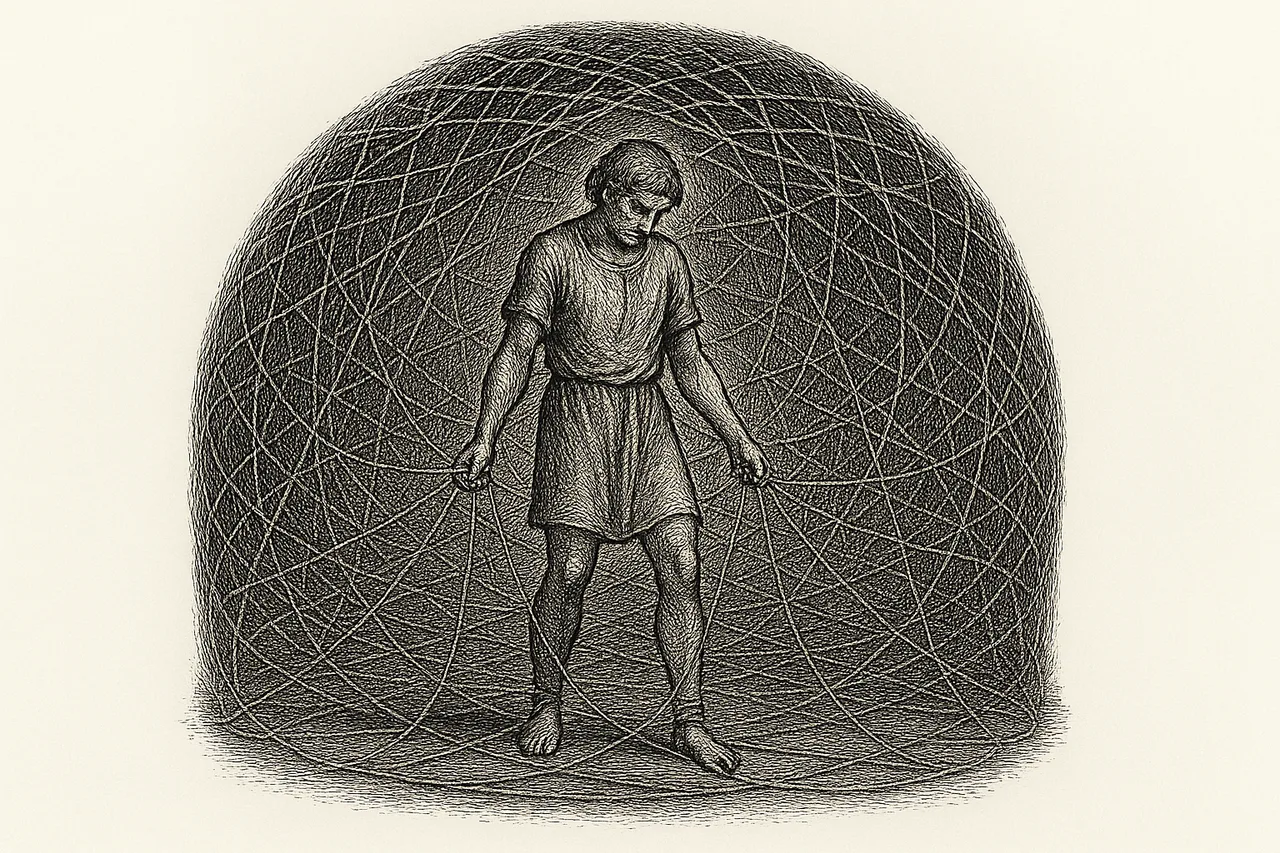
That's because imposter syndrome usually isn't a simple confidence problem. It behaves more like an unconscious protection pattern. Part of you would rather question your legitimacy than risk exposure, envy, rejection, or the strange responsibility that comes with being fully seen.
For people building creative work in public, this matters. When exploring what is imposter syndrome, you probably don't need another pastel infographic telling you to “believe in yourself”. You need a more honest map.
Table of Contents
- The High Achiever's Paradox
- Beyond the Buzzword What Is Imposter Syndrome Really
- The Five Masks of the Imposter
- Why Founders and Creatives Are the Perfect Hosts
- A Quick Unconscious Pattern Check
- Practical Tools to Re-Pattern the Imposter
- Meet Your Unconscious Co-Pilot with Surreal Experiments
The High Achiever's Paradox
The popular assumption says imposter syndrome shows up because someone lacks confidence. In practice, I see the opposite more often. It tends to latch onto capable people who are stretching faster than their identity can keep up.
That's the paradox. Your work improves, your standards sharpen, your taste gets better, and suddenly you become more aware of nuance, competition, and risk. From the outside, it looks like success. From the inside, it can feel like standing on a stage in borrowed clothes.
A UK workplace summary reports that about 70% of people experience imposter feelings at some point, 45% of workers avoid promotions or new opportunities because they fear being exposed, and the pattern can cost employees up to 10 full workdays per year through over-preparing and perfectionism, according to UK imposter syndrome statistics. That isn't niche insecurity. That's a career pattern with real consequences.
Why high performers get caught by it
The people most vulnerable often care greatly about standards. They notice what's missing. They compare current output with an internal vision that's miles ahead. Creatives do this constantly. Founders do it for breakfast.
A few common ingredients show up together:
- Expanding identity: Your skills may have grown faster than your self-concept.
- Harsh internal standards: You treat competence as a minimum requirement, not evidence.
- Visibility pressure: Praise raises the stakes because now more people are watching.
- Perfectionist compensation: You over-prepare so you never have to test whether “good enough” would have been enough.
If that last one feels familiar, the overlap with overcoming perfectionism is usually not subtle.
Practical rule: The louder the pressure to prove yourself, the more likely you're dealing with a protection strategy rather than a truth statement about your actual ability.
The sting of imposter feelings comes from misreading the signal. You think the fear means you're underqualified. Often it means you're at an edge where old identity, old safety rules, and new responsibility are colliding.
Beyond the Buzzword What Is Imposter Syndrome Really
If we strip away the pop psychology packaging, imposter syndrome is better understood as an imposter phenomenon. It isn't a formal diagnosis in the DSM-5. StatPearls describes it as a pattern marked by persistent self-doubt, difficulty internalising achievements, fear of being exposed as a fraud, and common overlap with perfectionism, fear of failure, burnout, and other forms of distress in lived experience, as outlined in this StatPearls overview.
Research estimates also swing wildly, with reported prevalence ranging from 9% to 82% in the same overview. That spread tells you something important. The measurement changes depending on who gets studied, how the screening works, and where the cutoff sits. So when people ask, “Do I have it or not?”, the more useful question is usually, “What pattern am I running when success gets close?”

The cycle underneath the feeling
The usual pattern is brutally elegant.
You achieve something. Instead of landing as evidence of competence, it triggers tension. Your mind explains the result away. Luck. Timing. Charm. Low standards. Then comes the fear of being found out, followed by overwork, over-preparation, overthinking, and a temporary hit of relief when you survive the next test. Relief gets mistaken for safety, so the cycle repeats.
A simplified version looks like this:
| Pattern stage | What happens internally |
|---|---|
| Achievement lands | Success creates exposure, not rest |
| Meaning gets distorted | You credit luck, timing, or other people |
| Fear spikes | You anticipate discovery or failure |
| Compensation begins | You overwork, hide, polish, delay, or self-monitor |
| Relief follows | The nervous system says, “Good, that saved us” |
That loop is why generic confidence advice often fails. It treats the thought as the problem. The deeper issue is that the system has learned to associate visibility with danger.
The painter and the shadow
There's an old-feeling parable I like. A master painter becomes famous for work so precise and luminous that critics call it genius. Each morning, the painter studies the finished canvas and becomes more convinced that some hidden apprentice must be entering the studio at night to do the actual work. Surely these colours, these choices, these compositions couldn't have come from them.
So the painter starts sleeping less, guarding the studio, checking locks, doubting every brushstroke. The apprentice never appears. Of course not. The apprentice is a projection.
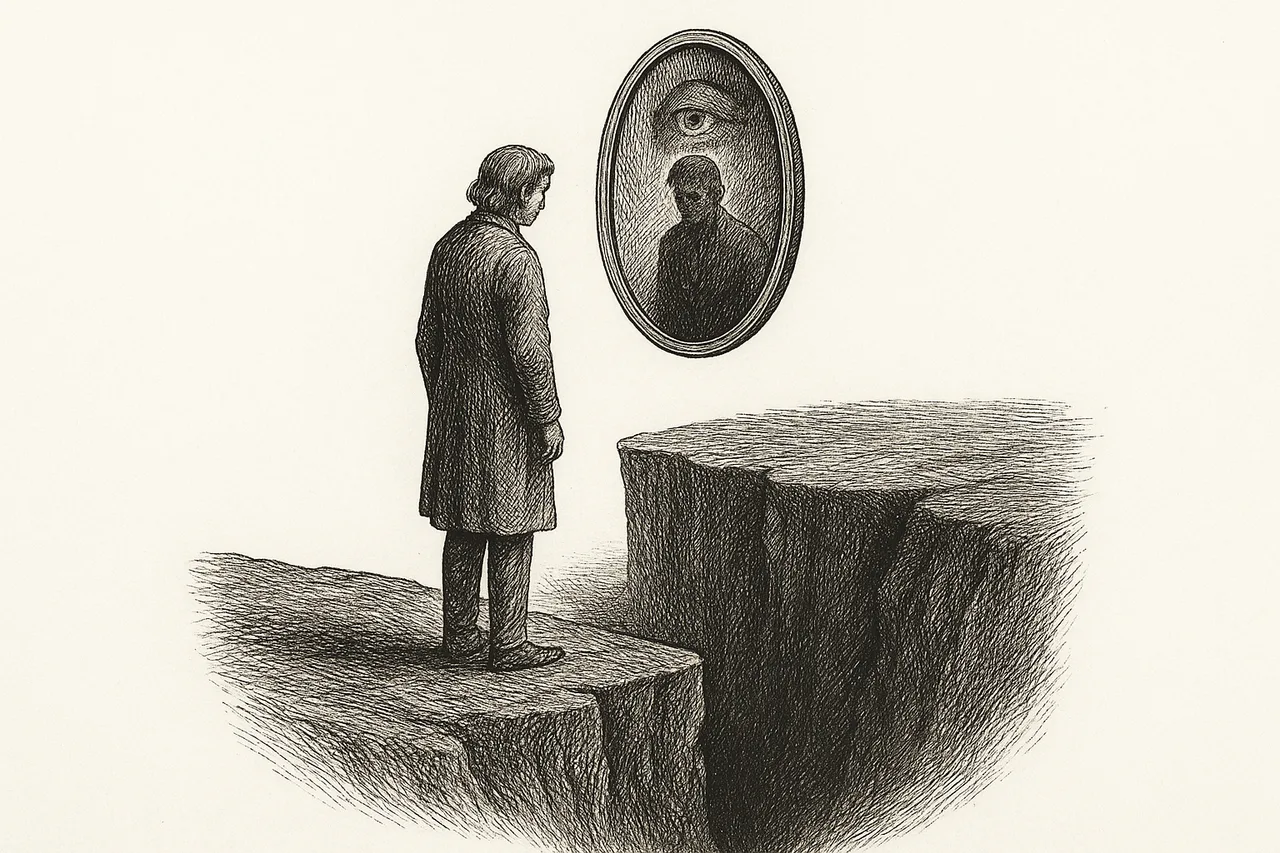
In Jungian language, this is shadow material. The disowned parts of the self, fear, ambition, uncertainty, hunger, power, get split off and then experienced as something “other”. The imagined fraud is often the shadow version of the self that the conscious personality refuses to own.
That's why limiting beliefs don't always respond to logic alone. The mind isn't merely making an error. It is trying to preserve an older emotional contract: “If I never fully claim my power, I may stay safer.”
Your imposter voice often speaks like a critic, but its job is closer to a bodyguard with outdated instructions.
The Five Masks of the Imposter
People love personality labels because they create neat boxes. Real life is messier. Imposter patterns usually behave more like masks. You may wear one at work, another in relationships, and a third when money gets involved.
The useful question isn't “Which type am I forever?” It's “What rule am I obeying when I feel under threat?”

Five common masks and the hidden rules beneath them
The Perfectionist This mask lives by the rule, “If there's a flaw, I'm exposed.” Creative founders often wear it when shipping work. They tweak offers for weeks, rewrite captions, redesign pages, and call it high standards when it's fear in a blazer.
The Expert The internal rule sounds like, “I must know more before I'm allowed to speak.” This one hoards certifications, tabs, courses, and research. It can look intelligent and serious while subtly blocking momentum.
The Soloist
Here the rule is, “If I need help, I've failed some secret test.” This pattern is common in independent business owners who equate self-sufficiency with worth. Collaboration feels like exposure.
A lot of people recognise themselves more sharply once they've examined the voice behind the performance. That's where work on the inner critic becomes useful, because the critic usually reveals the hidden law you've been following.
Later in the spectrum, two more masks tend to appear.
The Natural Genius assumes competence should be immediate. If learning feels clumsy, shame arrives fast. This is especially brutal for talented people switching mediums, scaling a business, or entering leadership after years of being praised for instinct.
The Superhero turns worth into output. Rest feels suspicious. Ease feels undeserved. Success only counts if it required strain. Among entrepreneurs, this mask gets rewarded publicly and resented privately.
Here's a simple way to spot the mask in live action.
| Mask | Hidden rule | Typical business effect |
|---|---|---|
| Perfectionist | I must get it right first time | Delayed launches and endless revisions |
| Expert | I must know everything first | Learning without shipping |
| Soloist | I must do it alone | Bottlenecks and isolation |
| Natural Genius | It should come easily | Shame around growth edges |
| Superhero | I must prove worth through effort | Overwork and identity fusion |
A short explainer on the subject can help if you want another lens on how these patterns show up in everyday work.
Why Founders and Creatives Are the Perfect Hosts
Traditional careers often give you external markers. A title. A manager's feedback. A clear ladder. Founders and creatives work in stranger terrain. You're expected to invent value, judge your own output, market it convincingly, and tolerate long stretches where the feedback is vague, delayed, or emotionally loaded.
That environment is almost engineered to provoke imposter patterns.
The structure itself creates friction
Entrepreneurship asks you to operate beyond your current evidence. You have to speak for the future version of the business before it fully exists. That can feel expansive on a good day and faintly fraudulent on a bad one.
Creatives face a parallel problem. Their work is often personal, symbolic, identity-soaked. If a campaign flops or a client says no, it rarely feels like neutral market information. It feels like a verdict on selfhood.
A useful comparison comes from another high-evaluation profession. In a UK survey of doctors and medical students, 49% reported often or sometimes feeling like a fraud, and this was higher among women and ethnic minority respondents, as reported in this UK survey analysis. Different profession, same pressure cooker. Constant scrutiny, high stakes, identity wrapped around performance.
Why identity matters here
For founders and creatives, the work often becomes the mirror. If the launch goes well, you feel briefly legitimate. If it lands badly, the old script returns. That creates unstable self-trust because your inner state keeps outsourcing authority to the latest result.
There's also a more uncomfortable truth. Sometimes what gets labelled imposter syndrome has a social component. The room may be signalling that you don't belong, or that you need to prove more than others do. Identity, culture, class, race, gender, accent, education, and taste codes all shape whether someone feels welcome in a professional environment.
Some feelings of fraudulence come from the psyche. Some come from the room. Wise self-inquiry learns to tell the difference.
This distinction matters because the remedy changes. If the pattern is mainly internal, you work with belief, nervous system response, and unconscious rules. If the environment keeps sending exclusion signals, personal mindset work alone won't solve the whole problem.
A Quick Unconscious Pattern Check
Most quizzes flatten this topic into a score. That's tidy, but not especially revealing. A better approach is to catch the mind before it edits itself.
Sentence completion is useful here because it slips past the polished, professional part of the self. You start a sentence, finish it fast, and let the first uncensored ending show you the rule underneath. Don't overthink these. Write by hand if you can.
Sentence stems worth using
Complete each line quickly and keep going until something slightly uncomfortable appears.
- If I were successful, I would have to...
- The thing people must never find out about me is...
- When I receive praise, I secretly feel...
- If I stop over-preparing, then...
- The problem with being fully visible is...
- People with real authority always...
- If I asked for help, it would mean...
Read your endings back slowly. The exact wording matters. “I would have to disappoint people” carries a different emotional contract from “I would have to work harder” or “I would have to be responsible for more.”
How to interpret what comes up
A few broad patterns tend to emerge:
- Fear of exposure: You assume success invites scrutiny you won't survive.
- Fear of burden: You link visibility with pressure, leadership, or emotional labour.
- Fear of envy or rejection: Part of you believes being seen will cost belonging.
- Fear of collapse: You distrust your ability to sustain what you've created.
If your answers point more towards exhaustion, flatness, resentment, and low physical energy, it may be worth reading something more specific on why am I so lazy and unmotivated. People often call themselves imposters when they're depleted, overloaded, or disconnected from meaningful work.
Field note: Healthy self-doubt asks, “What do I need to learn here?” An imposter pattern asks, “How do I stop anyone noticing I'm fundamentally inadequate?”
That distinction is practical. A genuine skill gap usually responds to training, practice, and feedback. Burnout responds to recovery, boundaries, and regulation. Imposter patterns tend to reveal hidden rules about worth, visibility, and safety.
If you want a more structured way to surface those rules, the Surreal Experiments assessment is built for that kind of reflective pattern spotting.
Practical Tools to Re-Pattern the Imposter
Insight helps, but it rarely finishes the job. The imposter pattern sits in language, imagery, expectation, posture, breathing, and memory. If you only argue with it cognitively, it often goes underground and returns wearing a smarter outfit.
The better approach is to work from multiple levels at once.

Change the meaning, not just the mood
In NLP terms, many people encode mistakes as identity evidence. A failed pitch becomes “proof” rather than information. That frame is expensive.
Try this reframe in writing. Describe a recent wobble under three headings:
- What happened
- What I made it mean about me
- What else this could mean
The power sits in the second line. Once you see the meaning you attached, you can loosen it. Richard Bandler's style of work often aimed at exactly this point. Not the event, but the coding of the event.
If you want a deeper read on how that works in practice, coaching with NLP gives a solid foundation.
Use hypnotic language on yourself properly
Most self-talk is clumsy and adversarial. It sounds like a manager shouting through a megaphone. That rarely calms the unconscious.
Ericksonian language works better because it is permissive. It gives the system room to update rather than forcing a performance. Try a phrase like this before a visible task:
You may notice that part of you still expects the old fear, and you can also allow another part of you to recognise that you've handled complex things before.
That wording matters. “May notice” softens resistance. “Another part of you” creates internal flexibility. The unconscious responds more readily to invitation than command.
Bring the body back into the conversation
Imposter feelings often arrive as physiology first. Tight chest. Shallow breath. Jaw tension. Frozen belly. If the body reads the moment as threat, your thoughts will usually follow.
A simple sequence helps:
- Shake out excess activation: Stand up and shake the arms, shoulders, hands, and legs for a short burst. Keep it loose and slightly ridiculous. The nervous system often benefits from completing a stress response instead of suppressing it.
- Use box breathing: Inhale, hold, exhale, hold, with an even rhythm that feels manageable. The point isn't performance. The point is signalling enough safety for clearer thinking.
- Orient to the room: Let your eyes land on actual objects around you. Name colours, edges, sounds. This interrupts the trance of imagined catastrophe.
Externalise the pattern
Jung had the right instinct here. What remains unconscious tends to run the show. Give the imposter voice a character. Not to dramatise it, but to stop fusing with it.
Name it. Describe its tone. Notice when it appears. Ask what it is trying to prevent. Often the answer isn't failure. It's humiliation, exclusion, envy, conflict, or responsibility.
Once the pattern has shape, you can work with it. Before that, it just feels like reality.
Know when self-help has hit its limit
Sometimes the pattern is sticky because it's woven into older experiences, chronic stress, or an environment that keeps reinforcing threat. If your reactions feel overwhelming, persistent, or hard to regulate alone, support from a qualified professional is a sensible next move.
That isn't defeat. It's intelligent calibration.
Meet Your Unconscious Co-Pilot with Surreal Experiments
Individuals often describe their pattern long before they can change it. They know they overthink, over-prepare, deflect praise, or disappear at the exact moment they need to become visible. The missing piece is often precision. Which belief is firing? Which image, memory, or body cue flips the switch? Which hidden rule keeps recreating the same result?
That's the territory Surreal Experiments is built for.
Rather than treating imposter feelings as a shallow confidence glitch, the platform approaches them as an unconscious pattern that can be examined, decoded, and reworked. The method draws on Jungian psychology, NLP, hypnotherapy-inspired language, reflective prompts, and pattern analysis designed for entrepreneurs and creatives who are already self-aware and want more than slogans.

What the experience actually helps you do
You start noticing the architecture of the problem instead of wrestling the symptoms. A prompt might reveal that your issue isn't praise, but the expectation that praise will raise standards you'll then have to maintain. Another pattern might show that asking for help triggers an old equation between dependence and shame.
That level of specificity changes the game.
The AI coaching experience is designed to surface these hidden equations and offer personalised reframes, reflective prompts, and deeper self-inquiry that feels closer to a skilled coach than a motivational poster. For people who think in symbols, images, and patterns, that matters. It gives the unconscious something usable to work with.
Understanding the pattern is useful. Interrupting the pattern is where life starts to feel different.
If you've spent years doing insight without integration, this is the kind of tool that makes the next layer accessible.
If you're ready to stop arguing with the imposter voice and start decoding the pattern underneath it, explore Surreal Experiments. It's built for creatives, founders, and deep thinkers who want sharper self-awareness, practical reframes, and a more intelligent conversation with the unconscious.
Continue reading
Explore the full Stop Self-Sabotage pillar