What Is Performance Coaching? A Guide for High Achievers
Unsure what is performance coaching? Discover how it moves beyond generic advice to rewire unconscious patterns for entrepreneurs and creatives.
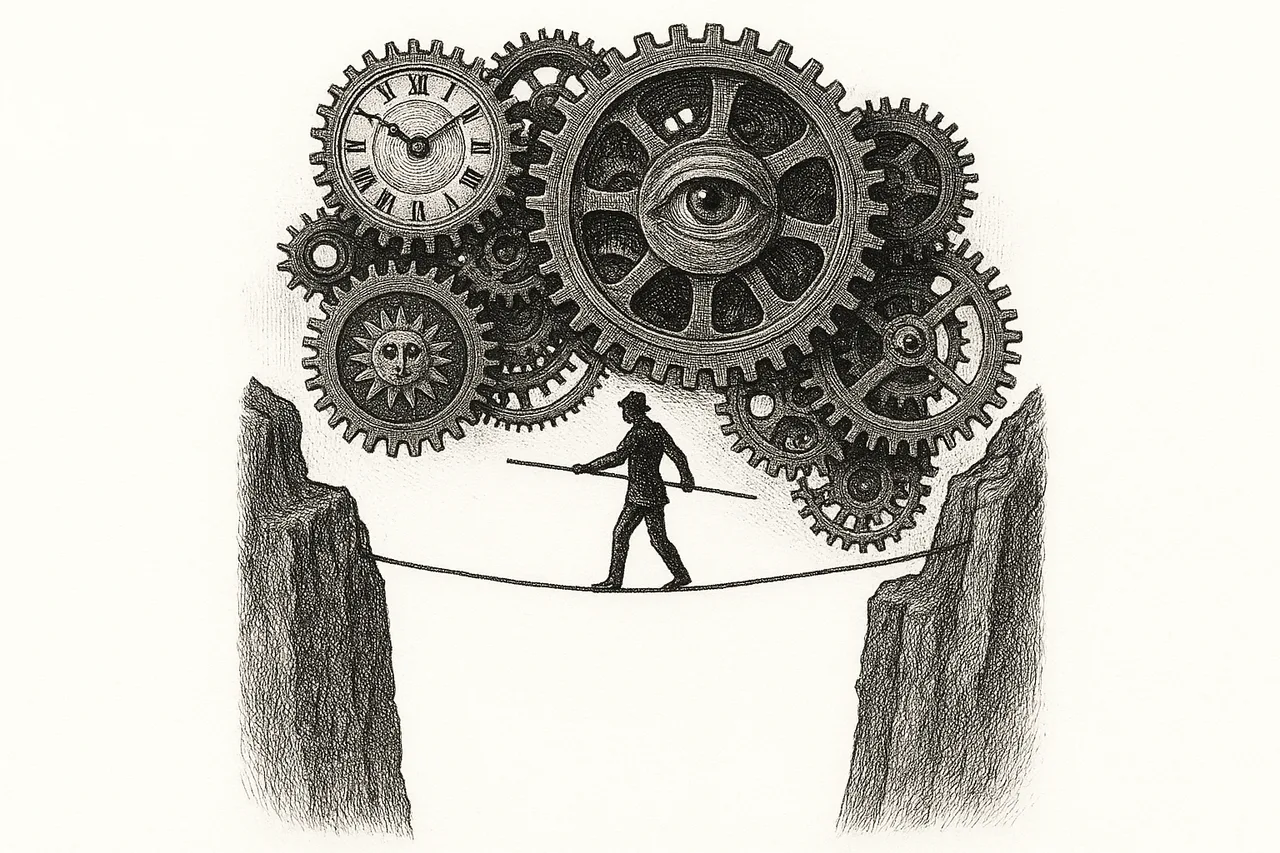
A founder I know could deliver a killer pitch to investors, then spend six days avoiding one spreadsheet that would improve cash flow. Another had a near supernatural instinct for brand strategy, yet froze every time it was time to ship. Both looked disciplined from the outside. Both were being dragged around by forces they hadn't learned to read.
Table of Contents
- The Charioteer and the Two Unruly Horses
- Performance Coaching as a Behavioural Operating System
- A Field Guide to Different Coaching Species
- The Alchemical Toolkit NLP Somatics and Hypnosis
- How Performance Coaching Unlocks Founders and Creatives
- How to Choose a Coach and Avoid the Gurus
- Frequently Asked Questions
- Is performance coaching just therapy with better branding
- What is performance coaching in one sentence
- Who is it actually for
- How is progress measured
- Can this work if I'm extremely busy
- Does it always involve deep unconscious work
- How long does it usually take
- What should I expect from a strong coach
The Charioteer and the Two Unruly Horses
Plato gave us a useful image. A charioteer tries to steer two horses at once. One is noble, disciplined, hungry for meaning. The other is impulsive, fearful, desirous, stubborn. The job isn't only to hold tighter reins. The job is to get both horses moving in the same direction.
That's a decent description of modern high performance, minus the sandals.
One part of you sets the vision. It books the strategy day, writes the quarterly goals, buys the course, fills a Notes app with sharp little insights. Another part of you mysteriously develops a fascination with inbox tidying, over-research, doom scrolling, or changing the font on a slide deck for forty minutes. You don't need more information at that point. You need translation.
When willpower keeps losing
Most ambitious people who ask what is performance coaching assume they need better discipline. Sometimes they do. More often, they need to understand why discipline keeps short-circuiting at the exact moment it matters.
Jung would call part of this the shadow. Not evil, just exiled. The competent founder who secretly fears visibility. The brilliant creative who says they want freedom but keeps building cages out of perfectionism. The operator who prides themselves on high standards while using those standards to avoid delegation.
You can read every driving manual in the world and still crash if you haven't learned the temperament of the horses.
A proper coach listens for that split. The stated goal says one thing. The behaviour says another. Performance coaching starts getting interesting when it stops taking your conscious story at face value.
Why this isn't just HR wallpaper
In the UK, coaching is no fringe ritual for people who own too many Moleskines. The industry is estimated at around £1.7 billion, which tells you how embedded it has become in professional development and business practice, especially when organisations treat it as a serious performance system rather than an informal chat (UK coaching industry benchmark).
That matters because the useful version of coaching has never been about generic encouragement. It's about alignment. It teaches the charioteer the language of the horses. Once that starts happening, effort drops, precision rises, and the same person who used to stall for weeks can move cleanly on a decision in an afternoon.
Performance Coaching as a Behavioural Operating System
The simplest useful answer to what is performance coaching goes like this: it is a structured process for changing behaviour in service of a real outcome.
That sounds almost boring, which is good. Boring is underrated. Boring works.
Performance coaching becomes powerful when you treat behaviour the way a good engineer treats a system. You identify friction. You locate the faulty loop. You stop romanticising the glitch. Then you test better inputs until the output changes.

Where most people get it wrong
It is often believed that performance problems are motivation problems. They aren't always. A founder says, “I need to be more focused.” Fine. But what does that mean in behaviour? Fewer open browser tabs? Faster decisions? Better sequencing? Less compulsive context switching? The phrase itself is too foggy to coach.
That's why effective coaching needs observable targets. One useful framing is that it moves from vague ambitions such as “be a better leader” to clear behavioural shifts such as reducing decision latency on weekly priorities, which connects mindset change to execution in practical situations (measurable behaviour change in coaching).
The handbrake analogy is still the best one. Plenty of high achievers are trying to accelerate while unconsciously applying the brakes. They call it caution, standards, strategic thinking, or needing a bit more clarity. Sometimes it's one of those. Sometimes it's an old pattern wearing a nicer blazer.
What a real coaching process tracks
Useful coaching usually includes a few moving parts:
- Clarity of outcome. Not “I want growth” but “I want to make decisions faster in this part of the business” or “I want to stop disappearing when it's time to publish”.
- Pattern recognition. The coach looks for repeated loops. Delay before visibility. Overcomplication before launch. False urgency before deep work.
- State management. Your performance changes with your inner state. If your nervous system reads ordinary challenge as threat, execution gets weird.
- Feedback and calibration. If nothing observable changes, the process needs adjusting.
A lot of people don't need more advice. They need cleaner mirrors. That's where assessment helps. If you want a structured way to look at the hidden beliefs shaping your execution, this unconscious pattern assessment is one way to surface what your stated goals often conceal.
Practical rule: If the coaching can't tell you what behaviour is changing this week, it's still floating around in theory.
A Field Guide to Different Coaching Species
The coaching industry has the taxonomy of a rainforest, with life coaches, business coaches, performance coaches, spiritual coaches, leadership coaches, mindset coaches, and transformational coaches. Somewhere in the middle, a man with a podcast is explaining your destiny beside a rented Lamborghini.
The categories are useful if you know what question each one is trying to answer.

The question each kind of coach is really answering
| Coaching type | Core question | Typical focus | Where it helps most |
|---|---|---|---|
| Life coaching | What would make this life feel more coherent, satisfying, or honest? | Direction, habits, relationships, fulfilment | When your whole life feels off axis |
| Business coaching | How does this company grow, organise itself, and make better decisions? | Strategy, systems, offers, leadership | When the business model or team needs work |
| Spiritual coaching | What is this experience trying to teach me about meaning, identity, or purpose? | Values, intuition, inner alignment, existential questions | When success without meaning feels hollow |
| Performance coaching | What's stopping this result from happening more cleanly, quickly, or consistently? | Execution, bottlenecks, patterns, state, behaviour | When you already know the goal but keep getting in your own way |
Performance coaching is narrower than life coaching and usually more psychologically granular than business coaching. It cares less about broad fulfilment and more about the exact mechanism by which you derail.
That's why it often sits well beside strategic frameworks. If your world runs on targets and team alignment, expert OKR coaching can sharpen the organisational side of execution. It won't necessarily decode why a founder keeps setting strong objectives and then vanishing into avoidance. That's where deeper behavioural work enters.
Here's a wider look at the terrain if you want to compare approaches in more detail: different coaching models and styles.
Where performance coaching fits
Performance coaching becomes the right species when the issue isn't ignorance. You know enough already. You may know far too much already. The friction is somewhere else.
Sometimes the issue is behavioural mechanics. Sometimes it's identity. Sometimes it's a Jungian split between the socially approved self and the part that would rather torch the whole performance than risk being seen imperfectly. Sometimes it's a very simple pattern, such as a meta-program in NLP terms where someone is strongly moving away from criticism rather than moving towards the objective, so every action gets unconsciously filtered through threat.
This short video gives a useful visual snapshot of the broader coaching field before you decide what sort of help best suits your problem.
A business coach may help you scale a company. A performance coach helps you stop sabotaging the scaling plan every time visibility, delegation, or uncertainty appears.
The Alchemical Toolkit NLP Somatics and Hypnosis
If coaching stays entirely in the realm of polite conversation, it often reaches polite results. Insightful, articulate, and strangely unchanged.
The more interesting work happens when coaching includes methods that can reach the unconscious patterning underneath your stated intentions.

NLP for pattern decoding
NLP is useful here because it pays attention to structure. Not “Why are you like this forever?” but “How are you creating this experience, step by step, in language, imagery, focus, and internal sequencing?”
A few examples make it concrete:
- Meta-programs can reveal whether someone filters the world through options or procedures, towards goals or away from problems, self-reference or external validation.
- Submodalities can show how a task becomes internally coded as heavy, distant, threatening, tedious, or impossible before any real action starts.
- Language patterns uncover hidden commands. “I have to get this right” creates a different internal state from “I'm testing a strong version”.
Sentence completion psychology and projective techniques help too. Ask a founder to finish the phrase “If I really became visible, people would…” and you often get more useful material than you'll get from an hour of polished self-description.
Somatics and trance for behavioural change
Patterns don't live only in language. They also live in the body. You can watch someone say they're ready to delegate while their shoulders lift, jaw tightens, and breathing goes shallow. The body often gives the game away before the story does.
Somatic work in coaching helps someone recognise how a pattern feels before it becomes behaviour. That matters because interception is easier at the level of sensation than after the sabotage has already turned into a three day delay.
Ericksonian hypnosis enters here as a way of creating a receptive learning state rather than a dramatic stage trick. In that state, the client can loosen rigid associations and install more useful ones. A creative who previously linked publishing with exposure and danger can begin to pair release with completion, contribution, and nervous system safety.
One modern twist matters as well. With 78% of UK businesses using some form of AI in 2024, the coaching conversation now has to include how technology supports reflection, prompts, and progress tracking between sessions (UK AI adoption in business). AI doesn't replace nuance, instinct, or human attunement. It can, however, extend the work between sessions by catching loops in real time.
For readers interested in the wider territory around altered states, symbolic material, and inner perception, this piece on consciousness expansion gives more context for why trance and reflection can affect practical execution more than most rationalists expect.
One example in this space is Surreal Experiments, which combines Jungian prompts, NLP and reflective AI tools to help entrepreneurs and creatives notice unconscious beliefs and decision patterns. That kind of hybrid setup can be useful when someone wants support between sessions rather than relying on memory and good intentions.
How Performance Coaching Unlocks Founders and Creatives
Performance coaching gets real when it touches the thing you keep swerving around.
For founders, that's often control disguised as standards. For creatives, it's often exposure disguised as refinement. Different costumes, same theatre.

The founder who avoids the numbers
Take the founder with big ideas and chronic resistance to financial admin. They aren't lazy. They'll work all weekend on brand, product, hiring, and sales. Yet invoicing, forecasting, or margin review somehow turns into “later”.
At first glance, this looks like a time management issue. It often isn't. A coach might find that numbers trigger an unconscious identity conflict. If the founder grew up equating money scrutiny with judgment, control, or scarcity, the spreadsheet isn't neutral. It becomes a symbolic threat.
So the intervention isn't “try harder”. It might involve changing the internal representation of the task, reducing shame around precision, creating a new ritual and state for financial review, and breaking the task into a repeatable sequence that no longer activates resistance. The result is usually cleaner decisions, fewer avoidable fires, and more trust in their own leadership.
That business relevance matters. Organisations with strong coaching cultures have reported 27% higher year-on-year revenue growth, a useful reminder that behavioural improvements are not merely personal luxuries when linked to execution and leadership (coaching culture and revenue growth).
The creative who can't release the work
Then there's the artist, writer, designer, or founder-creator with abundant ideas and a suspiciously unfinished portfolio. They can start beautifully. Finishing feels loaded. The piece is nearly done, then they revise it into dust.
In this case, coaching often reveals a hidden equation. If I release the work, I can be judged. If I'm judged, I lose belonging, status, innocence, superiority, or some cherished self-image. The nervous system would rather keep the work “in development”, where it remains pure and safe.
A good coach helps translate that pattern into something workable. The shift may involve separating self-worth from reception, rehearsing completion in trance, using somatic cues to regulate the moment before publishing, or replacing perfection with a stronger metric such as coherence, honesty, or usefulness.
If you want examples of practical goal design beyond vague self-improvement language, Beyond Time personal development strategies offers a useful contrast between abstract aspiration and concrete action.
There's also a strategic angle here. Creatives and founders often benefit from sharper thinking tools, not just emotional insight. These mental models from Buffett, Bezos, and Jobs are useful because they reduce drama around decisions and make action easier to sequence.
How to Choose a Coach and Avoid the Gurus
Choosing a coach is a bit like choosing a tattoo artist, a business partner, or a hypnotist. Charm helps less than people think. What matters is method, taste, and psychological depth. So does whether they can stay calm when your own resistance puts on a costume and starts making speeches.
This is especially important in a climate where pressure is already high. In Great Britain, there were 776,000 cases of work-related stress, depression, or anxiety, which raises an essential question: can this coach improve output without piling on more strain (work-related stress benchmark)?
Questions that reveal depth
Ask questions that force the coach to reveal how they think, not just how they market.
- How do you work with resistance? A seasoned coach won't treat resistance as disobedience. They'll see it as information.
- What do you do when a client says they want one thing but keeps doing another? You want someone who can work with contradiction without becoming preachy.
- How do you handle burnout patterns or overload? If their answer is basically “push through”, leave.
- How do you measure progress? The answer should involve behaviour, decisions, follow-through, or other observable shifts.
- How do you work with shadow material or self-sabotage? They don't need to use Jungian language, but they should understand the phenomenon.
- What belief do you hold about performance that runs contrary to popular opinion? This one is fun. It usually separates thinkers from slogan merchants.
The right coach feels less like a motivational speaker and more like a precise sparring partner for your own mind.
Red flags dressed as charisma
A few things should make you cautious:
- Everything sounds universal. If they use the same script for founders, artists, executives, and people in life transition, you're probably buying theatre.
- They can't describe their method. Mystery can be elegant. Vagueness usually isn't.
- They sell intensity as sophistication. Pressure is not proof.
- They turn people pleasing into virtue. That pattern wrecks performance more subtly than open procrastination. This essay on commercialised people pleasing is worth reading if you suspect your “professionalism” is truly a fear response in nice clothes.
Frequently Asked Questions
Is performance coaching just therapy with better branding
No. Therapy and coaching can overlap in depth, but they usually serve different purposes. Performance coaching focuses on execution, behaviour, decision-making, and results in a present or forward-moving context. It can include reflection, emotional work, trance work, and somatic awareness, but it isn't a substitute for regulated mental health care.
What is performance coaching in one sentence
It's a structured process that helps you identify and change the patterns affecting how you think, act, decide, and follow through under real conditions.
Who is it actually for
It tends to help people who are already capable, already reflective, and mildly irritated by the fact that their output doesn't match their potential. Founders, operators, creatives, and leaders often benefit most because their bottlenecks have consequences beyond mood. They affect teams, revenue, shipping, and momentum.
How is progress measured
Through behaviour. Faster decisions. More consistent follow-through. Cleaner delegation. Better quality of attention. More finished work. Fewer self-created crises. The exact markers depend on the goal, but if nothing changes outside the session, the process needs adjustment.
Can this work if I'm extremely busy
Yes, if the process respects reality. Good coaching shouldn't create a second full-time job made of worksheets and self-observation. It should simplify execution, not turn your life into a laboratory with bad lighting.
Does it always involve deep unconscious work
Not always. Some problems are tactical and can be solved with structure, accountability, and cleaner feedback. But when a pattern keeps repeating despite insight and effort, unconscious work usually becomes relevant. That's where NLP, somatic tracking, projective methods, or hypnotic language can reach places that surface-level advice won't.
How long does it usually take
It depends on the complexity of the pattern and the specificity of the outcome. Some shifts happen quickly once the mechanism is obvious. Others need repetition because identity, habit, and state are tangled together. The useful question isn't “How fast can this be fixed?” It's “How quickly can this become observable in daily life?”
What should I expect from a strong coach
Look for precision, honesty, and curiosity. The ability to notice patterns without pathologising you. A decent tolerance for paradox. Clear method. Respect for your ambition, without becoming impressed by your coping strategies.
If you're tired of generic self-improvement and want a more psychologically exact way to understand what's blocking performance, Surreal Experiments offers educational tools for uncovering unconscious patterns, reframing limiting beliefs, and turning insight into practical change for founders, entrepreneurs, and creatives.
Related
Read next
Coaching for Entrepreneurs & High Achievers
Business Mindset Coaching: Your Path to Entrepreneurial Flow
Stop generic advice. Discover how business mindset coaching works on unconscious patterns to end burnout and unlock entrepreneurial success.

Coaching for Entrepreneurs & High Achievers
How Does Hypnotherapy Work: How Hypnotherapy Works
Ever wonder how does hypnotherapy work? Discover the neuroscience & psychology of rewriting unconscious patterns. Go beyond stage myths for peak performance!

Coaching for Entrepreneurs & High Achievers
What Is a Life Coach? a Guide for People Who Hate Coaches
Wondering what is a life coach, really? We cut through the fluff to explain coaching's role in decoding unconscious patterns for entrepreneurs and creatives.