
How to Overcome Procrastination: 2026 Creative Guide
Discover how to overcome procrastination by decoding its real cause using NLP, Jungian insights, and somatic work to end the cycle for good.
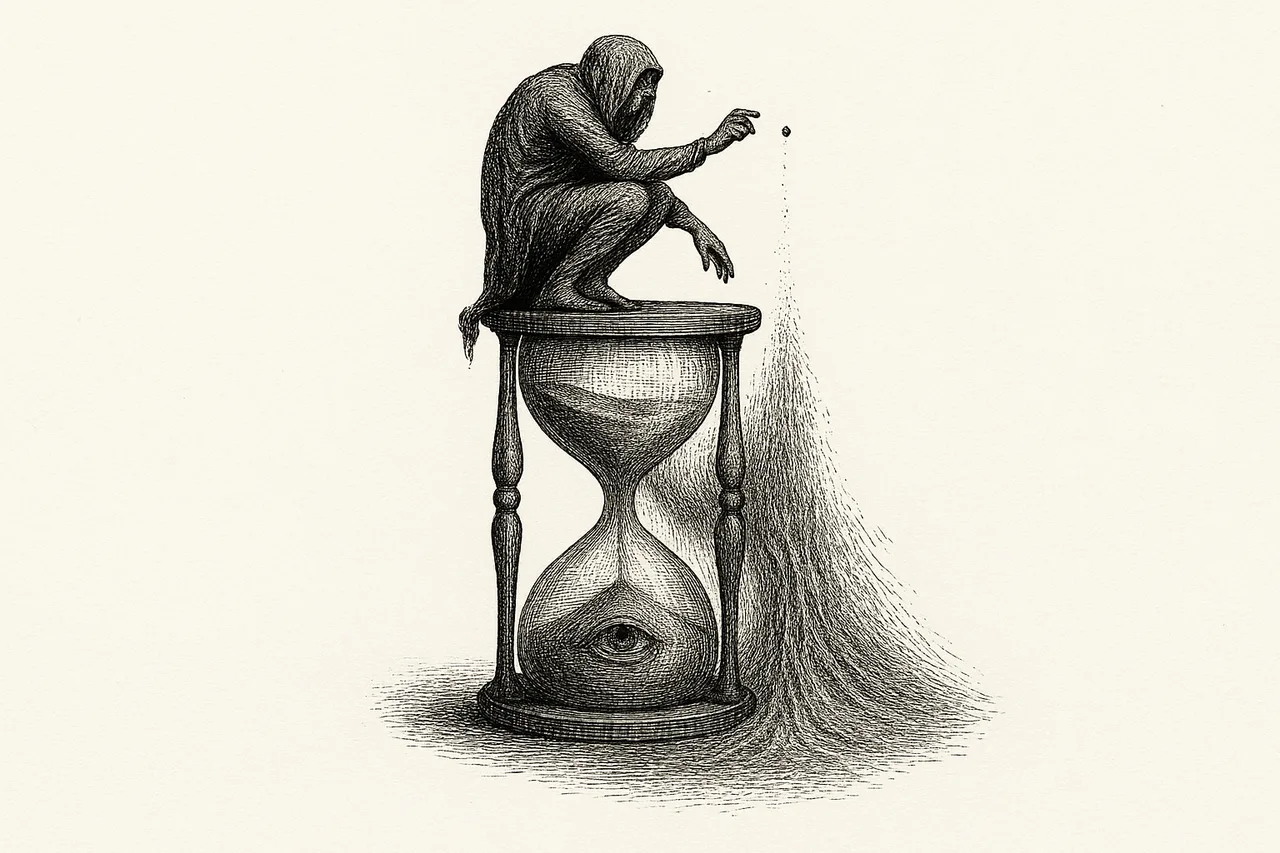
Most advice on how to overcome procrastination is built on a flattering lie. It assumes you're a rational creature with a calendar problem. Buy the right planner, colour-code your week, worship the timer, and apparently your resistance will melt like cheap butter.
That advice fails bright people for one simple reason. Procrastination is rarely a scheduling issue first. It's a protection strategy first. The missed deadline is just the visible symptom. Underneath it, the mind is often busy defending you from exposure, judgement, disappointment, success, visibility, or the unpleasant fact that the task in front of you no longer matches who you are.
If you're a founder, creative, or high-functioning overthinker, you already know the theatre of this pattern. You can build brands, close clients, carry teams, read dense books for fun, then somehow avoid sending one email that matters. Not because you don't care. Usually because you care so much that the unconscious starts treating the task like a threat.
Table of Contents
- Procrastination Is Not Your Enemy It Is Your Bodyguard
- The Unholy Alliance of Perfectionism and Procrastination
- Analyse Your Personal Procrastination Algorithm
- Practical Interventions Beyond the Pomodoro Timer
- Rewiring the Unconscious with NLP and Somatic Work
- Your AI Co-Pilot for Navigating the Unconscious
- From Resistance to Revelation Your Path Forward
Procrastination Is Not Your Enemy It Is Your Bodyguard
There is an old parable I like about a master bridge builder who designed a bridge so elegant that an entire city waited for its opening. He carved the arches, calculated the load, polished the stone, and then delayed laying the final piece. For months, then years. People assumed vanity or laziness. The truth was uglier and more human. Once the bridge opened, it could be judged, crossed, criticised, outgrown. His unfinished bridge let him keep the fantasy of greatness without enduring the reality of exposure.
A lot of procrastination works like that.
The unconscious would often rather preserve your imagined brilliance than risk an ordinary first draft, a shaky launch, or a client seeing the work before you've turned it into cathedral marble. Delay becomes a strange act of loyalty. Misguided, expensive, occasionally absurd, but loyal.
For business owners, the cost isn't poetic. According to this analysis of procrastination and founder burnout, 68% of founders experience chronic delay linked to limiting beliefs, and procrastination is associated with an estimated £125 billion in lost productivity across the UK economy. That's not a personality quirk. That's strategy-level leakage.
What the bodyguard is protecting
Usually one of these sits behind the delay:
- Fear of exposure because finishing means someone can judge the work
- Fear of finality because choosing one path closes off ten imagined identities
- Fear of consequence because success brings pressure, visibility, and expectation
- Fear of inner conflict because the task serves the business but not the deeper self
Procrastination often says, "I'm trying to keep you safe," in the world's least efficient accent.
If you treat this pattern like moral failure, you go to war with a part of yourself that's attempting protection. That war tends to produce more shame, more paralysis, and better excuses. A more useful move is to become curious about the protection itself. The dynamics behind delay are close cousins of why we self-sabotage, especially when achievement threatens an old identity.
The Unholy Alliance of Perfectionism and Procrastination
High-achievers rarely procrastinate because they don't have standards. They procrastinate because their standards have subtly mutated into a tribunal.

Perfectionism has a brilliant PR team. It presents itself as discernment, excellence, taste, ambition. Sometimes it is those things. Then it takes a hard turn and becomes a covert avoidance system. If the work must be exceptional, and your first attempt obviously won't be, then the mind solves the problem by not starting. No draft, no humiliation. No launch, no verdict. No email, no chance of sounding ridiculous.
That is the hidden bargain. You suffer now to avoid a fantasy of suffering later.
A 2024 UK report on the neuroscience of procrastination found that perfectionism-driven procrastination affects 35% of creatives and solo entrepreneurs, correlating with a 19% higher burnout rate and 12% reduced business scalability compared with non-procrastinators. If you've felt exhausted while appearing "ambitious", that's not mysterious. Perfectionism burns fuel while the vehicle is still in the garage.
The all or nothing trap
Perfectionism usually speaks in absolutist terms:
- If it can't be brilliant, it shouldn't be seen
- If I can't do it properly today, there's no point starting
- If I need help, I must not be good enough
- If they dislike it, that says something permanent about me
None of that is strategy. It's identity fusion. The work isn't just work anymore. It has become evidence in the internal court case about whether you're worthy, intelligent, original, or behind.
Practical rule: whenever a task starts carrying your entire self-worth on its back, delay becomes more likely.
The people pleasing twist
Many perfectionists aren't only trying to make good work. They're trying to produce work that prevents disappointment in other people. That makes the task heavier, weirder, and much harder to complete. Procrastination then acts like a passive rebellion. You delay what you secretly resent having to perform so perfectly for everyone else.
If that sounds familiar, the pattern overlaps heavily with people pleasing dynamics. The task isn't just "write the proposal". The hidden task is "write the proposal in a way that secures approval, preserves image, and prevents discomfort". No wonder your nervous system suddenly develops a passionate interest in reorganising folders.
Analyse Your Personal Procrastination Algorithm
Generic productivity advice assumes everyone's delay runs on the same machinery. It doesn't. One person stalls because they fear failure. Another because they fear success. A third because the task bores them senseless and their mind keeps defecting to low-stakes dopamine. A fourth delays because finishing would force a decision they don't want to make.
That's why broad advice often lands like a wet napkin. You don't need more slogans. You need a better map.

The shadow in the studio
Jung's idea of the shadow is useful here. The shadow isn't merely the dark and dramatic stuff. It also contains the disowned parts of you that don't fit the identity you've built: the selfish part, the tired part, the ordinary part, the ambitious part, the one that wants more, the one that wants out.
A lot of procrastination comes from protecting the polished persona against contact with those less flattering truths. If you've built an identity around being competent, the part of you that feels clumsy may go underground. Then every new project threatens to reveal that hidden part, and delay steps in like a loyal fixer.
NLP meta programmes at work
NLP offers another practical lens through meta programmes, the unconscious filters through which you sort experience.
A common one is Toward versus Away From motivation. Toward types move because they want the prize. Away From types move because they want to avoid pain. Both can be effective. But if your task is coded primarily as danger, criticism, hassle, embarrassment, or loss of freedom, your system may start dodging it even when you consciously want the result.
Ask yourself which of these sounds more familiar:
| Pattern | Inner signal |
|---|---|
| Toward | I want the finished thing, the impact, the relief, the expression |
| Away From | I need to avoid looking foolish, failing publicly, losing control |
| Options focused | I resist committing because keeping possibilities open feels safer |
| Procedures focused | I freeze when the path isn't clearly structured |
None of these are flaws. They're clues.
Sentence completions that catch the real story
Projective prompts work because they slip past the polished spokesperson in your head. The first answer is often the rehearsed one. The second or third answer is where the gold is.
Try these without editing:
- If I finish this project, I'm afraid that...
- If this succeeds, people will expect...
- I only feel productive when...
- The part of me that delays is trying to protect me from...
- If I did this badly, it would mean...
- If I did this brilliantly, it would force me to...
- I keep myself stuck when...
- The story I sell myself before avoiding the task is...
Write fast, without polishing or any kind of spiritual theatre. The aim isn't elegance, it's leakage.
Most people don't procrastinate on everything. They procrastinate on the tasks that threaten a particular identity.
Look for patterns in your answers. Certain words tend to repeat, things like approval, exposure, control, money, visibility, rejection, obligation. Once the language repeats, the algorithm starts to reveal itself.
If you want a more structured mirror, this assessment for unconscious patterns is built for exactly that kind of self-inquiry. It helps translate vague inner static into identifiable belief patterns, which is far more useful than calling yourself lazy and hoping for enlightenment.
Practical Interventions Beyond the Pomodoro Timer
A timer can help. It just can't negotiate with the part of you that thinks beginning the task might threaten your identity.

Treat interventions as experiments, not commandments. You're not trying to become a perfectly disciplined robot with a suspicious attachment to stationery. You're trying to lower the inner friction enough to create movement.
The five minute bet
This works because resistance usually lies about the cost of starting. The mind presents the task as a sprawling emotional swamp. Five minutes punctures the illusion.
Make a small bet with yourself. Not "finish the deck". Open the file and work for five minutes with full permission to stop after that. Set a visible timer. Remove all side quests. Begin in the ugliest way possible if needed.
The purpose isn't output. The purpose is contact.
Once you've made contact, the task becomes real rather than mythic. A surprising amount of avoidance dissolves at that point because the monster turns out to be paperwork wearing theatrical lighting.
Implementation intentions for real resistance
When delay has become habitual, vague commitments are nearly useless. "I'll do it tomorrow" is basically scented smoke. A better tool is the implementation intention, the classic if then structure.
A study summary focused on UK entrepreneurs reported that implementation intentions reduced procrastination by 62%, with daily use increasing task completion from 43% to 89% over eight weeks. That's worth taking seriously because it turns intention into a cue-linked behaviour.
Use this formula:
- If it is [specific time or trigger]
- Then I will [specific action]
- For [specific duration]
- In [specific location]
Examples:
- If I open my laptop at 9am, then I will draft the first three lines of the proposal for ten minutes in the studio before checking messages.
- If I notice myself circling tabs instead of deciding, then I will write one ugly sentence about the actual problem for five minutes at my desk.
- If I feel the urge to reorganise instead of create, then I will send the rough version to myself first for seven minutes in full-screen mode.
This approach pairs well with classic prioritisation systems. If you want a practical primer on how to conquer your toughest daily tasks, that framework can be useful, especially when the avoided task has obvious advantage.
Here's a quick visual walk-through of behavioural momentum in action:
The good enough for now draft
Perfectionism hates this one because it removes its ceremonial robes.
Create a version explicitly labelled good enough for now. Put that phrase at the top of the document if you need to. Your only job is to produce something structurally complete enough that a future version of you can improve it.
Try these constraints:
- One ugly paragraph first instead of a beautiful opening
- Notes in brackets where you don't yet know the phrasing
- Voice memo drafting when typing invites over-editing
- Deliberate incompleteness where the aim is shape before polish
A rough draft gives you something to revise. Avoidance gives you a fantasy to defend.
What doesn't work so well? Inflated morning routines, dramatic vows, punishing self-talk, and pretending the task has no emotional charge. That style creates a brief spike of control, then the unconscious waits you out.
Rewiring the Unconscious with NLP and Somatic Work
Behavioural tricks can get you moving. They don't always dissolve the pattern underneath. That's where deeper methods matter.
Piers Steel's foundational meta-analysis, summarised in this procrastination statistics review, reported that 80 to 95% of college students procrastinate, and 20% of the general population are chronic procrastinators. When a pattern is that widespread and persistent, it makes sense that calendars alone won't settle it. A lot of delay is wired into emotional associations, body states, and unconscious predictions.
Pattern interrupts for the moment resistance arrives
Richard Bandler popularised the idea of the pattern interrupt. The principle is simple. When the mind begins its familiar loop, you interrupt the sequence before it completes.
Let's say your loop goes like this: open laptop, remember task, feel dread, check messages, drift into low-value admin, call it a busy morning. A pattern interrupt inserts a deliberate break between the trigger and the old behaviour.
A simple version:
- Notice the first phrase of your avoidance script. Maybe it's "I'll just do this later when I'm clearer."
- Say "stop" out loud or internally with crisp precision.
- Change physiology. Sit forward, plant feet, lift chest, exhale sharply.
- Direct your eyes to one visible target linked to the task.
- Begin one mechanical action immediately.
The point isn't to become theatrical with yourself. It's to scramble the autopilot long enough to choose.
Work with the body not against it
Procrastination isn't only a thought pattern, it's often a body pattern: a tight throat, heavy chest, buzzing limbs, slumped posture, and shallow breath. If you only argue with the mind while the body is broadcasting threat, you're negotiating with one hand tied behind your back.
Try this instead:
- Locate the sensation of resistance in the body. Don't explain it. Find it.
- Name its qualities. Tight, hot, dense, fluttering, numb, braced.
- Breathe around it rather than into a battle with it. Longer exhale, softer jaw, less performance.
- Ask one curious question: "What would this sensation be protecting me from if it had a job?"
That question often changes everything. The body stops being an obstacle and becomes an informant.
For some people, this kind of inner work overlaps with practices like feeding your demons and trauma release exercises, where the resisted part is met symbolically rather than crushed. You don't have to buy every metaphysical flourish around such practices to find them useful. The core idea is psychologically sound: what you exile tends to govern you from the basement.
Ericksonian language for self direction
Milton Erickson understood something most productivity advice misses. Direct commands often provoke inner rebellion. Suggestive language slips past resistance more gracefully.
Instead of barking at yourself with "focus" or "stop wasting time", try language with space in it:
You don't need to know the whole path to begin the next intelligent step.
Or:
Perhaps the task becomes easier once your system realises it doesn't have to prove anything.
Or even:
You may notice that starting badly still counts as starting.
This style matters because the unconscious tends to resist pressure and respond better to curiosity, imagery, and permissive phrasing. You're not hypnotising yourself into compliance. You're changing the tone of the internal relationship so action becomes safer.
Your AI Co-Pilot for Navigating the Unconscious
Once you realise your procrastination has a pattern, the next frustration appears quickly. You can often see the pattern after the fact, but not always in the moment. Insight arrives after the damage, wearing a trench coat and apologising for traffic.
That's where a responsive tool can be useful. Think about the difference between reading a training manual and using a personalized AI workout plan. The value isn't abstract information. It's timely structure that adapts to your current state and keeps translating intention into action.

For this kind of inner work, Surreal Experiments functions less like a generic habit app and more like a reflective interface for hidden patterns. The assessment is designed to surface limiting beliefs and unconscious tendencies. The AI coach can then respond to what emerges, whether that's perfectionism, avoidance of visibility, people pleasing, overthinking, or the odd little ritual your mind performs before it disappears into delay.
What this kind of tool is actually good for
It helps with three things that matter:
- Pattern recognition when your procrastination shape is hard to name
- Timely prompts that interrupt old scripts before they harden into an afternoon
- Language for reframing so you're not relying on the same tired self-talk that helped create the pattern
The right prompt at the right moment can do more than a shelf full of underlined books.
Used well, an AI coach doesn't replace discernment. It extends it. For high-achievers who already know the theory, that can be the difference between collecting insights and applying them while the resistance is still alive.
From Resistance to Revelation Your Path Forward
Learning how to overcome procrastination has less to do with becoming harsher and more to do with becoming more accurate. Delay is often a coded message from the unconscious. Sometimes it says the task matters too much. Sometimes it says the task is contaminated by perfectionism or approval seeking. Sometimes it says you're trying to force movement without listening to the part of you that's unconvinced.
The shift that changes things is simple, though not easy. Move from accusation to investigation. Ask what the resistance protects. Ask what identity is on the line. Ask what the body knows before the mind invents another excuse. That posture turns procrastination from a humiliating flaw into useful information.
There are also times when self-help isn't the whole answer. If delay is consistently impairing basic day-to-day functioning, or if it arrives with pervasive low mood, severe distress, or a sense that everything has become unmanageable, speaking with a qualified professional is a sensible move. These tools are for self-discovery and behaviour change, not diagnosis.
A lot of people spend years trying to dominate the resistant part of themselves. It usually works better to understand it, renegotiate with it, and bring it back into the centre of the room. That is where useful momentum tends to return. So does a stronger sense of purpose and meaning.
If you want a more precise read on the beliefs and hidden patterns fuelling your delay, explore Surreal Experiments. It offers educational tools for uncovering unconscious patterns, reframing limiting beliefs, and turning vague resistance into something you can work with.
Related
Read next
Coaching for Entrepreneurs & High Achievers
15 Mental Models From The World's Top Performers
The most successful people consciously design their mental models. 15 frameworks from Warren Buffett, Jeff Bezos, and Steve Jobs you can install today.

Coaching for Entrepreneurs & High Achievers
Abundance vs Scarcity Mindset: How One Habit Made Wahei a Billionaire
Most rich people aren't happy. The ones who are share one filter, abundance. How Wahei Takeda built a fortune on a single morning ritual.
Coaching for Entrepreneurs & High Achievers
How to Use Jungian Active Imagination to Solve Business Problems
Carl Jung built a method for talking to the unconscious in metaphor. I used it to ask what my business actually looked like, and the answer changed how I ran it. A practical exercise for founders who want to see what their unconscious knows about their business.